
Not all mosaic tile is the same, and the material you pick changes the look, the care and the place it suits. This guide compares the main mosaic materials – glass, porcelain, ceramic, natural stone and metal – so you can match a product to the job rather than guessing from a photo.
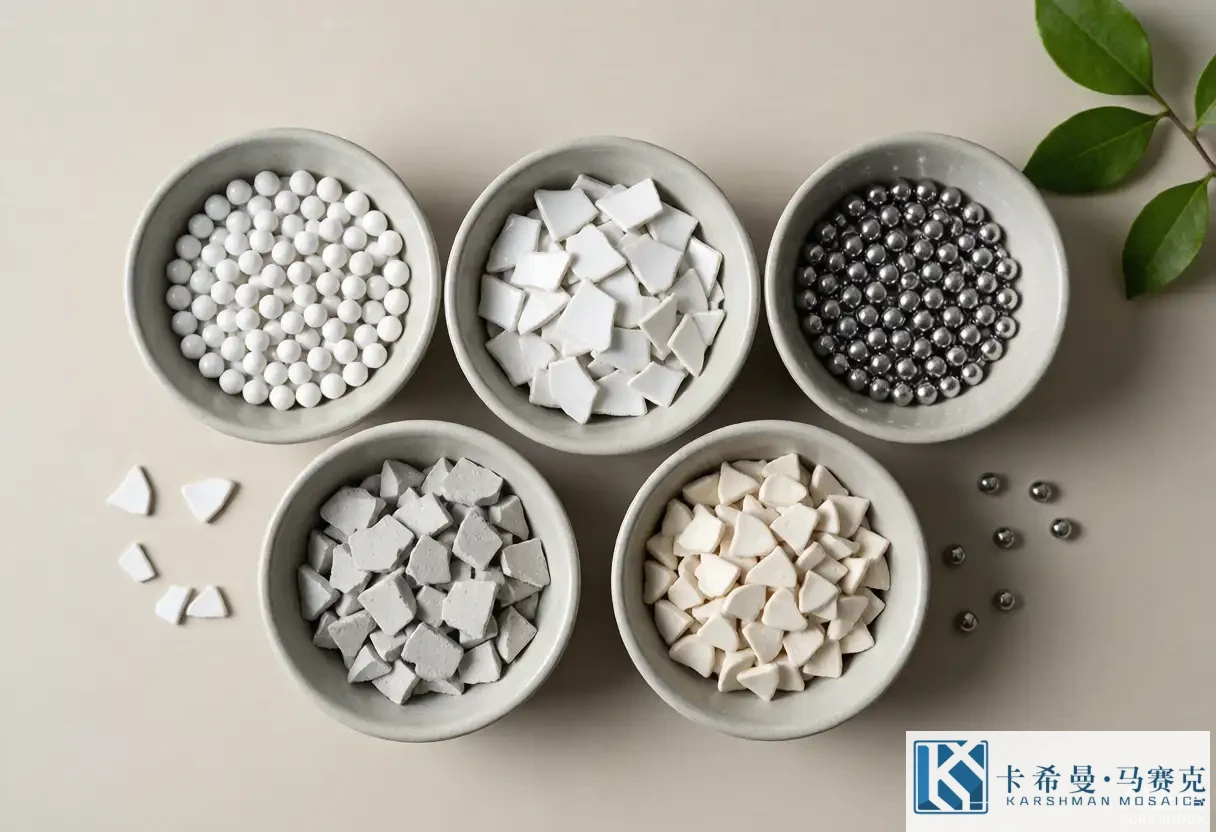
Glass mosaic
Glass mosaic is known for a reflective face and color with depth. It suits backsplashes, feature walls and pool waterlines, where the play of light is part of the brief. Glass resists water when grouted, which helps in wet rooms, and it cleans easily. The trade-off is that a glossy face shows marks, so a soft cloth and prompt wiping keep it clear. For many interiors, glass is the common pick when a surface needs to brighten a space.
Porcelain mosaic
Porcelain is dense, hard and low in water absorption, which makes it a sound choice for floors, showers and outdoor use. It stands up to heavy foot traffic and copes with frost where rated, so it fits patios and steps. The look is usually softer than glass, with matte and textured finishes common for grip. Because it is robust, porcelain often carries the working surfaces while glass handles the decorative ones.
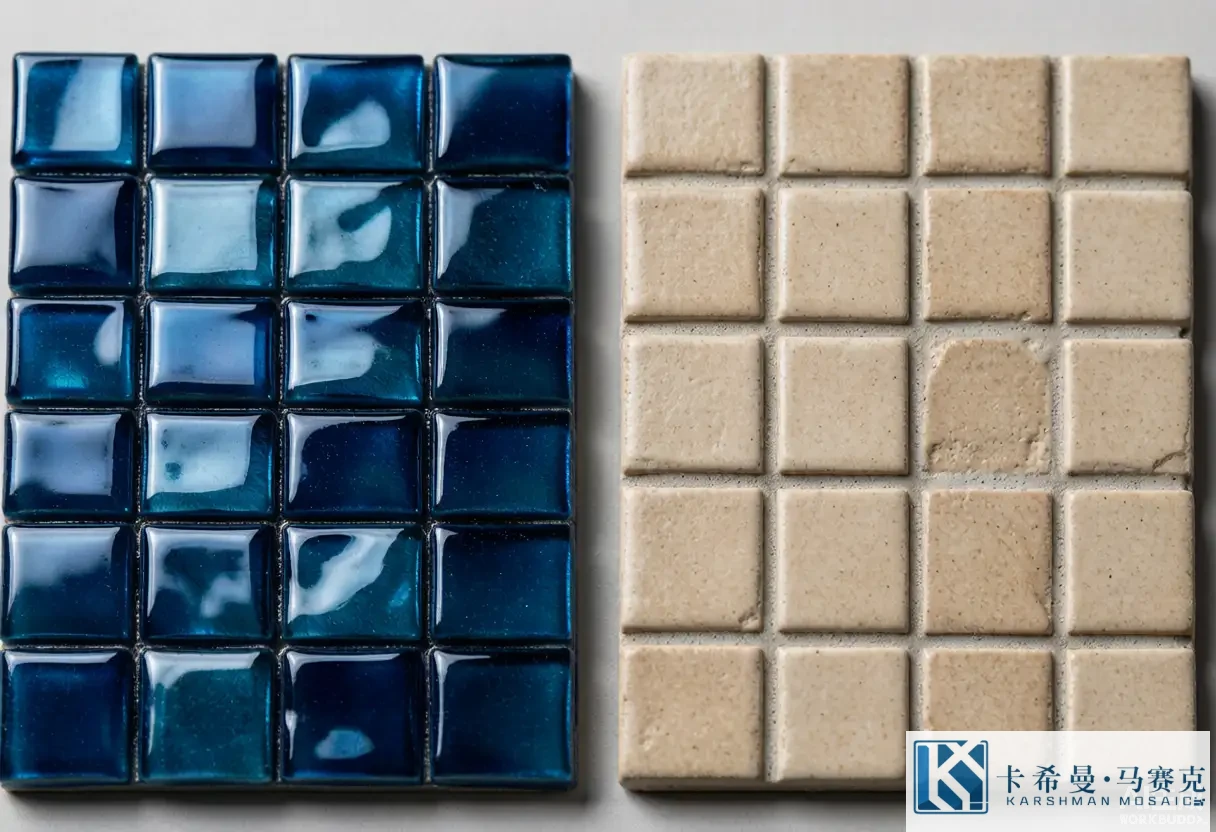
Ceramic mosaic
Ceramic mosaic is a warmer, often lower-cost cousin of porcelain. It suits indoor walls and light-traffic areas where moisture is moderate. The color range is broad and the feel is inviting, which suits rustic and traditional schemes. Ceramic is less dense than porcelain, so it is better on walls than on busy floors, and it should be specified with the room’s conditions in mind rather than as a default for every use.
Natural stone mosaic
Natural stone mosaic – marble, travertine, slate – brings an earthy, tactile surface that manufactured tile struggles to copy. It suits feature walls, vanity tops and low-moisture floors where its variation reads as character. Stone is porous, so it needs sealing and more care, and it can stain if left unsealed in a wet zone. For a project that wants a natural look, stone is strong, provided the maintenance is planned.
Metal and mixed mosaic
Metal mosaic, often stainless or brushed alloy, adds an accent with a cool, industrial edge. It is usually used in small amounts – a band, a niche, a backsplash strip – rather than a full wall, because the look is strong and the cost is higher. Mixed sheets that combine metal with glass or stone give two finishes from one product, which helps a designer get contrast without sourcing separate lines.
How the materials compare
Reading the materials side by side helps a decision. Glass leads on light and color; porcelain leads on durability and wet-area use; ceramic leads on warmth and value; stone leads on natural character; metal leads on accent. No single material wins every job, which is why many projects pair a working material with a decorative one. Matching the material to the exact location keeps the result both good-looking and sound.
Matching material to room
A practical way to choose is by location. Kitchens and bathrooms lean on glass and porcelain for wet, cleanable surfaces. Floors and outdoors lean on porcelain for grip and frost resistance. Feature walls can carry stone or glass for drama. Entries and niches suit a metal or mixed accent. Letting the room set the material avoids the common mistake of placing a pretty but wrong tile in a harsh spot.
Care by material
Care follows the material. Glass and porcelain wipe easily with mild cleaner; ceramic wants prompt drying; stone needs sealing and a pH-neutral product; metal wants a soft cloth to avoid scratches. A grout rated for the room and sealed after curing protects every type. Learning the small differences up front keeps each surface in good shape with little extra effort over time.
Choosing the right mosaic material is mostly about matching it to the place. If you want to compare samples in person, contact our team for current ranges and lead times.