
Tropical pool mosaic color is what turns a blue box into a place that feels like a coastal escape. The tropical range reaches beyond plain pool blue into teal and emerald green, warm coral and sunset tones of orange, yellow and soft pink. Used with care, these colors give a pool a lush, resort character; used without a plan, they can clash and read loud. The trick is to treat tropical color as a family with a few accents, not a rainbow across the floor. This guide covers the tropical color range and how to combine it for a calm or a lively feel that suits your pool, your light and your taste.
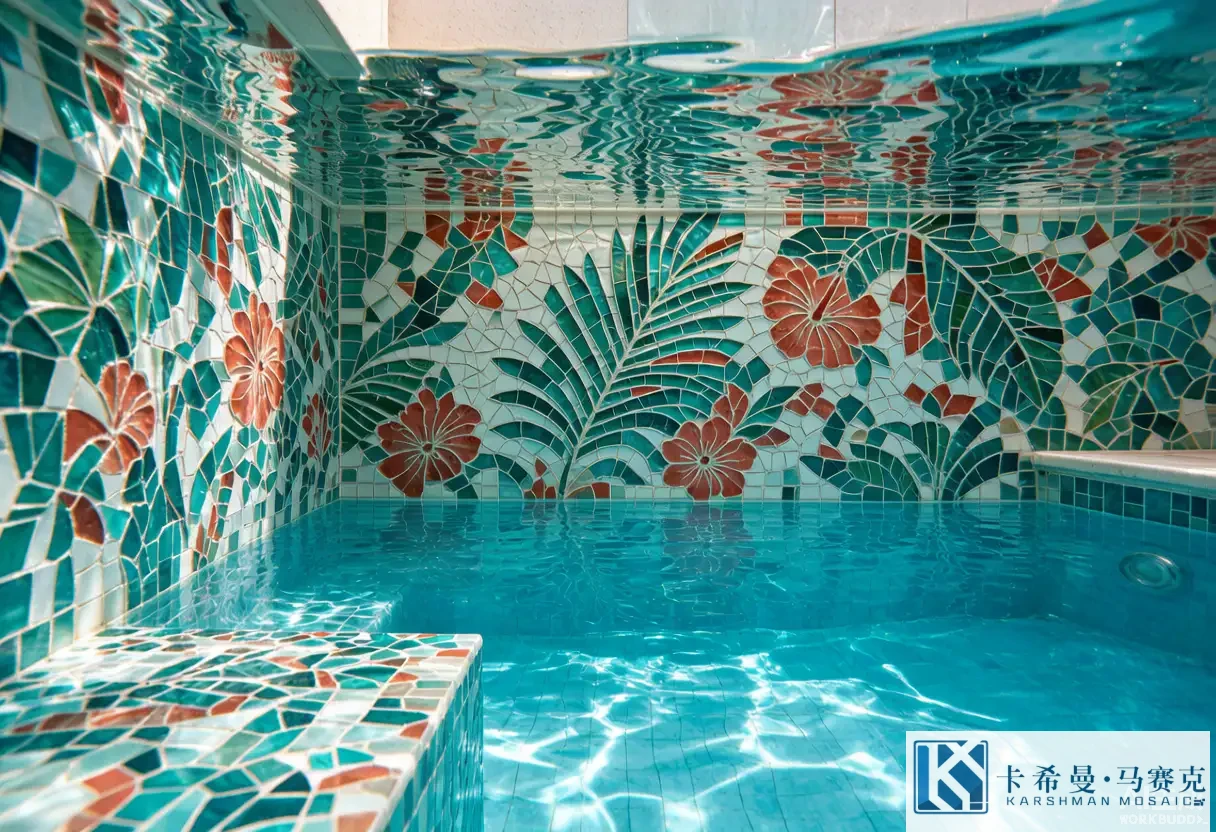
The tropical color family
Tropical pool color lives in a warm, saturated range built around water and nature. The base is the watery blue-aqua family that any pool uses, extended into teal and green to suggest leaves and lagoon water. On top of that base sit the warm accents – coral, sunset orange, yellow and pink – that suggest flowers, fish and sky. The family works because the cool base and the warm accents are related through nature, so they sit together without fighting. The discipline is to keep the cool tones as the field and spend the warm tones as accents, so the pool reads tropical rather than carnival.
Aqua and sky blue
Aqua and sky blue are the starting point of a tropical palette. Pale aqua reads bright and tropical, like shallow island water; mid sky blue reads classic and clean. These tones form the calm field that most tropical pools use, letting the green and coral accents do the talking. A single aqua field with a teal step toward the deep end already feels tropical without any motif. The safe plan is to build the whole pool on one or two aqua tones, then introduce the richer colors at the border and the feature where they show against the calm ground.
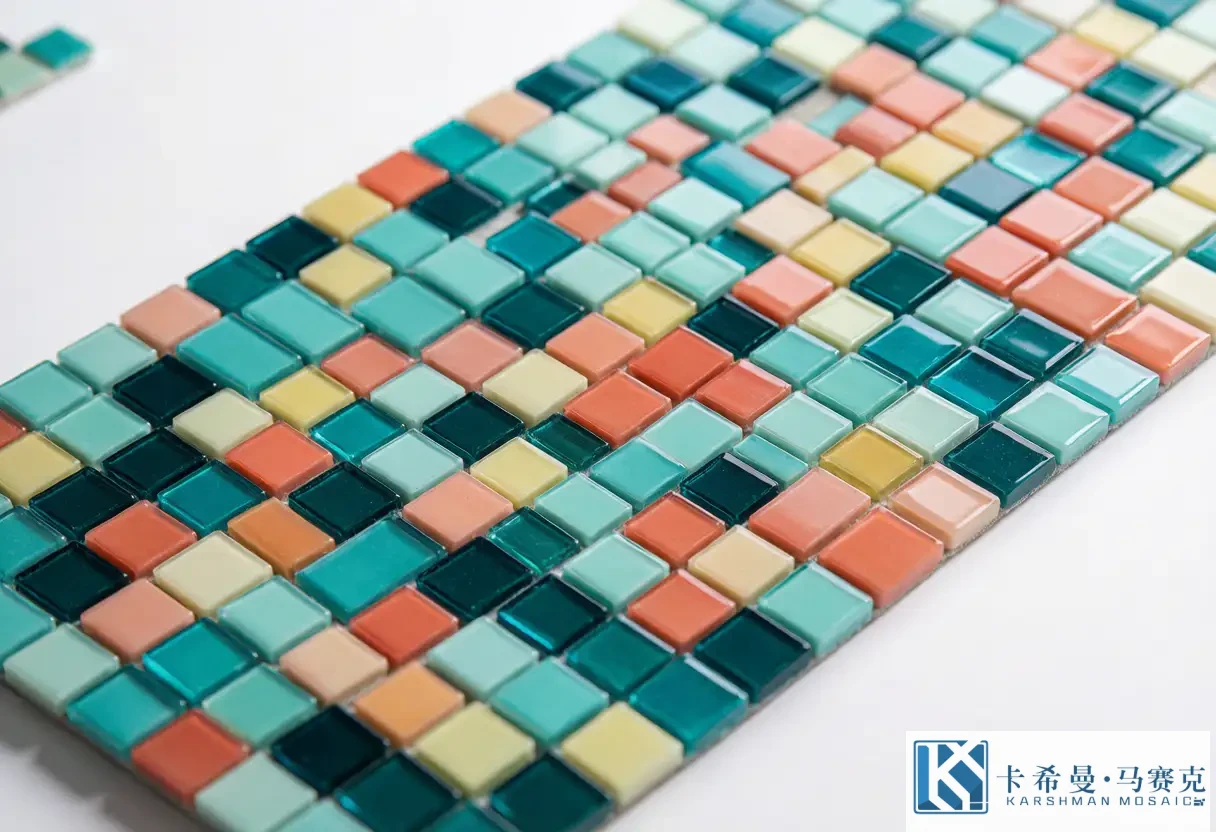
Teal and emerald green
Teal and emerald green carry the leafy, lagoon side of the tropical range. Teal – a blue with a green cast – reads rich and resort-like, and it suits both field steps and motifs such as palm leaves. Emerald and leaf green suit botanical motifs and add a garden note to the water. Because green is a strong color, a little goes a long way; a green border or a green leaf feature against an aqua field reads lush, while a fully green floor can feel heavy. Mixing aqua and teal in the field, then adding a leaf green motif, is a balanced way to bring the green without overwhelming the pool.
Coral and warm accent tones
Coral is the signature warm accent of tropical pools. A coral tone – a soft red-orange – reads sunny and pairs naturally with aqua and teal, the way a reef fish sits against blue water. Coral works as a motif color, a border accent or a small field step that adds life. Used sparingly, it lifts a calm pool; used across a large area, it can feel hot. The habit is to treat coral as the spark, not the base: a coral fish, a coral border line, a coral flower – placed against the cool field so the warmth reads as a highlight rather than a wash.
Sunset tones: orange, yellow, pink
Sunset tones extend the warm side of the tropical palette. Soft orange, warm yellow and a dusty pink suggest sky, hibiscus and tropical light. These tones suit accents – a sunset gradient at the shallow end, a yellow fish, a pink flower – more than large fields, because they grab attention more than any other tone in the range. A sunset blend from pale yellow at the top to coral at the bottom can read like a horizon, which is a lovely tropical move when kept soft. The caution is contrast: sunset tones need a calm aqua or sand near them so they glow rather than clash.
Combining tropical colors
Combining tropical colors is about balance between cool and warm. A common, balanced plan is an aqua or teal field, a green or coral border, and a feature that pulls two or three of the accents together. The warm tones should stay a minority of the surface so the cool base keeps the pool calm. A pool with coral, green, yellow and pink all across the floor tends to read busy rather than tropical, so restraint in the warm range is the habit that keeps the scheme composed. The eye should land on one or two warm moments, not be pulled in six directions at once.
Using color to set the mood
Tropical color sets the mood by how much warm tone you allow. A calm tropical pool stays mostly aqua and teal with a small coral or green accent – relaxed and resort-quiet. A lively tropical pool adds more green, coral and a sunset step, reading energetic and playful. The same motifs read differently against a calm versus a lively ground, so the color plan should come before the motif plan. A good brief names the mood first, then the palette, then the subjects, because the color is what the eye meets first when someone looks into the water.
Tropical borders and fields
The field and border are where tropical color does its quiet work. A field that steps from aqua to teal toward the deep end already feels tropical without a single motif. A border in green or coral frames the water and ties the scheme together. A popular, balanced route is a calm aqua field with a teal step and a coral or green border at the waterline. The contrast lands on the frame and the feature, the field stays calm, and the pool reads composed from a distance and detailed up close. Treating the border as the main color moment keeps the spend focused and the look clean.
Depth and tropical color
Depth changes how tropical color reads. Submersion cools and darkens a tone, so a coral that looks bright dry will read a step deeper once filled, and a teal will read richer. A pale aqua field makes shallow water feel airy; a deeper teal field makes the pool feel cooler and larger. Because the shift is predictable, the plan should allow for it: choose values that hold their place at the actual depth, and keep a warm accent contrast strong enough to survive the cooling. The aim is a floor that stays visible and a palette that reads as intended from the deck, not a color that looked right dry and flattened underwater.
Finish and light
Finish changes tropical color after build. Glossy glass reflects sun and brightens a shaded pool but can glare in direct light, which can wash out a pale aqua. Matte glass keeps the tone soft and hides marks, good for a bright, open pool. Iridescent glass shifts color with the angle, adding life to a coral or a green accent. A pool in full sun may suit a calmer finish so the warm tones stay true; a pool in shade may suit a glossy one to lift the light. The finish is a color decision as much as a shine decision, so it belongs in the plan alongside the tones rather than as an afterthought.
Trends in tropical palettes
Current tropical pool trends lean natural and a little sunset-warm. Aqua-to-teal fields, a green palm accent and a coral border appear often in home and resort pools. Soft sunset blends at the shallow end are also common, paired with a calm field so the warm tone stays a highlight. What stays useful is the principle, not the fashion: a cool base, a shared warm accent, and a calm field. Trends come and go, but a tropical palette built on balance reads well in any year, and following the light and the shape of your own pool is what makes it work.
Planning a tropical palette
A practical tropical palette plan runs in order. Pick a cool base – aqua, teal or a step between them. Add one green and one coral or sunset accent, keeping the warm tones a minority. Decide where the warm tones sit – border, feature, a shallow sunset step. Match the finish to your light. Approve a laid sample of the field, the border and the feature together, viewed in water or under the pool light, before the volume order. A list this short covers the points that decide whether the pool reads tropical and calm or tropical and loud once it is full.
Sampling before you commit
Because water and light change the read, a dry loose tile is not a safe reference for tropical color. Lay a sample board of the field, the border and the feature with the planned grout, and view it in water or under the pool light if you can. Check that the cool base stays calm, the warm accent pops without clashing, and the step reads at depth. This sign-off is the cheapest point to adjust a tone, and it gives both sides a reference if a question arises during the install. Treating the sample as the contract settles most disputes before the tile reaches the site, and it protects the tropical feel you planned.
Mixing tropical color with a neutral base
A neutral base can ground a tropical palette so the warm tones read as accents rather than noise. A sand, ice or soft white field lets aqua, teal, green and coral sit on top without competing, the way a white wall shows off bright art. The neutral base also keeps the pool calm from a distance, so the tropical color appears as you get close and notice the motifs. For a home pool that shares a space with stone or wood, a neutral base ties the pool to the surroundings while the tropical accents carry the mood. The balance – mostly neutral, a little tropical – is a safe route that still reads clearly tropical.
Tropical color for small and large pools
Pool size changes how tropical color should be used. A small pool or a spa reads well with a bolder tropical step, because the surface is seen up close and a vivid aqua-to-teal field or a coral border shows its character. A large pool seen from across a garden suits a calmer base with the tropical accents placed as borders and a feature, so the color does not shout from a distance. Matching the color intensity to the viewing distance keeps the scheme legible rather than lost, and it avoids spending fine work where a broad tone would do the same job for less. The tile size and the color should scale together with the pool.
Avoiding clashing tropical color
Tropical color clashes when too many saturated tones meet without a calm base between them. A floor that jumps from coral to yellow to green with no aqua to rest the eye reads busy and can feel tense rather than relaxed. The way to avoid it is to keep one cool tone as the majority and let the warm tones appear as a minority – a border, a feature, a shallow step. Checking the spread on a laid sample, with the grout, shows whether the colors sit together or fight before the volume order. A palette that rests on a calm base and spends warm tone as highlight is what reads tropical and composed rather than tropical and loud.
Tropical color and the seasons
Tropical palettes read well across seasons because the cool base stays timeless while the warm accents carry the mood. In bright summer light the aqua and teal fields feel fresh; in lower winter light the coral and sunset accents keep the pool lively when the garden is bare. Choosing a base that works in both lights – a mid aqua rather than a pale one that can look flat in dim light – keeps the pool good all year. The warm accents can lean sunset in a pool used for evening swims, where the orange and pink read richer under warm garden lights. Planning for the light the pool actually receives is what makes the palette hold up beyond the photo shoot.
Tropical pool mosaic color spans aqua, teal, green, coral and sunset tones, combined so a cool base carries a few warm accents for a calm or lively resort feel. If you want to plan a tropical palette for your pool, contact our team for sample boards and a layout drawing.