
Pool tile products move with design trends, but the practical drivers are steady: owners want surfaces that look good, clean easily and last. Here is a look at the pool tile products and finishes that are drawing interest right now, and why each one fits certain projects.
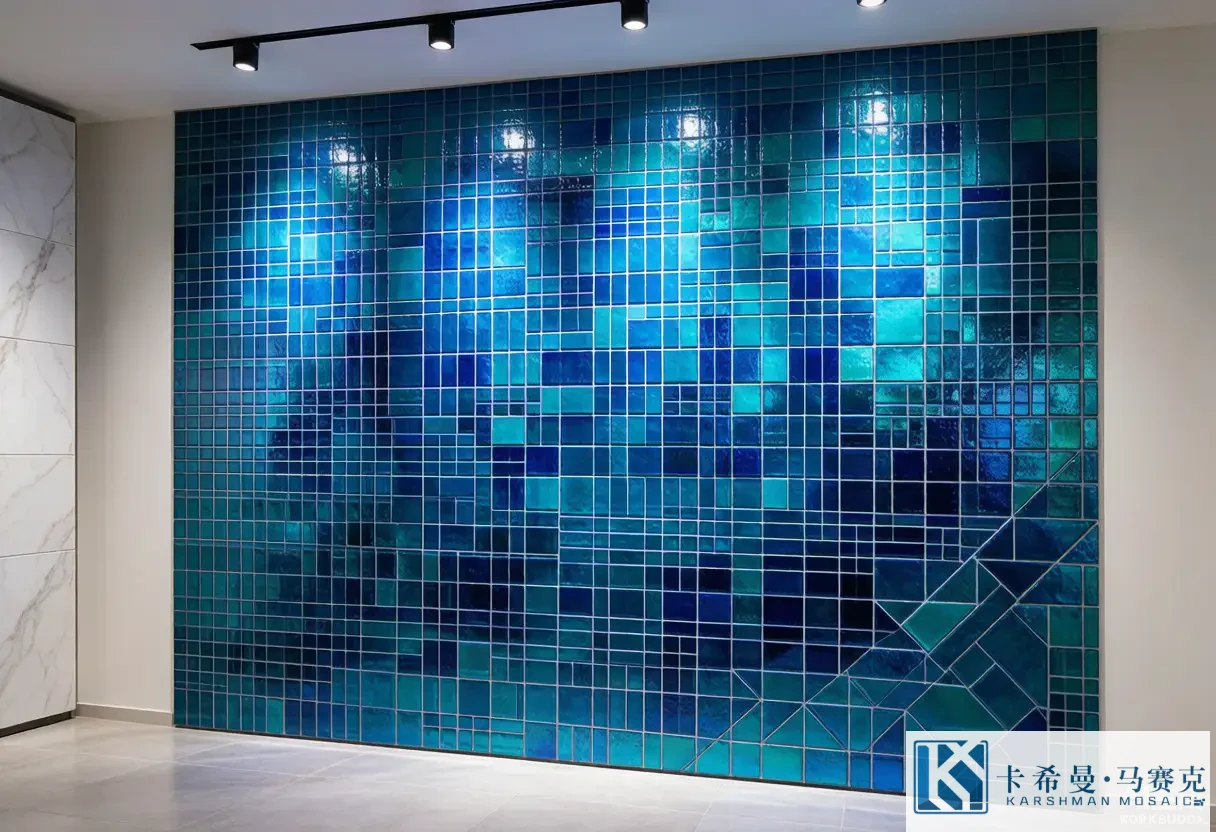
Iridescent and changeant glass
Glass tile with a shifting, light-dependent finish — often called iridescent or changeant — has become a staple of premium pools. The surface picks up the sky and the water, so the color appears to move as you walk past. It suits feature walls and waterlines where the play of light is the point, and it pairs well with calmer field tiles so the effect stays controlled rather than busy.
Large-format porcelain
Big porcelain tiles are popular for floors because they cut down the number of grout lines across a large surface. Fewer joints mean less cleaning and a more continuous look, which reads as modern and calm. Advances in printing let large porcelain mimic stone and concrete convincingly, so owners get a natural look with manufactured durability and consistent sizing.
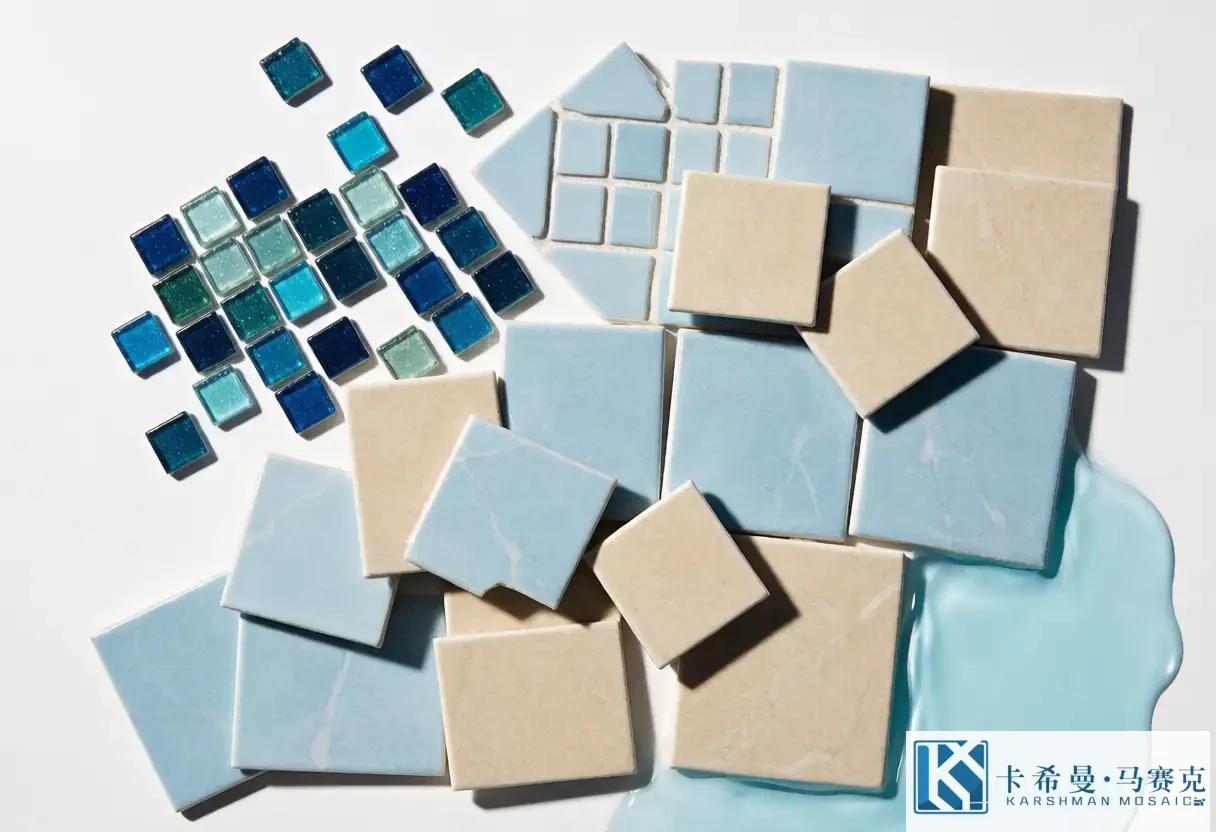
Mosaic blends and gradients
Rather than a single flat color, many current designs use blends: small glass mosaic squares mixed with matte porcelain, or a gradient that fades from pale aqua at the shallow end to deep navy at the deep end. These products give depth and a custom feel without a fully custom commission, and they photograph well for resorts and villas that market their pools.
Matte, textured and slip-rated finishes
There is clear demand for finishes that feel good underfoot, not just good to look at. Matte and lightly textured tiles are showing up on floors and steps where grip matters, often with a documented slip rating. This trend aligns with a broader move toward safer, lower-glare pool surfaces that still read as designed rather than utilitarian.
Neutral, resort and sand palettes
Alongside blue, neutral tones — sand, bone, soft grey and warm white — are gaining ground for a spa-like, resort mood. These palettes make the water the focus and age gracefully as trends shift. A frequent combination is a neutral floor with a single colored waterline band, which keeps the pool flexible if the surrounding decor changes later.
What to check before ordering
Whichever finish you favor, confirm the practical details: the frost and slip ratings for the intended zone, the sheet or tile size, the grout the maker recommends, and the lead time for the quantity you need. Trending products can sell out or shift shade between batches, so locking the batch and keeping spare stock is a sensible step for a large or phased build.
Mixed-material specification
A growing number of projects combine products rather than commit to one. A neutral porcelain floor with a glass waterline, or a stone coping with a glass feature wall, lets each material do what it does well. This mix also helps control cost: spend on glass where the eye lands, and use value ceramic or porcelain where it does not. The result reads designed rather than monotone.
Products built for easier care
Alongside looks, there is steady interest in tiles that stay clean with less effort — tighter joints, stain-resistant glazes and grouts formulated for pool chemistry. For commercial pools with high bather load, these practical products can cut routine labor meaningfully. When you compare options, ask how the surface and grout behave after a season of use, not just on day one.
Specifying for your market
The right product also depends on who uses the pool. Family and public pools lean toward slip-rated, hard-wearing finishes; boutique resorts may favor the drama of iridescent glass. Matching the product to the user, the climate and the maintenance team is what turns a trend into a sound specification.
The popular pool tile products today share a theme: controlled color, easy maintenance and a finish suited to where the tile lives. If you want to see current samples or discuss what fits your project, talk to our team about the latest glass, porcelain and blend options we stock.