
Specifying pool tiles is less about finding a single right product and more about matching the tile to the place it will sit. A waterline band, a pool floor, a spa wall and a feature all ask for different properties. This guide walks through the points that matter when you choose pool tiles for a new build or a renovation.
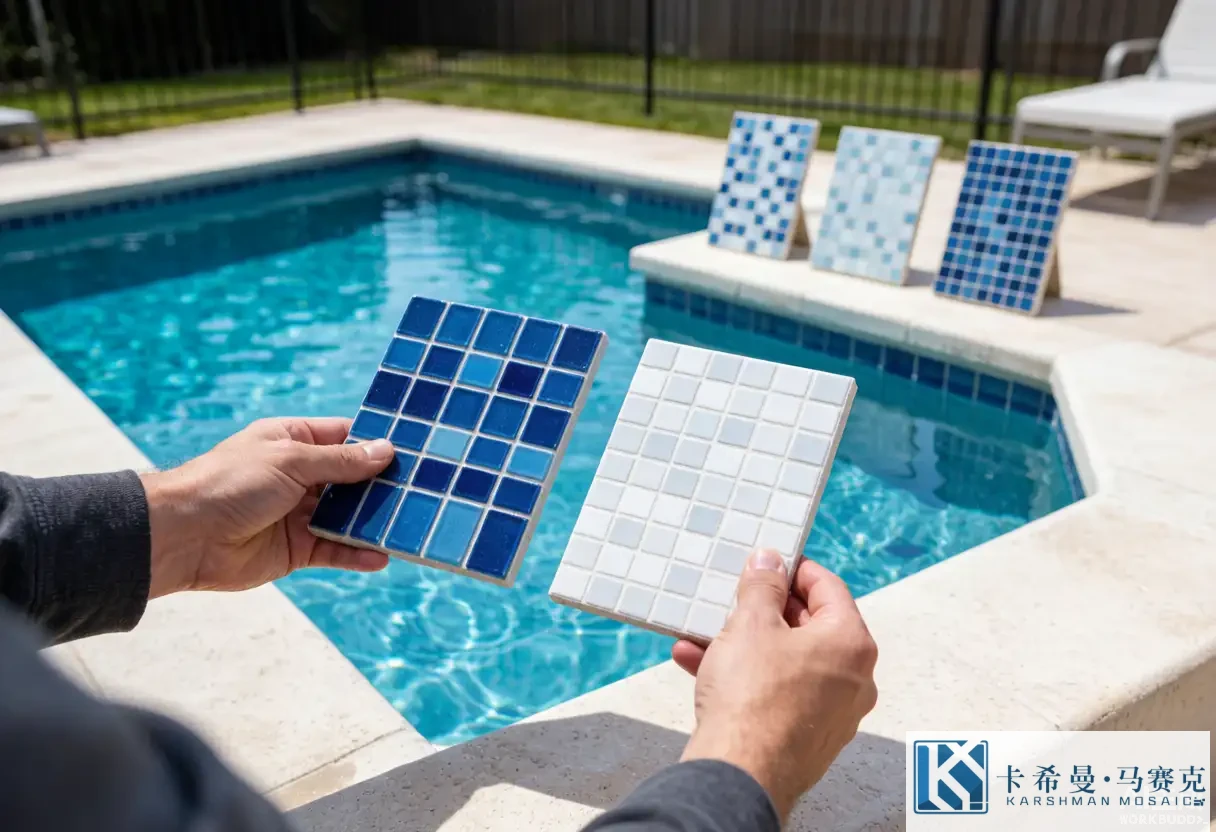
Start with the zone
Decide where each tile goes before you pick the look. Floors need grip and density, so a matte porcelain or a textured stone works well. Walls and features can carry glossy glass because nobody walks on them. The waterline — where the water meets the tile — takes heavy staining, so it rewards a low-porosity, easy-clean product and often a patterned band that hides the tide mark.
Size and format
Pool tiles come as small mosaic sheets and as larger field tiles. Mosaic sheets are flexible, follow curves and give the detailed look many resorts use; they also mean more grout to keep clean. Large-format porcelain covers a floor with fewer joints, which many owners prefer for a calm, modern surface. The format you choose shapes both the install time and the final feel of the pool.
Finish and slip resistance
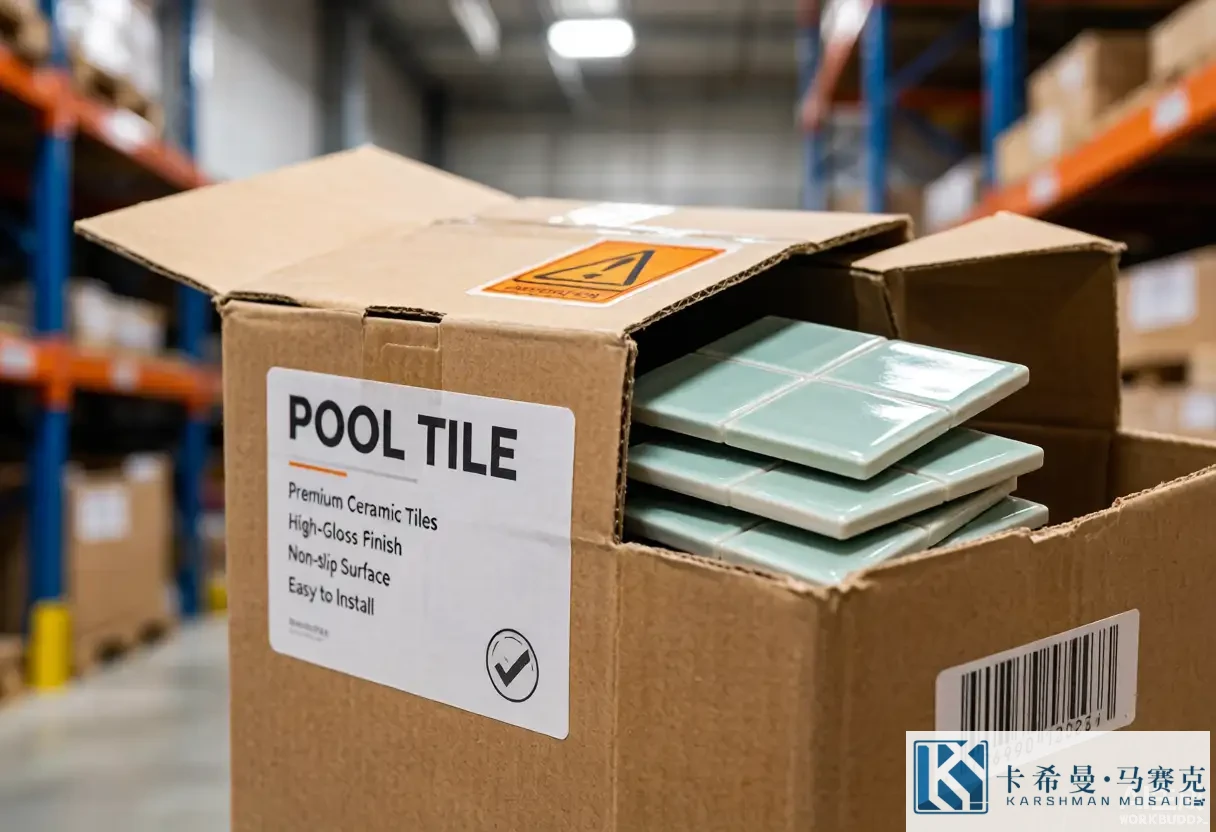
Finish affects safety as much as style. A matte or textured surface gives more footing on wet floors and steps, while a gloss finish reads brighter on vertical surfaces. For any area people walk on, check the slip rating and match it to the use. There is no need to make every surface matte — pairing a grippy floor with glossy walls is a common, practical combination.
Climate and frost rating
If the pool sits in a region with freezing winters, water absorption becomes a key number. A dense, low-absorption tile such as porcelain resists the damage that trapped water can cause when it freezes. In mild climates, ceramic and some glass products open up more options. Matching the tile’s rating to the local climate is a straightforward way to protect the investment over the years.
Color, light and quantity
Lighter tiles make a small pool feel larger and brighter; deeper blues and greens give a calm, resort mood. Order enough for the measured area plus a waste allowance for cuts and corners, and keep a spare box for future repairs so a discontinued shade does not leave a patch. Viewing a sample in the actual pool light, rather than under showroom lights, is a reliable way to confirm the color before committing to a large order.
Lean on samples and your supplier
Before a large order, ask for physical samples and lay them where the tile will actually go. A good supplier can also advise on sheet sizes, trim pieces and the grout that suits the product. Taking a little time at this stage prevents mismatched batches and surprises during installation, and it keeps the whole specification consistent from floor to coping.
Budget and phasing
Tile is only part of the cost; setting, grout and trim add up, and intricate mosaic takes more labor than large-format tile. If the budget is tight, spend on the areas that show and wear most — the waterline and the floor — and simplify the secondary walls. For a phased build, buy the full quantity up front so every batch matches, then install in stages; this avoids the shade drift that happens when a product is reordered months later.
Sample check before commitment
Colors shift under water and under different skies, so a showroom chip can mislead. Lay the shortlisted samples on the pool deck at midday and again in the evening, and look at them both dry and with a thin film of water. This simple check catches surprises that a catalog photo seldom will, and it is the cheapest point to change your mind.
Trim and edge pieces
Do not forget the pieces that finish the job: corner trims, coping edges and step nosing. Coordinating these with the field tile keeps the pool from looking pieced-together. Ask the supplier for the matching trim range up front, because a great field tile with mismatched edges can undermine the whole design.
Choosing pool tiles is a balance of location, safety, climate and look. If you want help turning these points into a shortlist, reach out to our team for samples and sizing advice matched to your project.