
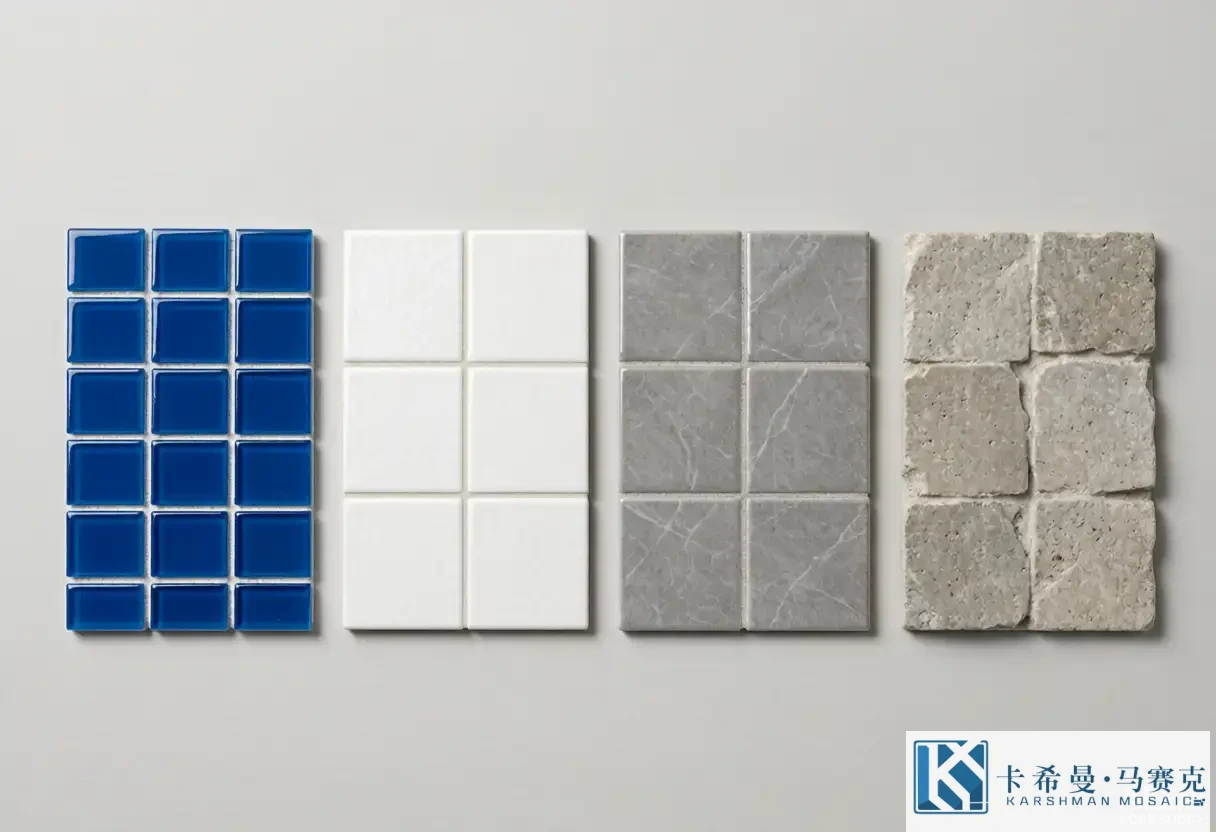
A swimming pool can be lined with more than one kind of tile, and the material you choose changes how the pool looks, how it wears, and what it costs to maintain. Rather than treating all pool tiles as the same product, it helps to compare the main options — glass, ceramic, porcelain and natural stone — and match each to the part of the pool where it will do its job.
Glass pool tile
Glass tile is valued for the way it holds and reflects light underwater. Because the color sits in the body of the tile rather than only on the surface, the blue reads deeper and shifts gently as the water moves. Glass is frost-proof and resists staining, which makes it a strong pick for waterlines, features and decorative bands. The trade-off is price: glass is usually the higher-cost option, and intricate mosaic sheets take more time to set than larger tiles.
Ceramic pool tile
Ceramic tile is a glazed product with a wide color range and a friendlier price. For mild-climate pools and wall surfaces it performs well, and the glaze gives a clean, easy-to-wipe finish. The body is less dense than porcelain, so it absorbs a little more water and is less suited to freeze-thaw exposure or heavy floor traffic. Many homeowners use ceramic for splash zones and accent areas where budget matters more than maximum density.
Porcelain pool tile
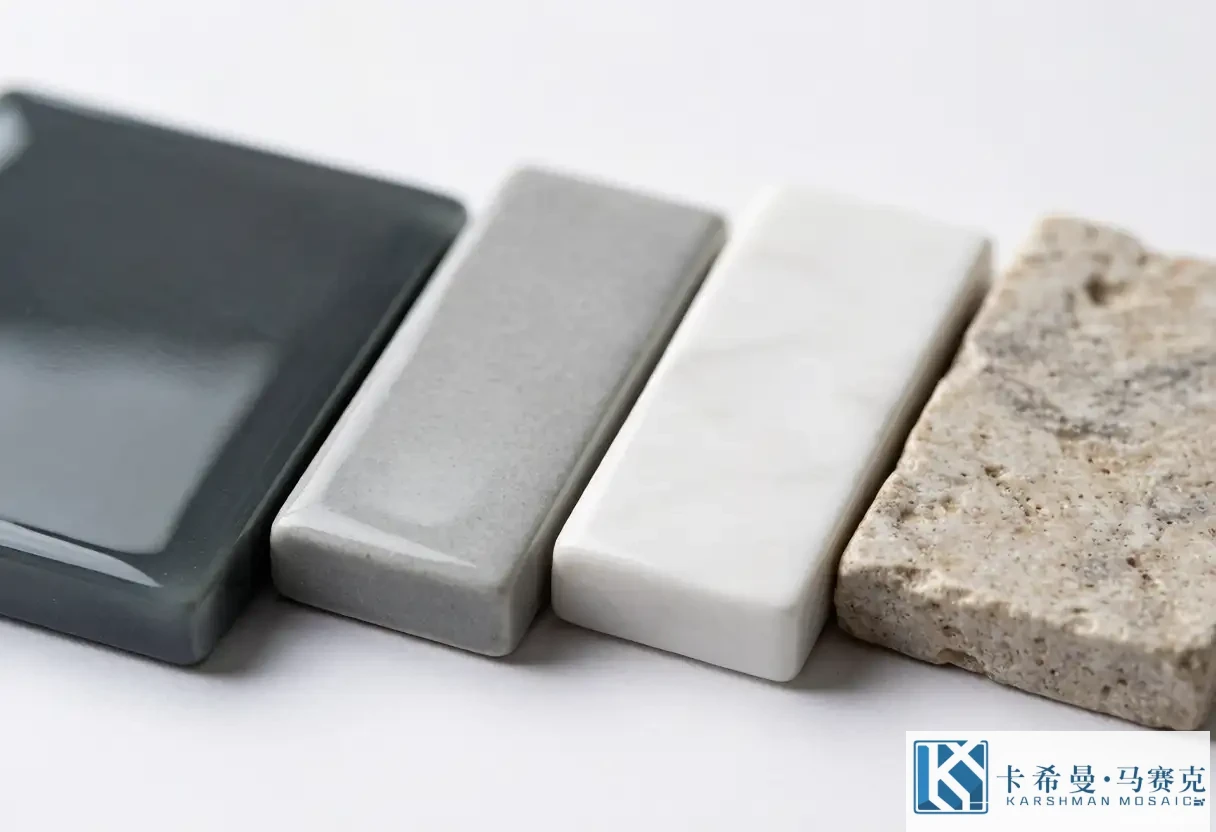
Porcelain is a dense, low-absorption tile that stands up to submerged use, foot traffic and cold winters. That durability is why it is a common choice for pool floors and for projects in regions with freezing conditions. Porcelain is also available in large formats, which can reduce the number of grout lines across a big floor. The surface can be finished glossy or matte depending on where the tile will sit, and the color stays stable over years of sun and chemicals.
Natural stone
Stone such as travertine, slate or granite brings a textured, warmer feel that manufactured tile seldom matches. The slightly uneven surface gives good grip underfoot, which is useful around steps and coping. Stone does ask for more care: it is porous, so it needs sealing and a maintenance routine to keep it from staining. For a resort or spa look, stone is a popular way to soften the hard edges of a tiled pool.
Reading the technical ratings
When you compare products on paper, two numbers matter: water absorption (lower is better for freeze resistance) and the slip rating for any walking surface. A supplier should be able to share these for each tile you consider. Matching the rating to your climate and to the tile’s location in the pool is a practical way to avoid problems later, and it also helps with local building requirements in some markets.
Mixing materials by zone
You do not have to use one material everywhere. A frequent approach is porcelain or stone on the floor for durability and grip, with a glass waterline band for color and a finished edge. Ceramic can fill secondary walls where the budget is tight. Planning the zones first — floor, wall, waterline, coping, feature — keeps the specification clear and helps the installer sequence the work.
Cost and lifecycle
Price follows the material’s density and finish work. Ceramic is usually the entry point, porcelain sits in the middle with stronger performance, glass carries a premium for its look, and natural stone varies widely by type and thickness. Beyond the sticker price, think about lifecycle: a denser tile often means fewer repairs and less frequent replacement, which can balance a higher upfront cost over the life of the pool.
A quick way to decide
If you want one practical rule: put durable, grippy material on every walking surface, reserve glossy glass for walls and features, and use a patterned waterline band to manage staining. That single habit covers most residential and commercial pools, and it leaves room to play with color through the glass rather than the structural tile.
Choosing among pool tile materials comes down to where each tile will sit and what you want it to deliver over time. If you are specifying a build or renovation, contact our team for material samples, slip and frost ratings, and sheet sizes that suit your pool’s layout.