
Glass mosaic is a versatile surface material, and its use at home goes well beyond a single splashback. Because the tiles are small, they wrap around curves, sit flat on uneven walls, and let you build detailed patterns that larger tiles cannot. This guide looks at the residential spaces where glass mosaic works well and how to plan each one.
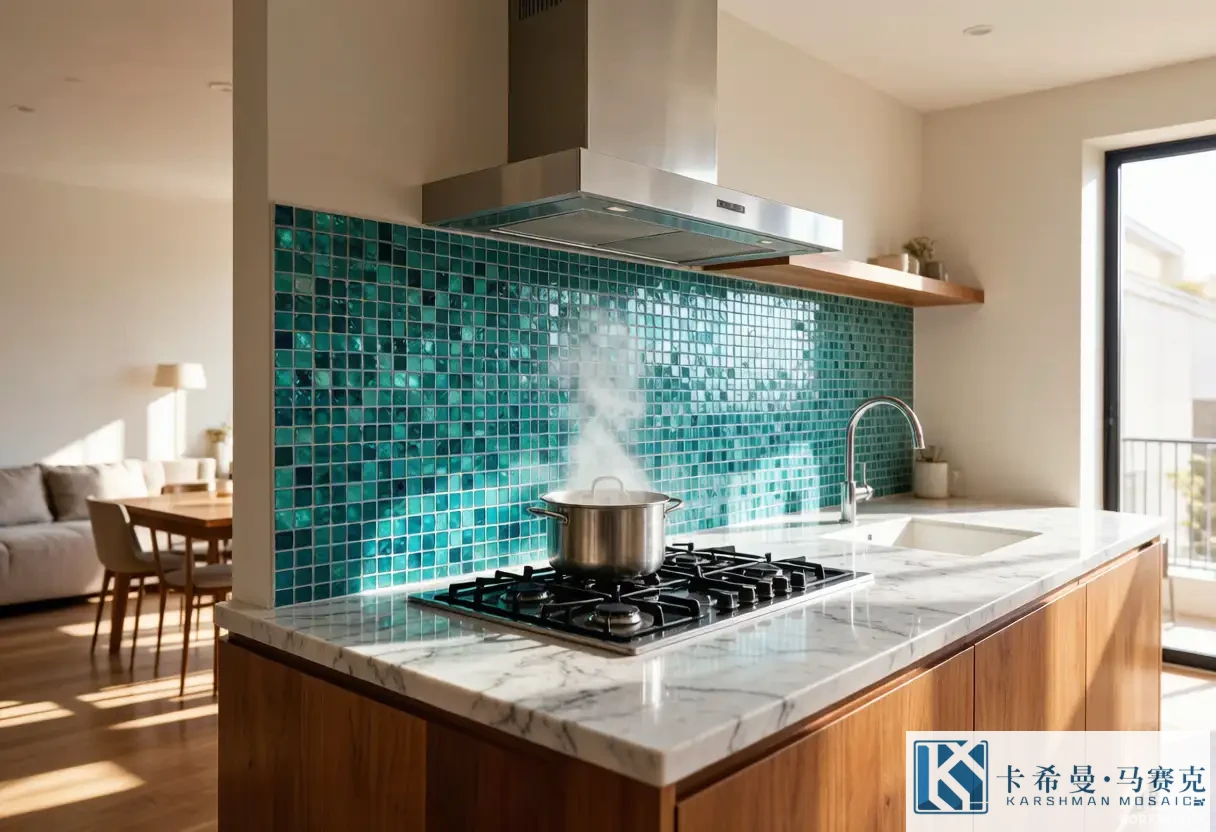
Kitchen backsplashes
The kitchen is the classic place to use glass mosaic. Behind a cooktop or sink, a mosaic band adds color and texture without overwhelming the room, and the glossy surface wipes clean of grease and splashes. A common approach is a full-height splash of one color behind the hood, or a thinner border that ties the cabinet and counter finishes together. Keep the field tile calm if the mosaic is busy, so the wall stays a feature rather than a distraction.
Bathroom walls and showers
Bathrooms suit glass mosaic because the material handles moisture and the small format follows the shape of a shower niche, a curved wall or a tiled vanity. A full mosaic wall behind a basin reads as a designed focal point, while a band at eye level adds interest to an otherwise plain tiled room. For wet areas, choose a grout rated for damp use and keep the joints even so the surface stays easy to maintain.
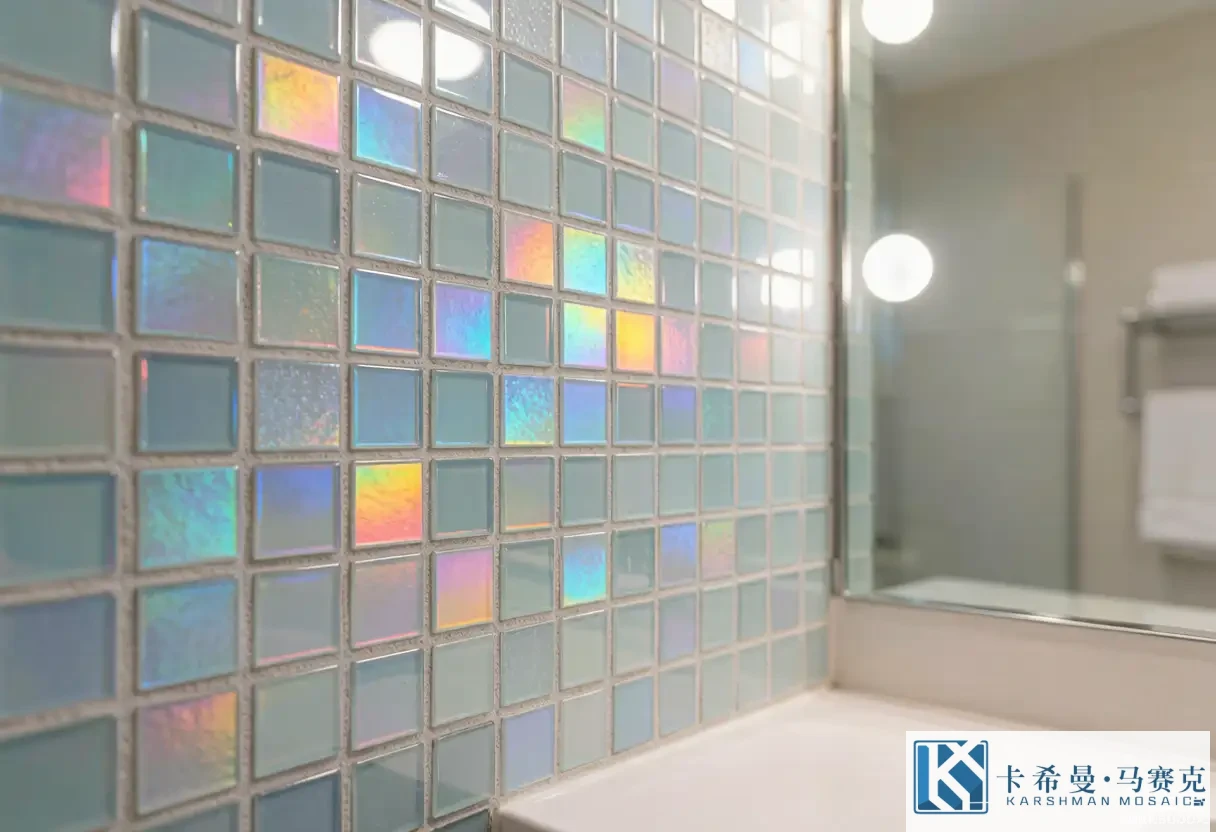
Fireplace surrounds
A fireplace surround is a strong candidate for glass mosaic because it sits in the living room where guests look, yet it stays dry and warm rather than wet. Mosaic here can frame the opening with a pattern, or cover the whole surround in a color that catches the firelight. Since there is no water concern, the main planning points are the heat rating of the adhesive and a finish that complements the room’s other materials.
Feature walls and accents
Beyond kitchens and bathrooms, a single accent wall in a hallway, dining room or home office gives a room a custom feel. Glass mosaic reflects light, so it can brighten a dim corner or add depth to a plain wall. Use it sparingly: one wall, not four, keeps the effect intentional. Pair a strong mosaic with neutral surrounding surfaces so the color reads clearly rather than competing with busy decor.
Floors and steps
Glass mosaic on floors is possible but needs thought. The small tiles can be slippery when wet, so reserve them for dry, low-traffic areas or use a textured, matte finish where footing matters. A frequent use is a mosaic inset in an entryway or a decorative panel on a stair riser, where the material shows without becoming a walking surface. If the floor will see water, a slip-rated product is the safer pick.
Planning the color and pattern
Residential mosaic reads strongest when the color connects to something already in the room — a cushion, a countertop, a piece of art. Blends of two or three close tones give depth without a hard pattern, while a single contrasting color makes a bold statement. Before committing, lay a sample sheet where it will sit and view it in morning and evening light, because glass shifts tone as the room’s light changes through the day.
Installation and care notes
Glass mosaic comes on mesh-backed sheets that speed up setting, but the backing and the adhesive should suit the surface — a flexible adhesive for a plaster wall, a waterproof one for a shower. Grout color changes the whole look: a matching grout hides the joints for a smooth field, while a contrasting grout emphasizes the grid. Routine care is simple — a pH-neutral cleaner and a soft cloth — which keeps the surface clear without dulling the glass.
Where to start
A practical way to begin is to pick one wall that lacks interest and treat it as a sample project. A backsplash or a vanity splash is small enough to manage and gives a clear sense of how the material behaves. From there, you can extend the same color or pattern to other rooms for a coherent home scheme.
Glass mosaic applications at home reward a little planning, because the same material can read as calm, bold or playful depending on where and how you use it. If you want samples or help matching a palette to your rooms, contact our team for swatches and sheet sizes suited to your project.