
Where water meets a wall, glass mosaic is a frequent choice because the material is non-porous, color-stable and easy to keep clean. That makes it a strong fit for wet rooms, showers, spas and decorative water features. This guide covers how to use glass mosaic in these damp settings and what to get right so the surface lasts.
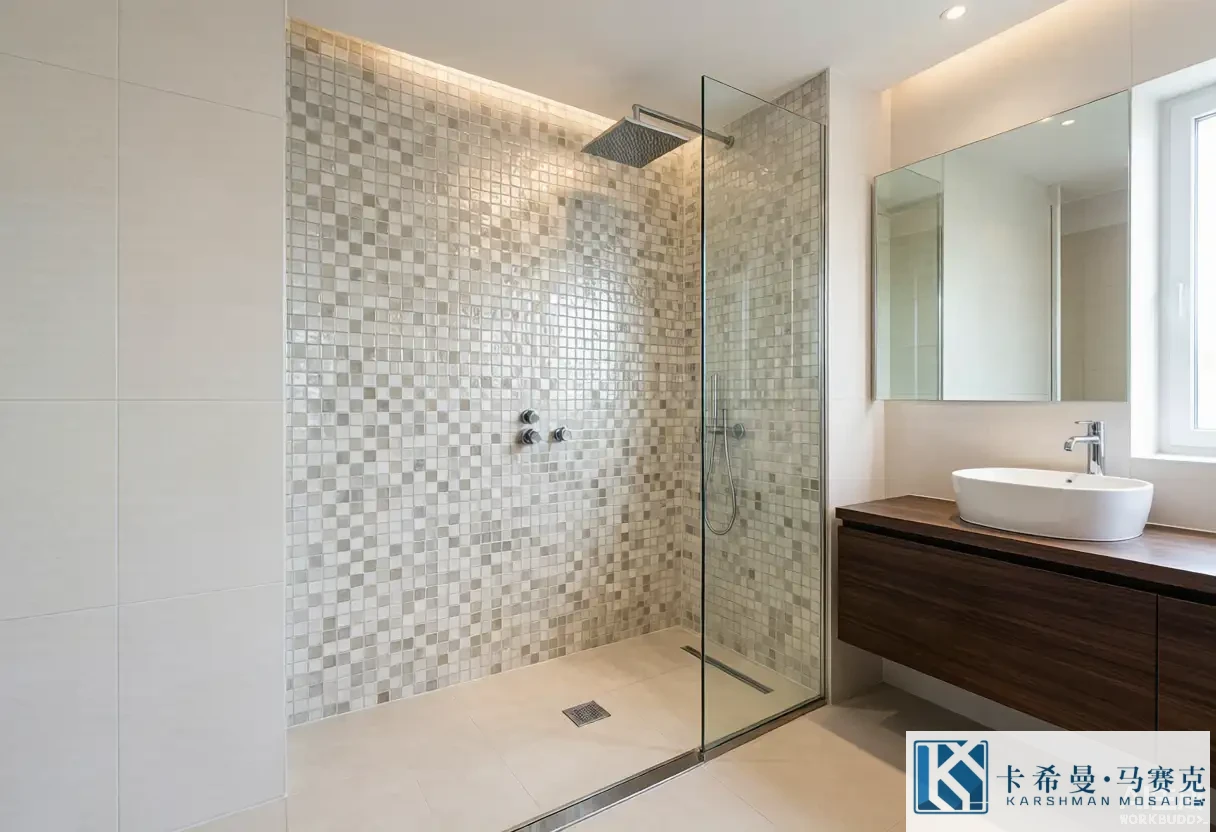
Wet rooms and shower enclosures
A wet room treats the whole space as a shower, so every surface is exposed to water. Glass mosaic works here because the small tiles follow the slope and the falls of the floor, and the glossy face sheds water rather than soaking it up. Cover the walls and the floor tray in the same mosaic for a seamless look, and plan the fall toward the drain carefully so water does not sit in a corner. A contrasting grout line can also act as a subtle wayfinding edge underfoot.
Steam rooms and spas
Steam and warmth are harder on finishes than a quick shower, so the build-up matters as much as the tile. Use a waterproof adhesive and a grout rated for continuous moisture, and let the substrate dry fully before the tile goes on. Glass handles the humidity without warping or fading, which keeps a spa calm and bright through heavy daily use. Soft blues and greens suit the mood, while a single accent band adds interest without clutter.

Indoor and outdoor fountains
Fountains are where glass mosaic shows its decorative side. A basin or a feature wall clad in mosaic turns moving water into a designed element, and the tile’s reflectivity makes the surface shimmer as the water flows. For outdoor fountains, choose a frost-resistant tile and a grout that copes with freeze-thaw if the climate calls for it, and seal the edges so water does not track behind the panel. Indoor fountains are simpler but still benefit from a waterproof backing.
Pool edges and spas (brief)
Although pools deserve their own detailed guides, it is worth noting that the same glass mosaic used on a pool wall can extend into an adjacent spa or raised spa lip, giving a continuous material story. Matching the pool and spa tile keeps the whole leisure area coherent and simplifies the spare-tile stock for future repairs.
Choosing the finish for damp use
In wet areas the finish affects both safety and upkeep. Gloss tiles read brighter and shed water readily, but they can be slick underfoot, so reserve them for walls and vertical faces. For floors and steps, a matte or textured glass with a documented slip rating is the sensible choice. The right finish depends on where the tile sits, not on a single rule for the whole room.
Grout and sealing
Grout is the weak point in any wet mosaic, so specify a product made for submerged or continuously damp use and keep the joints uniform. A matching grout gives a smooth field; a contrasting one emphasizes the pattern. Either way, periodic resealing of the grout lines in a fountain or steam room extends the life of the installation and keeps the color of the tile clear rather than clouded by stained joints.
Cleaning and routine care
Glass mosaic stays clean with a gentle routine: a soft brush or cloth, a pH-neutral cleaner, and a rinse to remove any residue. Avoid abrasive pads and strong acids, which can dull the surface or break down the grout over time. For fountains, a seasonal clean of the basin and a check of the backing prevents algae and staining before they set in, which keeps maintenance light.
Planning a water-feature project
Start with the water path: where it lands, where it flows and where it sits. Tile the dry-to-wet transition first and confirm the fall before covering large areas. For a fountain or spa with a custom motif, build the pattern on a sample board and view it with water moving, because a static dry sheet can mislead about how the finished piece will read in motion.
Glass mosaic for wet rooms and water features rewards careful specification of the tile, the grout and the finish together. If you are planning a shower, spa or fountain, contact our team for damp-rated samples, slip data and sheet sizes suited to your build.