
Commercial interiors ask more of a surface than a home does: higher footfall, stricter cleaning, and a look that reads well in photos and under artificial light. Glass mosaic meets several of those demands at once, which is why it shows up in hotels, restaurants, spas and retail. This guide covers where it earns its place and what to specify for a busy venue.
Hotel lobbies and receptions
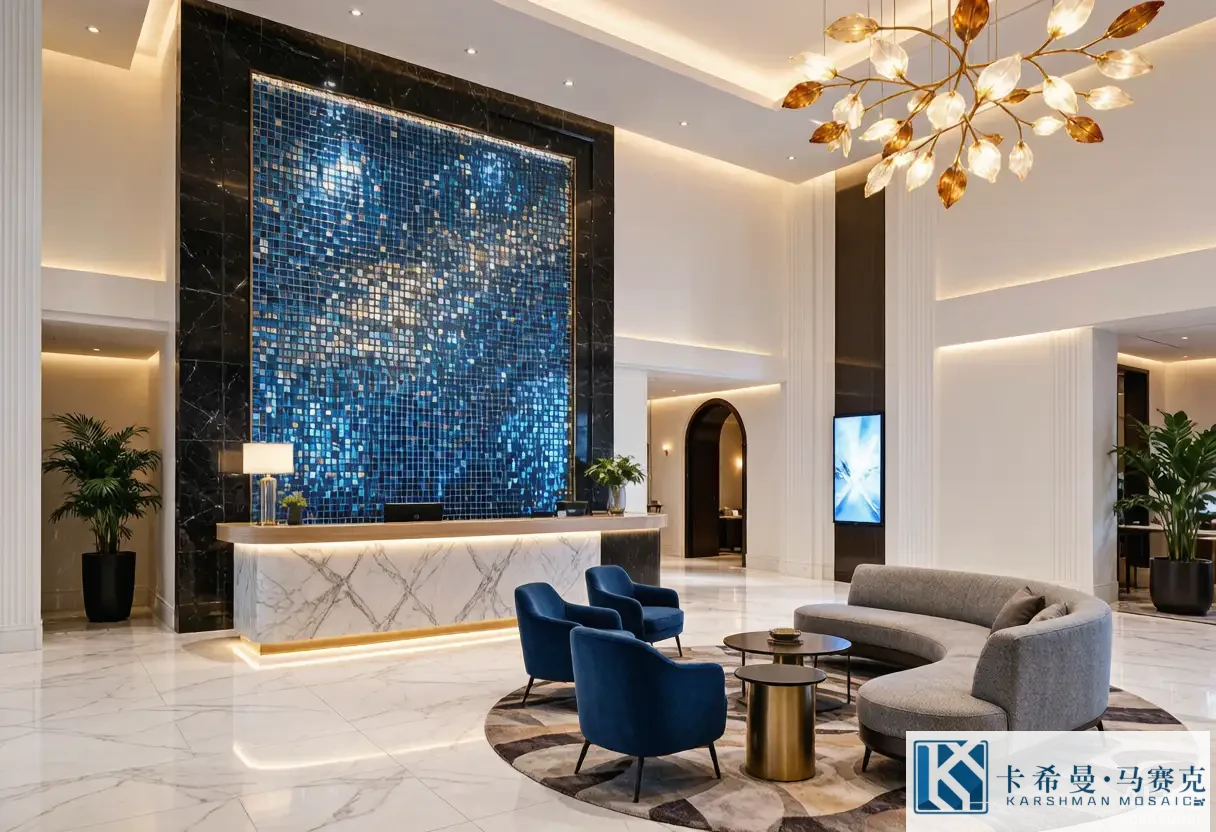
A lobby is a hotel’s first impression, and a large glass mosaic feature wall behind the reception desk delivers color and texture that photographs well for marketing. Because the tiles are small, the pattern can curve with the architecture and include a logo or a subtle motif. Specify a durable, easy-clean glass and a grout that resists the constant wiping a public wall receives, and keep the lighting even so the surface does not read patchy.
Restaurants and bars
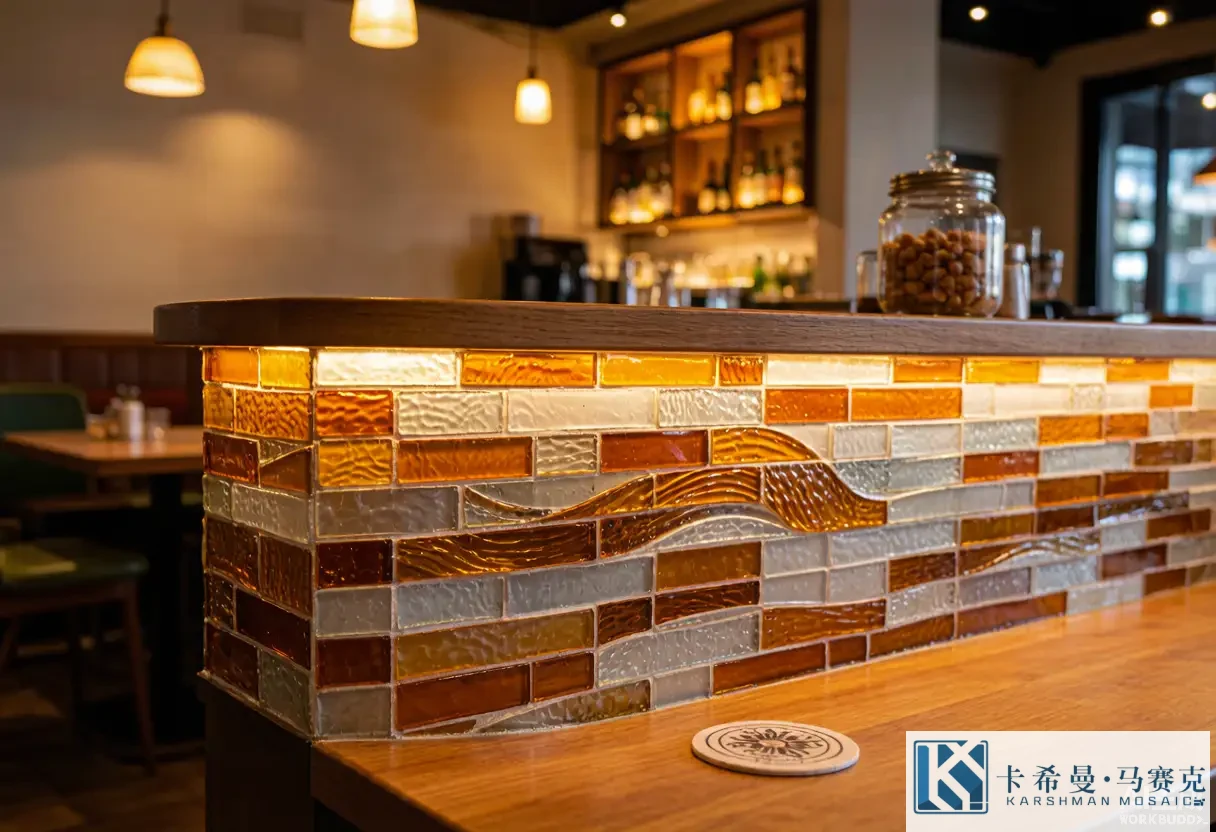
In food and drink venues, glass mosaic works on bar fronts, feature walls and back-of-house splash zones. A bar wrapped in a wave or gradient pattern becomes a talking point, while a kitchen splash benefits from the material’s wipe-clean surface. For areas near food, check that the tile and grout meet the hygiene standard the venue operates under, and avoid very glossy finishes where reflection could bother staff or diners.
Spas, salons and wellness
Wellness spaces use glass mosaic in treatment rooms, steam areas and relaxation zones, where the calm color and reflected light support the mood. The material copes with humidity, so it suits steam rooms better than many painted or wallpapered finishes. Plan the adhesive and grout for a continuously damp environment, and favor soft, cool palettes that read as restful rather than busy.
Retail and display
Shops and showrooms use mosaic to frame a product without competing with it. A neutral mosaic behind a display lets merchandise stand out, while a branded color band reinforces identity at the entrance. Because retail lighting is controlled, the reflectivity of glass can be tuned with the finish — matte for a subtle sheen, gloss for a brighter pop — so the wall supports the merchandise rather than stealing attention.
Pools and wet leisure (briefly)
Many commercial sites combine a spa or hotel with a pool, and glass mosaic is a natural link between the wet and dry spaces — the same tile language can run from the pool wall into the adjacent lounge. This continuity helps a venue feel designed as one scheme rather than a set of separate rooms, and it simplifies the material list for procurement.
Durability and maintenance
Busy venues need surfaces that survive daily cleaning. Glass resists staining and does not fade under UV or cleaning chemicals the way some prints can, which keeps a feature wall looking current for years. Specify a commercial-grade grout and a maintenance routine that uses non-abrasive cleaners, and build in access for periodic deep cleaning of high-touch areas such as bar fronts and reception backs.
Slip and safety ratings
Where mosaic meets a floor or a step in a public building, slip rating becomes a compliance point, not just a preference. Choose a textured or matte glass for walking surfaces and document the rating for the venue’s safety file. Keeping glossy, reflective mosaic on walls and vertical features is a simple way to get the look while meeting floor-safety expectations.
Procurement and consistency
For a multi-room or multi-site rollout, lock the batch and order enough for the whole project plus spares, because shade can shift between production runs. A single approved sample, held by the operator, keeps every installer aligned and prevents the mismatched panels that are hard to fix once a venue is open. Working from one specification also speeds up reordering for later phases.
Glass mosaic in commercial spaces pays off when the material, the rating and the lighting are specified together rather than chosen separately. If you are fitting out a venue, reach out to our team for commercial-grade samples, slip and hygiene data, and sheet sizes matched to your drawings.