
Mosaic tile is not only an indoor material. With the right product it also performs outdoors, where it can dress a patio wall, edge a garden path or clad a planter. The key is to choose tile and setting materials rated for weather and foot traffic. This guide covers practical outdoor mosaic applications and what to get right before you start.
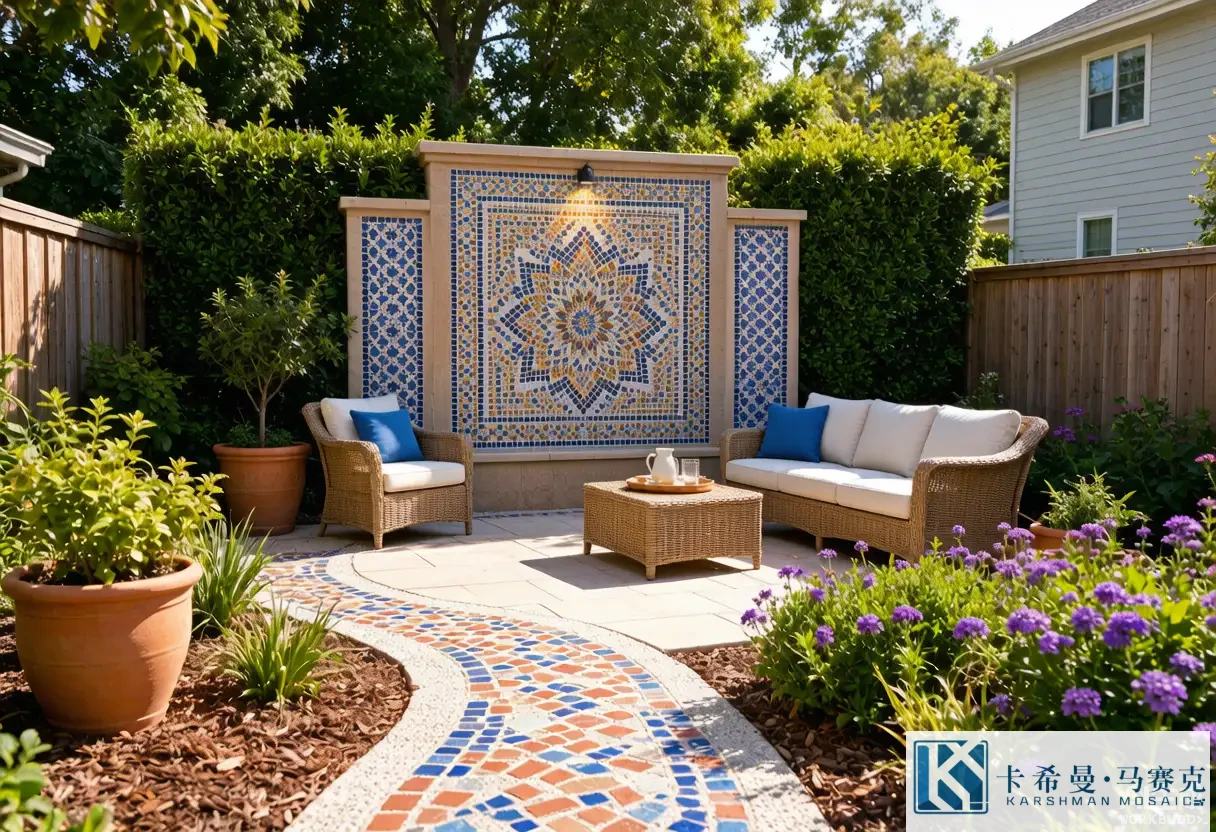
Patio feature walls and facades
A courtyard or patio wall is a natural place for outdoor mosaic. A feature wall behind a seating area adds color that reads well in daylight and pairs with planting. Because the tiles are small, the pattern can follow an uneven or curved wall, and a simple band or motif gives the space a finished look. Use a tile with low water absorption and an exterior-grade adhesive so the surface copes with rain and sun without lifting.
Garden paths and step edges
Mosaic works on flat, walked surfaces too, provided the finish gives grip. A path border or a step nosing in mosaic adds a crafted edge to a garden route, and a textured or matte tile keeps the surface safe underfoot when wet. Keep glossy, reflective tile on vertical faces and reserve slip-rated finishes for anything people walk on. Plan the fall so water runs off rather than pooling on the pattern.
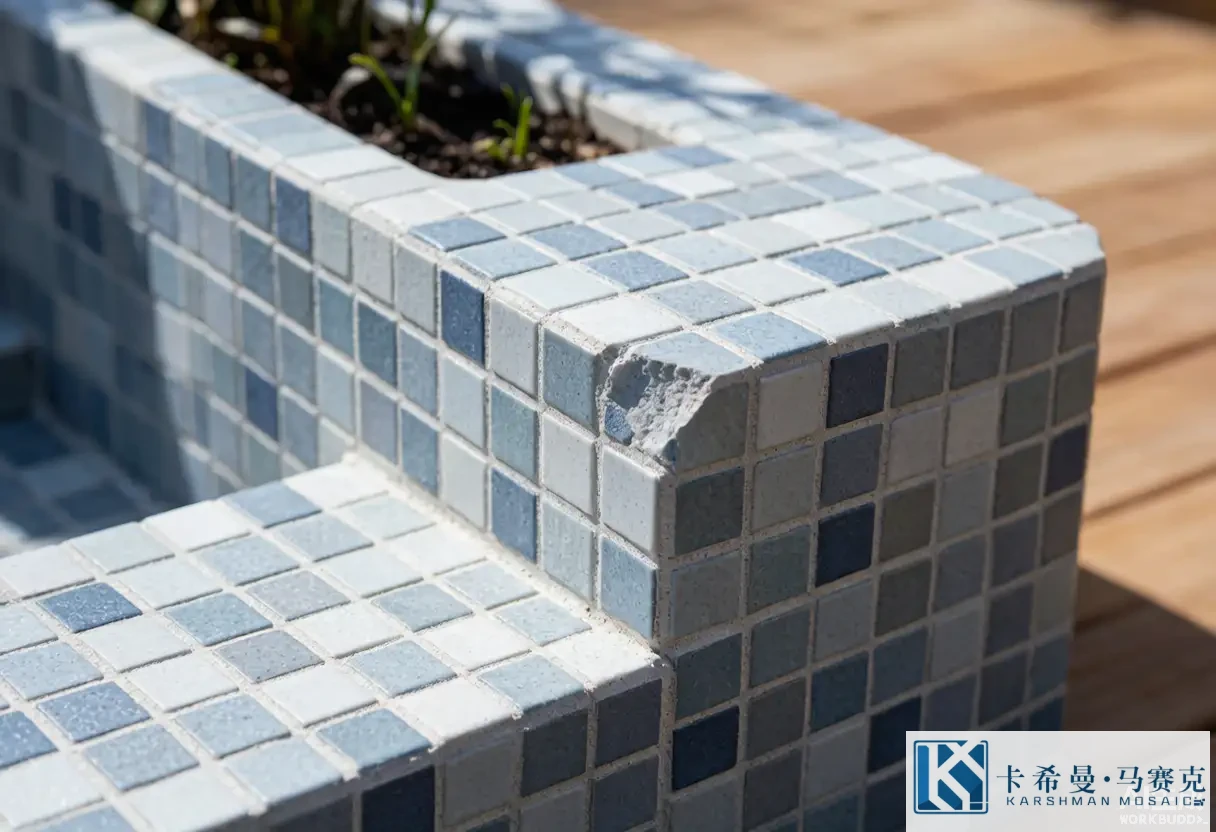
Planters, risers and water features
Low planters, retaining-wall caps and stair risers are small surfaces where mosaic shows without becoming a maintenance burden. A planter edge clad in tile resists scuffs from tools and boots, and a riser panel adds a detail that reads as designed rather than functional. For any outdoor water feature, use a frost-resistant tile and a waterproof backing so freeze-thaw cycles do not crack the panel.
Choosing outdoor-rated products
Outdoor use demands more from the materials than a dry interior. Look for low water absorption (porcelain and glass score well), a slip rating for any walked surface, and an exterior adhesive and grout rated for the local climate. In regions with freezing winters, frost resistance is a practical requirement rather than a nice-to-have, because trapped water expanding in a joint can damage the work.
Planning color and pattern outside
Outside, light is stronger and shifts through the day, so a color that looks right indoors can read differently in the garden. Earthy terracotta, stone and sand tones sit naturally with planting, while a blue or green band can pick up the sky or a pool. A blend of two close tones gives depth without a hard pattern, and a sample laid on the actual wall at midday confirms the read before you commit.
Installation and weather
Set outdoor mosaic on a stable, clean substrate and let it cure in dry conditions before the weather turns. Exterior adhesive and a flexible grout handle movement from temperature changes better than interior products, and sealing the grout lines reduces staining from soil and leaf debris. Build in a slight slope on any horizontal surface so water drains, and protect fresh work from rain until the adhesive has set.
Care through the seasons
Outdoor mosaic is low-care but not no-care. A seasonal rinse clears pollen and dirt, and a check of the grout each spring catches any joint that needs topping up. Avoid harsh acids that can dull the tile or break down the grout, and clear leaves from low edges before they stain. With that light routine, a garden mosaic keeps its color for years.
Around a pool, mosaic on the deck edge or the coping band links the water and the surround and gives a finished, slip-aware edge. Use a frost- and slip-rated tile here because the surface sees water and bare feet, and keep the pattern simple so it reads at a glance from across the garden. This is a natural extension of the patio work above, and it keeps the material story consistent from lounge to water.
Lighting the surface
Outdoor mosaic shows well with the right light. A warm downlight on a feature wall brings out the tile’s depth in the evening, while low path lights make a mosaic step edge safer after dark. Because glass reflects, a little light goes a long way, so aim fixtures to wash the wall rather than glare into seating areas. Plan the lighting with the tile so the two read as one scheme.
Mosaic tile for outdoor spaces rewards a careful choice of weather-rated products and a sensible split between walls and walked surfaces. If you want samples or help matching a frost-resistant tile to your climate, contact our team for exterior-rated options and sheet sizes suited to your project.