
In a hotel or a resort, the pool is part of the product. Guests judge the property by it before they ever swim, and the surface has to survive constant use, daily cleaning and the occasional knocked glass. Glass mosaic handles both jobs, looking considered and standing up to wear, which is why specifiers keep reaching for it in spaces where image and durability pull in the same direction. The difference from a backyard is scale and traffic: a public pool is cleaned harder and seen by more eyes, so the spec has to be tighter.
The waterline at volume
On a commercial pool the waterline does the same job as at home, hiding the mark the water leaves, but the mark builds faster with more swimmers. A tonal band in a mid blue is the safe commercial pick because it hides the line and stays calm under venue lighting. A contrasting white band looks crisp in photos but shows every splash, so it needs a cleaning routine the staff will actually follow. We suggest naming the cleaning method in the brief, not just the tile, because a band is only as good as the wipe it gets.
Feature walls and the infinity edge
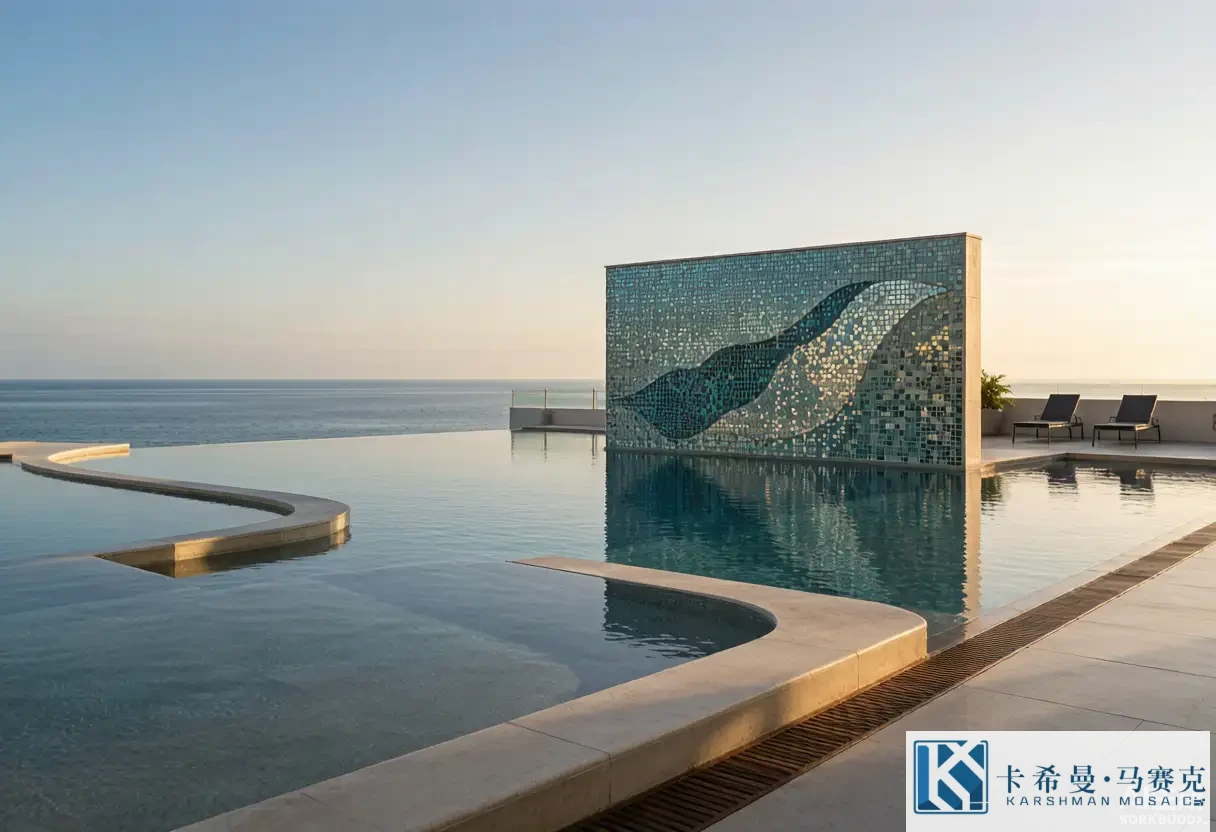
A mosaic feature wall behind an infinity pool, or a band along the vanishing edge, gives a resort an identity that paint or a single material rarely achieves. Because the tile is small, a broad wall reads as one surface rather than a grid, and the color can be tuned to the brand without a custom print. For a boutique property especially, that identity is often the difference between a pool people photograph and one they forget. The brief should name the wall, the color, the finish and the lighting as one decision, because a finish that sings under one scheme can fall flat under another.
Decks, coping and the lounger zone
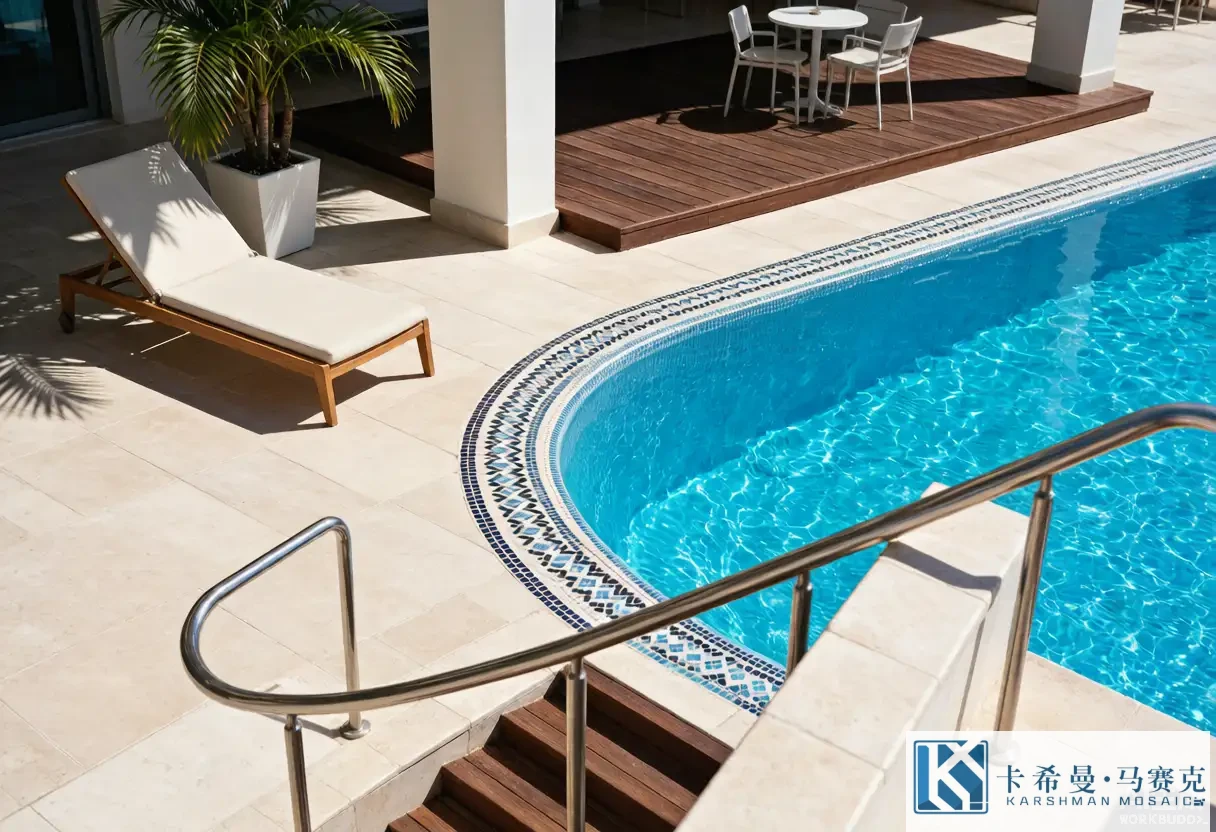
Around the pool, a mosaic border along the coping ties the water to the deck and gives the eye a finished edge. In a commercial setting where the deck is the main entertaining space, that edge is what guests see from their lounger, so a considered border does more for the look than a plain tile would. Keep it tonal with the waterline so the two read as one system. On the deck itself, use a textured or matte tile anywhere feet walk, and save glossy finishes for the walls where they belong, because a slick deck is a liability a property doesn’t want.
Durability under daily cleaning
Commercial pools clean harder and more often than homes, and the tile has to keep up. Glass mosaic, set with the right adhesive and a pool-grade grout and sealed on schedule, resists the marks that come from constant wiping and the chemicals in the water. Specifying the rated system, not just the pretty tile, is what keeps a wall looking new after a busy season rather than tired by the next. Ask the supplier for the absorption grade and the backing type; a spec with those lines is one you can stand behind when the maintenance lead questions the bill.
Lighting as part of the spec
In a resort, lighting is designed, not incidental, and glass responds to it strongly. Warm spots bring out glow; cool light keeps it crisp; a grazing light across a textured wall adds depth. We suggest deciding the light source before the tile is fixed, because an evening pool and a noon pool are different surfaces. Treat the two as one decision and the result is steadier, and steadier is what a property that photographs for a living needs.
Maintenance for the staff
A finish is only as good as the cleaning it gets, so the brief should include a simple routine the staff can follow. Wipe the waterline the same day, a weekly mild wash of the tiled areas, and reseal the grout on the maker’s schedule. Keep a note of the exact products and the grout color for future repairs, because a property that trains its cleaners on the right method protects the wall without extra cost. The commercial pools that still look fresh after years are usually the ones maintained with steady care, not the costliest build.
Where the budget goes
Glass mosaic in a commercial job costs more than paint and more than basic tile, and the labor rises with the detail of the pattern. You can keep it contained by limiting mosaic to the waterline, the feature wall and the coping, and using plainer materials on the broad deck, which still delivers the identity without wrapping the whole pool deck. For a property where the pool drives bookings, a focused mosaic wall often pays back in the way guests perceive the place, which is hard to measure but easy to feel in the reviews.
A boutique resort we worked on
A small resort asked us for a pool that guests would remember without a big build. We clad the infinity-edge wall in a single tonal field of glass mosaic in a deep teal, lit by a warm grazing light, and left the rest of the deck in pale stone. The wall became the backdrop for half the guest photos, and the owner later said it did more for the brand than any ad spend. No extra rooms, no extension, just one surface done with intent. That’s the whole case for a commercial mosaic wall: less risk, less cost, and often more comment than a larger build.
A short specification checklist
For a commercial pool mosaic, name the zones first, then the color and finish, then the rated adhesive and grout, then the lighting, then the cleaning routine. Approve a laid sample under the venue’s own light before the order, and keep a carton of spares matched to the batch for future repairs. A checklist like this keeps the project on track and the result close to what was approved, which matters more in a venue that opens to the public than in a private home.
Slip and the public standard
Public pools carry a duty of care that a backyard doesn’t. Any tiled surface guests walk on should use a textured or matte finish, and the spec should name the slip rating for wet barefoot use and follow it. A rating exists for a reason, and ignoring it trades a short-term look for a long-term hazard a property can’t afford. We’d rather see a safe deck in a calm tone than a bold one that fails the slip test, because a claim costs more than a tile.
Common commercial mistakes
The patterns are predictable. A property mosaics every surface and the pool tires the eye. A waterline uses a wall-grade tile not rated for the splashes it takes. A grout is chosen for color alone and fails under daily cleaning. A deck uses a glossy tile and someone slips. Each is avoidable with the right product named in the plan and a tiler who has set commercial pool mosaic before, not just residential work.
What you’re specifying
Commercial pool mosaic is the same idea as residential, small glass pieces on a backing, but the grading and the setting system matter more because the traffic is higher and the cleaning is harsher. The color runs through the body, so it doesn’t fade under daily scrubbing, and a well-graded sheet keeps the wall even across a large area where a shade gap would show for meters. Ask the supplier for the absorption grade and the backing type; a spec with those lines is one the maintenance team can work with and the owner can trust.
Glossy, matte or iridescent at scale
At venue scale, finish choice sets the mood. Glossy and iridescent catch spotlights and feel lively, good for feature walls and the edge. Matte reads calm and hides marks, good for broad walls and any walking surface. A mix can work if one finish leads and the other supports, but a pool that combines three finishes often looks busy under venue lighting. Pick the lead finish first and build around it, and the property will read designed rather than decorated.
Phasing a renovation around a season
A commercial pool can’t close for long, so the tiling has to fit the property’s slow weeks. We plan the waterline and feature wall for the shoulder season, when occupancy drops, and phase the deck border around the same window so the pool reopens before the next peak. A tiler who sets commercial mosaic can work in sections, draining and refilling a bay at a time, which keeps the pool partly open and the guests happier. The brief should name the open dates before the order, because a property that closes in high season loses more than the tile costs, and a plan that respects the calendar is the one that gets approved.
Looping in the brand or design team
In a hotel, the pool color is often the brand color, so the brief should reach the design or marketing team before the tile is fixed. A mosaic wall in the wrong blue reads as a mistake in every guest photo, and a mistake at venue scale shows for meters. We suggest a laid sample approved by both the maintenance lead, who cares about cleaning, and the brand lead, who cares about the look, so the wall serves both. A sample signed off by both sides prevents the late argument that delays the open and costs the season.
Warranty, spares and the maintenance file
For a property, the file matters as much as the tile. Keep a carton of spares matched to the batch, the grout color and the exact product names, and hand them to the maintenance lead with the cleaning routine. A repair years later is invisible when the original is documented, and a mismatch is the thing guests notice from the lounger. Ask the supplier for the warranty terms in writing and note the absorption grade and backing in the file, so a future claim rests on facts rather than memory. A property that files the build properly protects the look long after the installer has left.
If you’re specifying pool mosaic for a hotel or resort and want to compare ranges under commercial lighting, contact our team for sample boards, technical details and current lead times.