
Most people think of pool mosaic as decoration, and it is that, but in a backyard pool it does a few jobs that plain plaster can’t. The tile line hides the mark the water leaves, the floor color sets the whole mood of the water, and the steps and benches become safer to see. We’ve watched a tired plaster pool turn into the thing a family actually uses after a weekend of tiling the waterline alone. That’s the realistic pitch: mosaic earns its keep in specific spots, and knowing those spots is most of the work.
The waterline does the heavy lifting
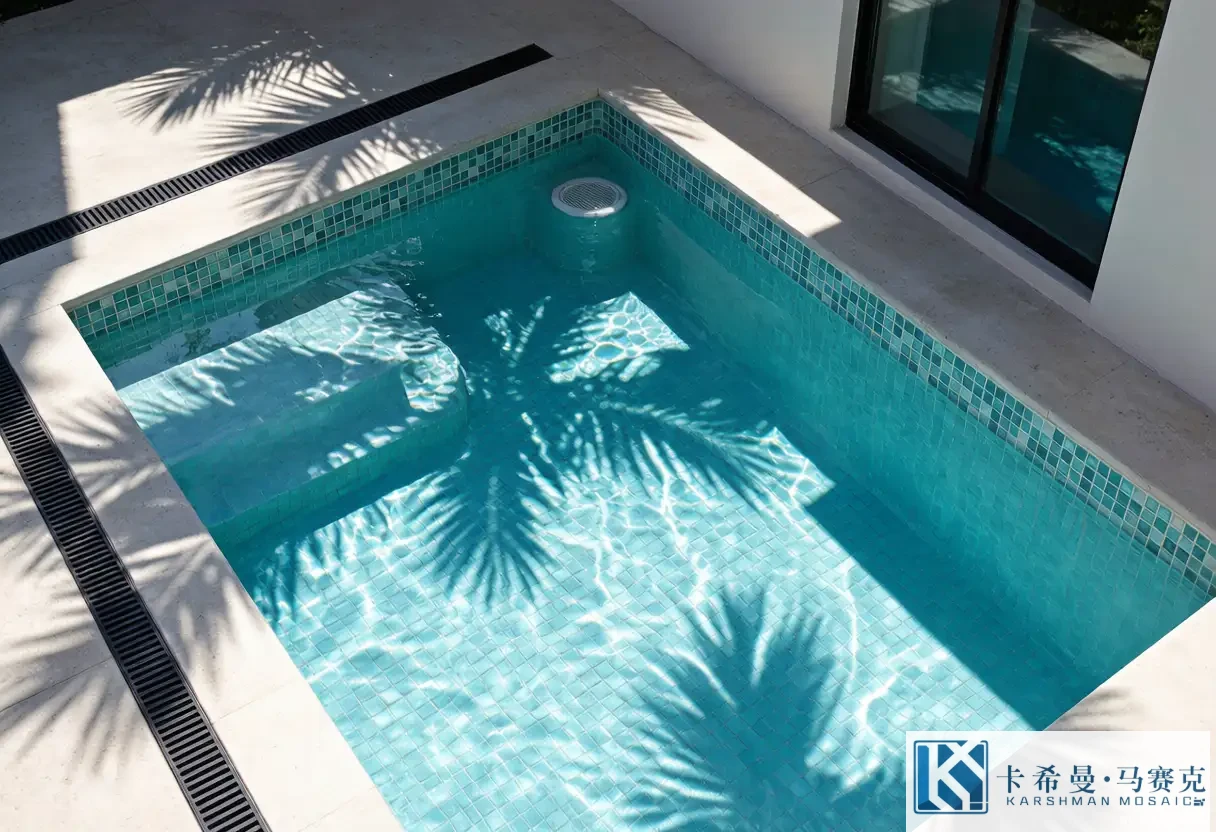
The tile line, the band where the water meets the wall, is where a pool shows its age first. Oils from skin, leaves and sunscreen leave a faint line that plaster holds onto. A mosaic band there covers that line and stays easy to wipe, so the pool reads clean even between deep cleans. A single tonal band in a mid blue is the common pick because it hides the water mark and doesn’t fight the rest of the pool. A contrasting band, say white on blue, looks crisp but shows every splash, so it needs a bit more attention.
We usually suggest a band of at least one course of tiles, sometimes two, along the whole perimeter. A thin line can look stingy once the water is in, and a wider band reads as a deliberate choice. Tape a sample to the coping and look at it from the patio before committing; the line you see dry is the line you’ll live with wet.
The floor sets the mood
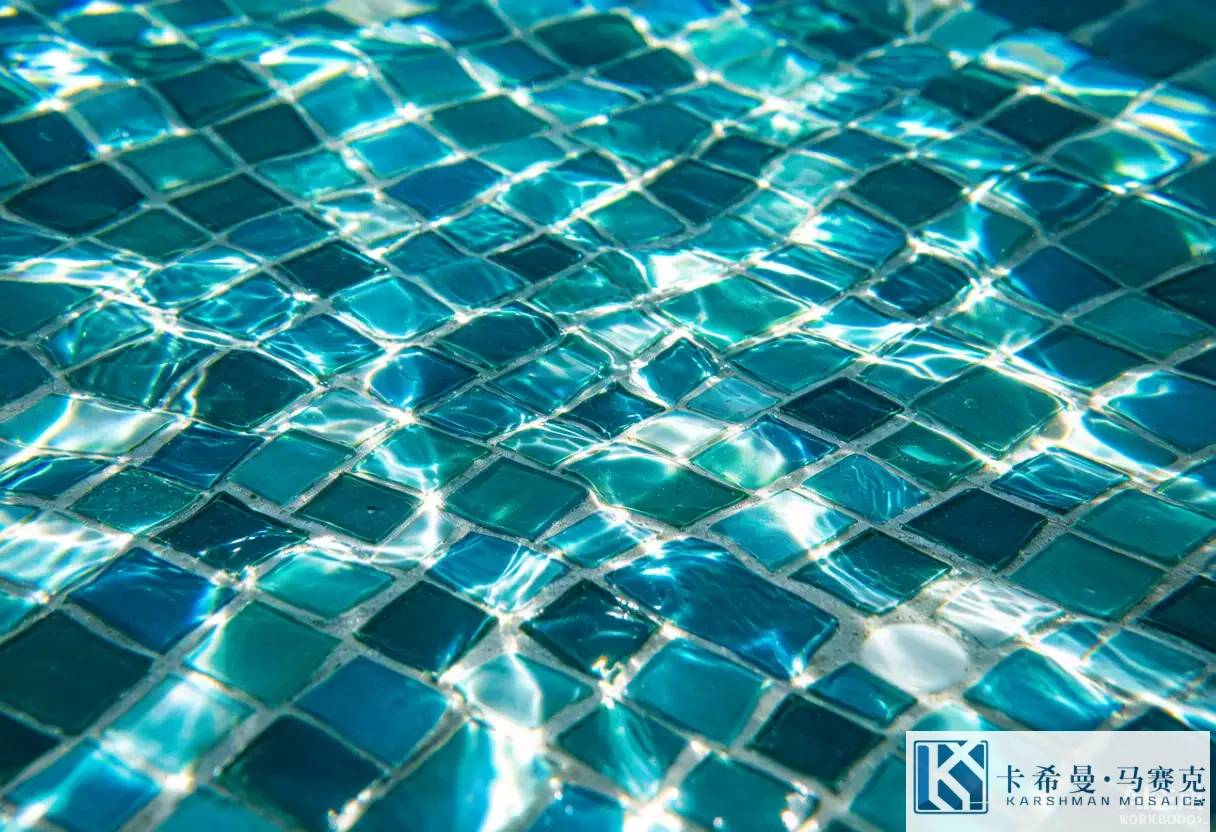
The floor color changes how the whole pool feels. A light aqua or white floor makes the water look bright and tropical, the classic backyard look. A deeper blue floor makes the water read richer and a touch more serious, which some people prefer for a smaller urban yard. The trick is that water deepens every color, so a floor tile that looks pale on the sample will read a shade stronger once it’s submerged. Pick the sample, then expect the installed read to be a little more saturated than the chip in your hand.
Steps, benches and the shallow end
Steps and benches are where mosaic earns its safety keep. A light or contrasting tile on the top step and the bench edges makes them visible from the surface, which helps anyone getting in or out, and it helps guests who don’t know the pool. On a tanning ledge or a spa seat, a different tile from the floor turns an invisible edge into an obvious one. It’s a small choice that prevents more scraped shins than people expect.
Coping, the edge and the border
The border where the pool meets the deck is another quiet win. A mosaic line along the coping, or a band just below it, ties the pool to the stone or wood around it and gives the eye a finished edge. In a backyard where the deck is the main entertaining space, that edge is what people see from their lounger, so a considered border does more for the look than a plain tile would. Keep it tonal with the waterline so the two read as one system rather than two decisions fighting.
How water changes the color
This is the part first-time buyers underestimate. Water acts like a filter: it absorbs warm light and passes blue, so every tile reads cooler and deeper once it’s under a meter of water. A tile that looks green on the sample can read teal installed; a white can read pale aqua. We tell people to view the sample through a glass of water, or better, a clear tray of water an inch deep, before ordering. It sounds fussy, but the pool is a long-term surface, and a day of looking beats a season of wondering.
Slip and bare feet
Pool decks and steps get wet, and glossy tile can be slick. On any surface you stand on, use a textured or matte glass rather than a high-gloss one, and keep the glossy finishes on the walls and the floor where feet don’t go. The many joints in mosaic already give more grip than a large smooth tile, so a textured mosaic step is a sound choice, provided the finish matches the spot. We’d rather see a calm matte step than a bold glossy one that fails the bare-foot test.
Grout and pool chemistry
A pool lives in chlorinated or salt water, and that’s harder on grout than a bathroom. Use a grout rated for pools and seal it on the maker’s schedule; a pool-grade line resists the staining and softening that plain grout can suffer underwater. Ask the installer which grout they’d use for a submerged tile and why, because the joint is the part that shows wear first. A short talk here prevents a dingy line a year later, and a dingy line is the thing that makes an otherwise lovely pool look tired.
The install in plain terms
Mosaic comes on mesh or paper sheets, and a pool is set sheet by sheet. The substrate has to be sound, the waterproofing has to be right, and the sheets have to line up so the pattern reads continuous across the waterline. A tiler who has set pool mosaic before will also check the movement joints, because a pool shifts with temperature and a wall without them cracks. Ask to see a finished pool, not a photo, and check the corners and the step edges, where weak work shows first.
Where the budget goes
Glass mosaic costs more per square meter than basic pool plaster, and anyone who tells you otherwise is selling something else. The trade is in the install: small tiles take more time to set, so labor rises with the detail. You can keep the spend sane by tiling the waterline and the steps first and leaving the floor in plaster or a plainer tile, then adding floor mosaic later as a finish. Used as an accent rather than a full wrap, it delivers the look without the whole-pool bill, which suits a backyard reno that’s already spending elsewhere.
A backyard we still talk about
One family came to us with a ten-year-old plaster pool that had turned a dull grey and showed a dark waterline nothing would shift. We tiled the waterline in a calm mid blue, added a lighter band on the top step, and left the floor as it was. The pool went from forgotten to the center of every weekend, and the owner later said the waterline alone did more than the repaint they’d planned. No new shape, no new equipment, just one focused band of tile done well. Stories like that are why we keep recommending mosaic for backyard pools; it rewards a small, deliberate move more than nearly any other pool surface.
Reading a pool quote
When a supplier or builder sends a price, check what’s inside it. Does it cover the tile only, or the adhesive, grout and labor too? Is the glass rated for submerged use, or is it a range meant for drier walls? A clear quote lists the sheet size, the joint width, the backing type and the lead time. If those lines are missing, ask. A quote you can read is one you can trust, and it protects you when the cartons arrive and someone needs to confirm they’re the right ones for a pool that holds water.
Lead times and planning
Pool mosaic often ships from a batch run, so a specific color can take a few weeks rather than a few days. If your reno is on a summer clock, order early and let the tiles sit in the box until the wall is ready. Rushing a late order can mean a substitute color you didn’t pick, and a waterline in two slightly different blues is the kind of mismatch you notice every time you swim. A little planning keeps the finish close to what you approved.
When mosaic is the wrong call
Honesty helps here. If you have a small above-ground pool with a vinyl liner, mosaic isn’t a fit; the structure won’t take it. If the budget is tight across the whole reno, spend it on the pump and the surface first and add a waterline later. And if you want a pool you don’t have to think about, a plain plaster finish beats a grid of joints that needs sealing. Mosaic earns its place when you want the pool to feel considered, not when you want the wall to disappear.
A note on salt versus chlorine
The sanitizer matters for the grout more than people expect. A salt system is gentler on the tile than a heavy chlorine dose, but it still asks for a pool-grade grout sealed on schedule. A chlorine pool cleaned on a steady routine will look just as good; the difference shows only if the maintenance slips. We tell backyard owners to pick the sanitizer they’ll actually keep up, because the routine, not the chemistry label, is what keeps a waterline bright. A pool nobody services will mark up whatever tile is on it.
Timing the work with your builder
If the pool is new, tile the waterline and steps while the shell is still open and the crew is on site; adding mosaic after the deck is poured means a second visit and a dirtier job. If it’s a renovation, plan the tiling for the shoulder season so the pool is ready for summer rather than mid-patch when the first heatwave hits. A tiler who sets pool mosaic needs a dry, sound substrate, so let the surface cure before the sheets go on. Rushing this step is the usual cause of a band that lifts a season later, and a lift is harder to fix than to prevent.
A short sample checklist
Before you order, keep one sample of the tile, one of the grout as it dries, and a note of the sheet size and backing. Tape the tile to the coping and look at it at noon and in the evening, because the water will show it in both lights. Note the slip rating if any part gets walked on. A checklist like this sounds small, but it’s the thing that keeps the pool you receive close to the pool you approved, which is the whole point of sampling in the first place.
If you’d like to compare pool ranges in person and see how the color reads through water, get in touch with our team for sample boards and current lead times.