
Not every mosaic project needs a full wall or a renovation crew. Some of the more memorable uses we’ve seen are small, a border, a niche, a single panel, that bring color and a crafted feel without tearing a room apart. If a whole backsplash feels like a lot, start small; the effect is often bigger than the area suggests.
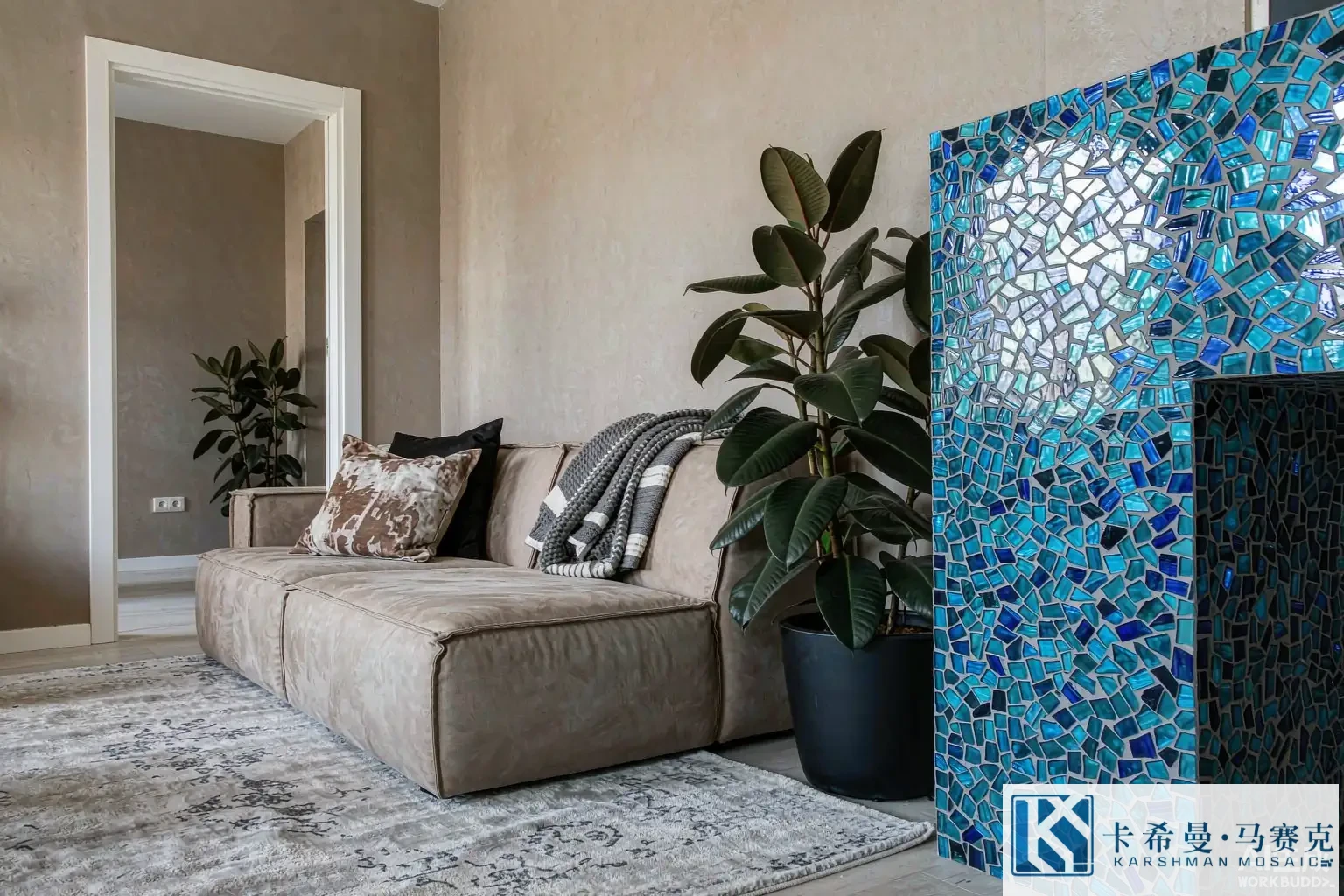
A fireplace surround is a favorite. A glass mosaic border running along the mantel or a panel set into the surround gives the hearth a focal point, and because the area is small, you can pick a color you might not risk across a whole room. A cool blue against a white wall, or a warm amber against stone, turns a forgotten surface into the thing the eye lands on. The surround stays cool to the touch away from the fire, so glass there is a safe, lasting choice.
The shower niche
In a bathroom, a mosaic-lined niche is a small project with an outsized payoff. It catches the light, gives the shampoo shelf a crafted edge, and lets you add color in a room that’s often plain tile. Because the niche is tiny, a bold tile reads as a decision rather than a risk, and the labor stays small. We suggest picking the niche tile last, after the field tile is set, so the two actually relate.
A kitchen island face
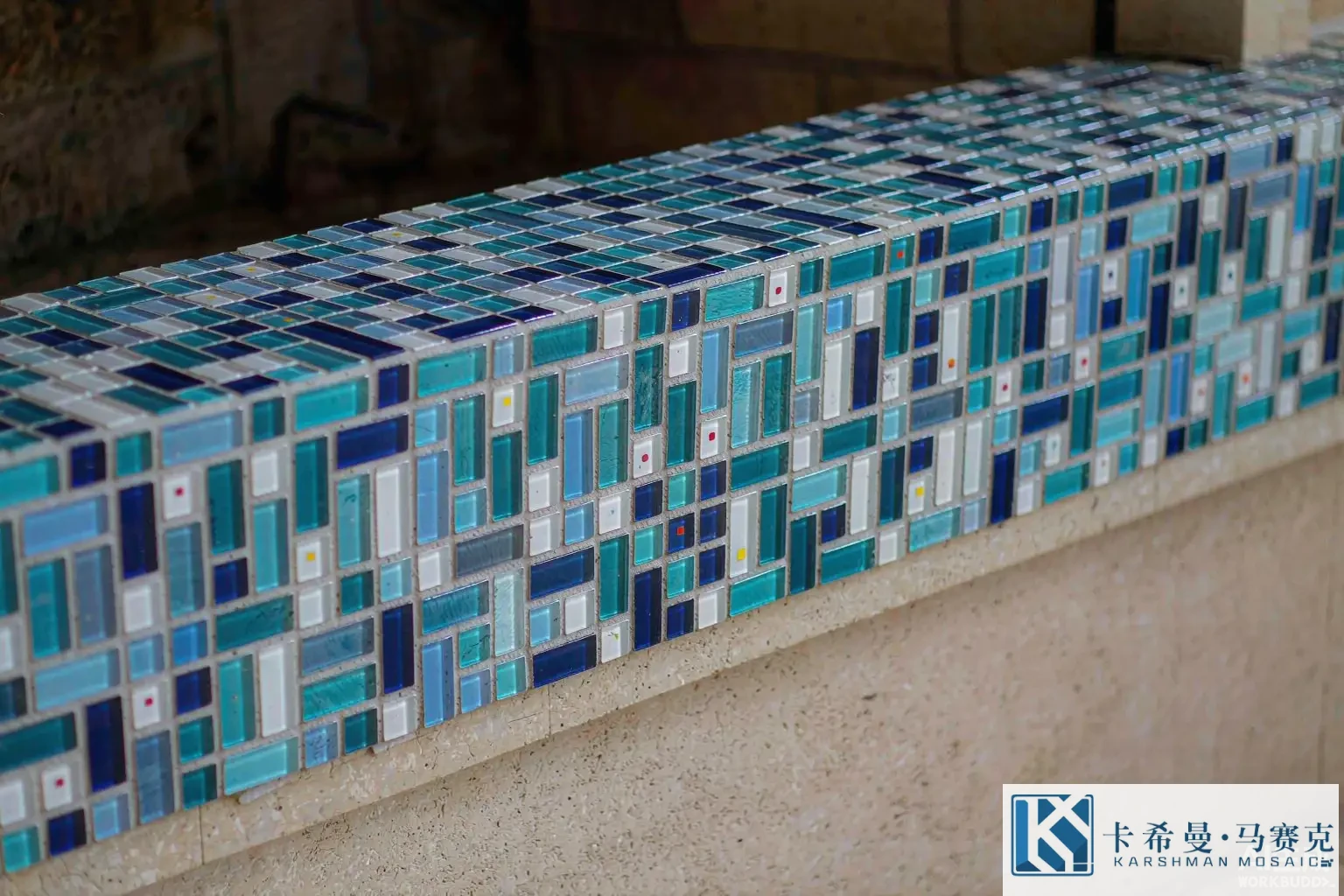
The front of a kitchen island is another contained canvas. A band of glass mosaic there, at seating height, brings color to the center of the room without touching the cooking walls. It’s a friendly first project because the area is flat, visible and small, and a mistake is cheap to fix compared with a full wall. For an open-plan kitchen, the island face is often the surface guests see first, which makes it worth the effort.
A feature panel in a living room
A single panel of glass mosaic on one living-room wall, say a meter square, can anchor a seating area without remodeling. Against a painted wall it adds texture and a point of interest that art alone sometimes doesn’t. Keep the rest of the wall plain so the panel reads as intent, not clutter. In a rental, a panel can be a quieter commitment than a full tiled wall, though check the wall type before you commit adhesive.
Stair risers and single columns
Smaller still, stair risers lined with mosaic turn a plain staircase into a quiet surprise, and a single column wrapped in glass becomes a sculptural note in an entry. These are weekend-scale projects in terms of area, though they still need proper adhesive and a clean substrate. The appeal is the same every time: a small, deliberate surface that changes how a space feels without changing its footprint.
Picking color for a small area
Small areas let you go bold. Where a whole wall in emerald might feel like too much, a fireplace border in emerald feels considered. The trick is to let the small area be the single strong color in its zone, so it reads as a choice. If the room already has a lot going on, a neutral mosaic with an interesting finish, iridescent or textured, adds life without adding another hue. Match the tile to the one thing you want the eye to find.
Mixing with paint and wood
Glass mosaic sits well against painted walls and wood. Against a flat paint it adds the shine and depth the wall lacks; against wood it brings a cool counterpoint that keeps warmth from dominating. The small scale means you’re not committing the room, just adding a note, which is why these projects suit people who want character without a full redesign. Let the surrounding material stay quiet and the mosaic will carry the moment.
A weekend panel that worked
A client wanted color in a beige living room but didn’t want a remodel. We set a single blue glass panel, about a meter square, beside the sofa, with the rest of the wall left plain. The room went from flat to finished in an afternoon of work, and the panel became the thing visitors asked about. No paint, no new furniture, just one focused surface. That’s the whole case for starting small: less risk, less cost, and often more comment.
Install reality for small jobs
Even a small mosaic job needs the right approach. Use an adhesive suited to the substrate, set the sheet with even pressure, and grout with a color you’ve seen dry, not just in the tub. A tiny area shows errors more than a large one, because there’s less to distract the eye, so take the time on alignment and cleanup. If the project is truly small and you’re handy, a careful DIY is possible; for anything near water or heat, bring in someone who has set mosaic before.
Ordering for a small project
Approve a sample in the room’s light and note the grout and sheet size. For a mixed or custom look, ask for a laid sample, not loose chips. Order a little extra so a later repair matches the batch; a patch from a different run can shade off and show. Keep the sample as your reference through the work, and the small job will read as intended rather than as a guess.
What glass mosaic is, briefly
For the uninitiated, glass mosaic is small glass pieces, usually 10 to 25 millimeters, mounted on a mesh or paper sheet so a wall can be set in panels. The color runs through the body, so it stays even as the light moves, and that’s why a small area in glass feels richer than the same area in paint. A sample held to the window should look consistent in hue; patchy color points to weak grading and is a reason to look elsewhere.
When small is the wrong move
Small projects aren’t right for every goal. If you want the room to feel fully finished, a single panel may feel lonely against a large plain wall. If the substrate is poor and won’t be prepped, even a small sheet will fail. And if you actually want a full feature wall, start there instead of testing with a token panel. Small mosaic is a tool for adding a note, not for solving a room that needs a fuller treatment.
Care for a small surface
Care is light. A wipe with mild soap and water clears dust and marks, and a reseal of the grout on schedule keeps it fresh. Because the area is small, maintenance takes minutes, which is part of the appeal for a surface meant to be enjoyed, not maintained. A quick routine a few times a year is enough to keep a panel or border looking new.
One more small idea: a mirror frame
A mirror in a hallway or bath is a ready-made canvas. A thin border of glass mosaic around the glass turns a bought mirror into a considered object, and the area is tiny, so the labor stays small. Pick a finish that catches the room’s light, iridescent by a window, matte in a dim spot, and the frame will read as intent rather than decoration. It’s a good first project for someone unsure about committing a whole panel.
Colors that age well
Bold is tempting, but some hues date faster than others. Deep teal, soft aqua, warm sand and a clean white tend to hold up year after year, while a very trendy neon can feel dated sooner. For a small area you can afford to be braver than on a wall, but a color drawn from the room’s existing palette will still look right long after the trend has moved on. Match the tile to what’s already there and the panel won’t fight the room as the years pass.
What a small job really costs
Small doesn’t mean free. You still pay for the tile by the sheet, the adhesive, the grout and the time, even if the area is a meter square. The saving is in the labor and the disruption, which are both minor compared with a full wall. Budget a little extra for a spare sheet matched to the batch, because a later repair from a different run can shade off. A small job done with the right materials costs less than a large one, but it isn’t a throwaway, and treating it with care is what makes it look built-in rather than stuck-on.
If you’d like to compare small-project ranges and see how a panel or border might look in your room, get in touch with our team for sample boards and current lead times.