
In a hotel, a restaurant or a shop, the wall behind the desk or the bar does quiet work. It sets the first impression before a word is spoken, and it has to survive years of use, cleaning and the occasional knock. Glass mosaic handles both jobs, looking considered and standing up to wear, which is why specifiers keep reaching for it in spaces where image and durability pull in the same direction.
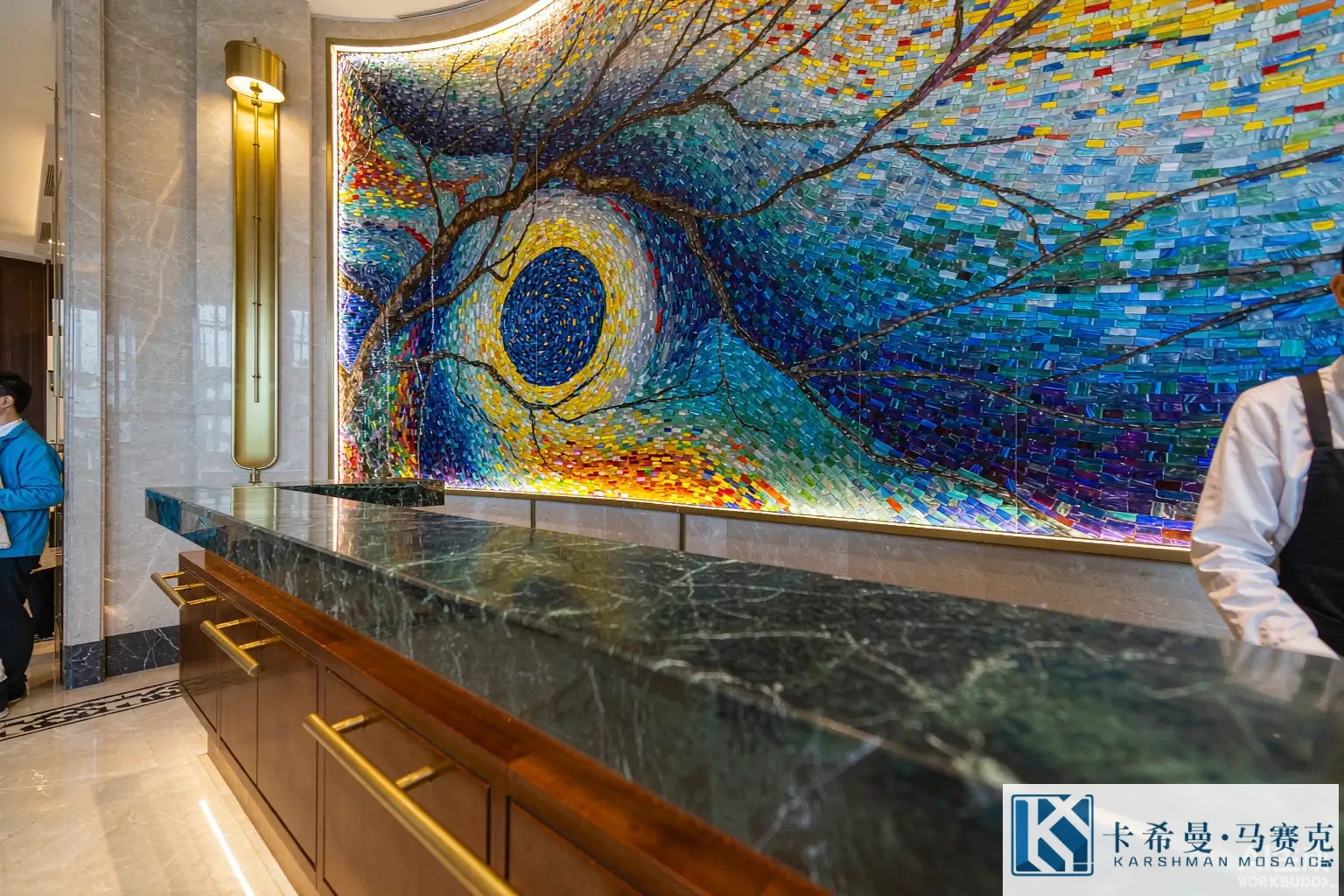
The reception or feature wall is the natural home for mosaic in a hospitality setting. A large mural or a tonal field behind a desk gives a lobby a crafted identity that paint or a single material rarely achieves. Because the tile is small, a broad wall reads as one surface rather than a grid, and the color can be tuned to the brand without a custom print. For a boutique hotel especially, that identity is often the difference between a room people photograph and one they forget.
Restaurant and bar fronts
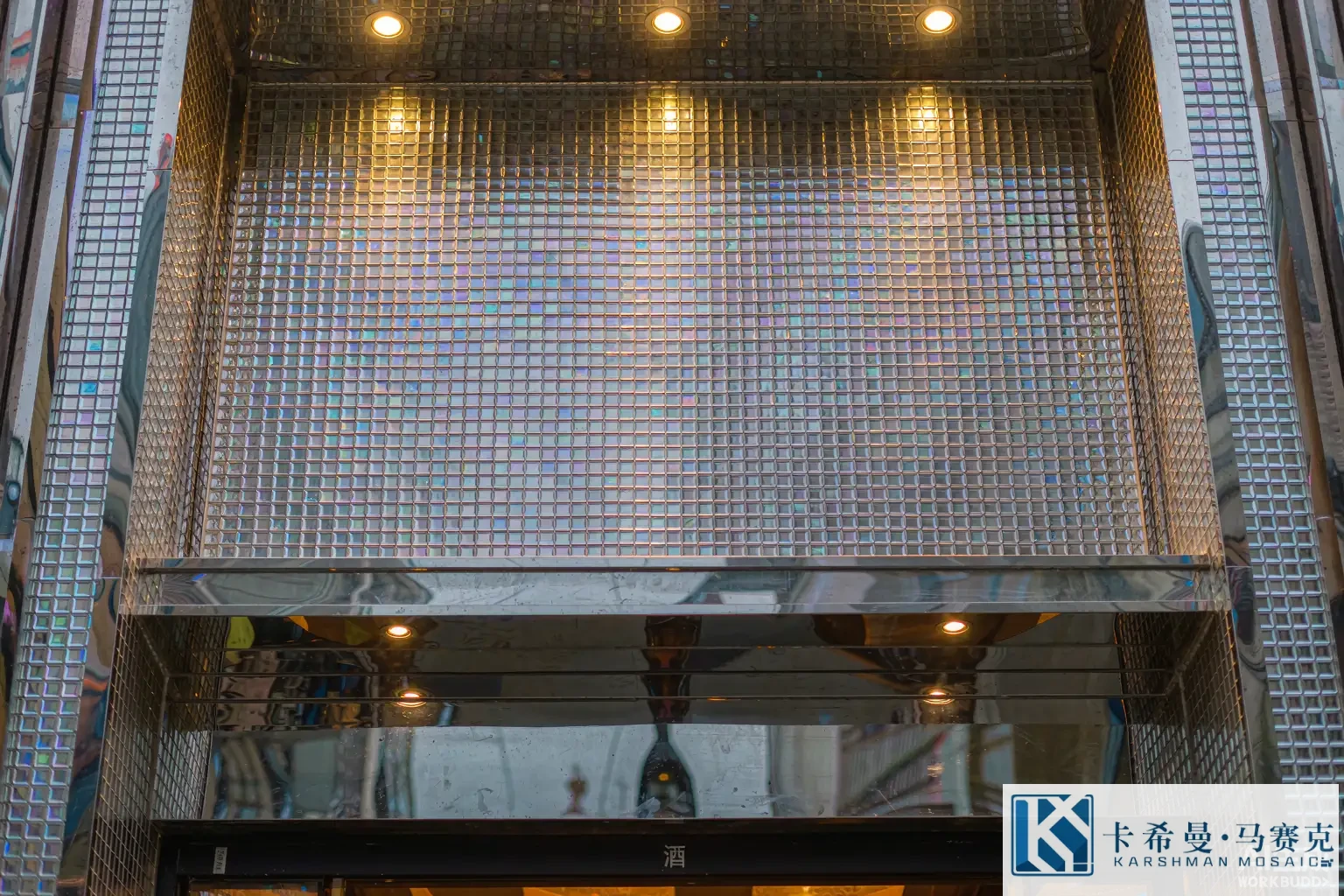
Behind a bar, glass mosaic earns its keep in two ways. It looks rich under warm spotlights, with the iridescent and glossy ranges catching the light as bottles move, and it wipes clean of the splashes and condensation that a bar generates nightly. A bar front takes more abuse than nearly any other vertical surface in a venue, so a material that cleans fast and keeps its color is a practical pick, not just a pretty one.
For a dining room, a mosaic feature wall or a column can frame the space without adding furniture. The key is restraint: one strong surface, the rest calm, so the room reads designed rather than busy. We’ve seen venues try to mosaic everything and end up with a space that tires the eye; the ones that work pick a single hero wall and let it carry the mood.
Retail and display
In shops, mosaic lines the areas customers stand closest to: the counter, the feature bay, the wall behind a product. A small, considered use of color here signals care, and care reads as quality. For a brand with a defined palette, matching the tile to the identity makes the space feel owned rather than generic. The practical side is that these zones also get touched and cleaned often, and glass takes both without showing it.
Spas, wellness and leisure
Spas and poolside bars sit in the same wet, warm world as a residential bath, and the same logic applies at scale. Glass mosaic lines the walls, the waterline and the feature elements, holding color under constant use and cleaning. In a commercial spa the cleaning is frequent and the traffic is high, so a well-graded, properly set sheet protects the look far better than a finish that marks easily.
Durability under heavy use
Commercial spaces clean harder and more often than homes, and the tile has to keep up. Glass mosaic, set with the right adhesive and grout and sealed on schedule, resists the marks that come from constant wiping and the occasional chemical. Specifying the rated system, not just the pretty tile, is what keeps a wall looking new after a busy season rather than tired by the next.
Lighting as part of the spec
In a commercial interior, lighting is designed, not incidental, and glass responds to it strongly. Warm spots bring out glow; cool light keeps it crisp; a grazing light across a textured surface adds depth. We suggest deciding the light source before the tile is fixed, because a finish that sings under one scheme can fall flat under another. Treat the two as one decision and the result is steadier.
Maintenance for the staff
A finish is only as good as the cleaning it gets, so the brief should include a simple routine the staff can follow. Wipe splashes the same day, a weekly mild wash, and reseal the grout on the maker’s schedule. Keep a note of the exact products and the grout color for future repairs, because a venue that trains its cleaners on the right method protects the wall without extra cost. The commercial installs that still look fresh after years are usually the ones maintained with steady care, not the costliest build.
Where the budget goes
Glass mosaic in a commercial job costs more than paint and more than basic tile, and the labor rises with the detail of the pattern. You can keep it contained by limiting mosaic to the hero walls and using plainer materials elsewhere, which still delivers the identity without wrapping the whole building. For a venue where first impressions drive revenue, a focused mosaic wall often pays back in the way guests perceive the place, which is hard to measure but easy to feel.
A boutique hotel we worked on
A small hotel asked us for a lobby that guests would remember without a big build. We clad the reception wall in a single tonal field of glass mosaic in a deep teal, lit by a warm grazing light, and left the rest of the lobby in warm plaster and wood. The wall became the photo backdrop for half the reviews, and the owner later said it did more for the brand than any ad. No extra rooms, no extension, just one surface done with intent.
A short specification checklist
For a commercial mosaic wall, name the zones first, then the color and finish, then the rated adhesive and grout, then the lighting, then the cleaning routine. Approve a laid sample under the venue’s own light before the order, and keep a carton of spares matched to the batch for future repairs. A checklist like this keeps the project on track and the result close to what was approved, which matters more in a venue that opens to the public than in a private home.
What you’re specifying
Commercial glass mosaic is the same idea as residential, small glass pieces on a backing, but the grading and the setting system matter more because the traffic is higher. The color runs through the body, so it doesn’t fade under daily cleaning, and a well-graded sheet keeps the wall even across a large area where a shade gap would show for meters. Ask the supplier for the absorption grade and the backing type; a spec with those lines is one you can stand behind.
Glossy, matte or iridescent at scale
At venue scale, finish choice sets the mood. Glossy and iridescent catch spotlights and feel lively, good for bars and feature walls. Matte reads calm and hides marks, good for broad walls in bright spaces. A mix can work if one finish leads and the other supports, but a wall that combines three finishes often looks busy under venue lighting. Pick the lead finish first and build around it.
Common commercial mistakes
The patterns are predictable. A venue mosaics every wall and the space tires. A bar front uses a wall-grade tile not rated for the splashes it takes. A grout is chosen for color alone and fails under daily cleaning. Each is avoidable with the right product named in the plan and a tiler who has set commercial mosaic before, not just residential work.
Reading a commercial quote
A venue quote should name the tile, the sheet size, the backing, the rated adhesive and grout, and the lead time, not just a price per square meter. If those lines are missing, ask before you sign; a quote you can read is one you can trust when the cartons arrive. For a branded color, confirm the supplier can match it across future batches, because a reception wall repaired from a different run can shade off and show as a patch.
Phasing the rollout
You don’t have to clad everything at once. Many venues start with the reception wall, see how guests respond, then add a bar front or a column in a later phase. Phasing spreads the spend and lets the first wall prove the look before you commit the rest. It also keeps the venue open during the work, which matters more for a business than for a home.
Training the people who clean it
The commercial installs that stay bright longest are usually the well-maintained ones, and maintenance is a training issue as much as a product one. Hand the cleaning team the exact products and the grout reseal schedule, written down, and the wall stays bright with less effort. A venue that treats the finish as part of the routine protects its investment without calling in specialists.
If you’re specifying glass mosaic for a hotel, restaurant or shop and want to compare ranges under commercial lighting, contact our team for sample boards, technical details and current lead times.