
Bathrooms are wet by design, and that’s exactly why glass mosaic has found a home there. The same non-porous surface that wipes clean in a kitchen also shrugs off steam and shower spray. But a bathroom isn’t a kitchen, and the places mosaic helps most are not necessarily the places people expect. Here’s how we think about it when a client asks.
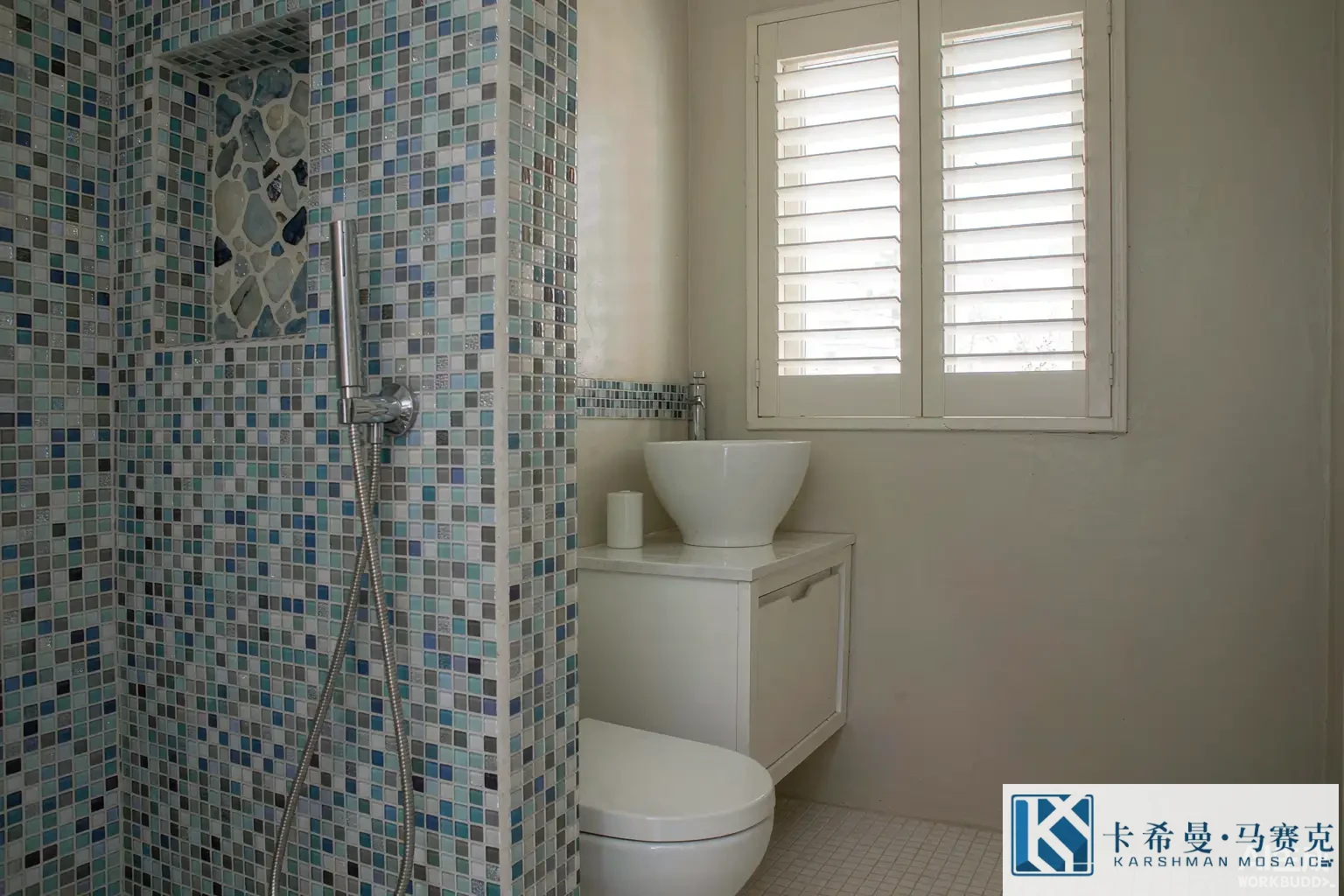
The shower is the obvious start. Glass mosaic on a shower wall brings color and a crafted feel that a large plain tile can’t quite match. Because the tiles are small, they follow a slightly curved or uneven wall better than big formats, and the many joints add a bit of grip underfoot on a shower floor. Set on a proper waterproof substrate with a pool-grade grout, the wall stays bright through years of daily use.
The slip question, answered plainly
Floors are where people worry, and they’re right to. A fully glossy mosaic on a shower floor can be slick when soapy. The fix is simple: use a textured or matte glass on any surface you stand on, and keep glossy finishes on the walls where they belong. The grout joints already give more traction than a large smooth tile, so a textured mosaic floor is a sound choice rather than a risky one, provided you match the finish to the spot.
For a shower floor, also check the tile’s rating for wet barefoot use and follow it. A rating exists for a reason, and ignoring it trades a short-term look for a long-term hazard. We’d rather see a safe floor in a calm tone than a bold one that fails the slip test.
Vanity splash and basin backs
Around a basin, glass mosaic does the same job as in a kitchen: it protects the wall from splashes and gives a small area for color. A vanity backsplash in a soft aqua or sand tone ties the room together without competing with the mirror or the counter. It’s a contained project, often under two square meters, which makes it a gentle first step into mosaic if a full shower feels like a lot.
Grout and sealing in a wet room
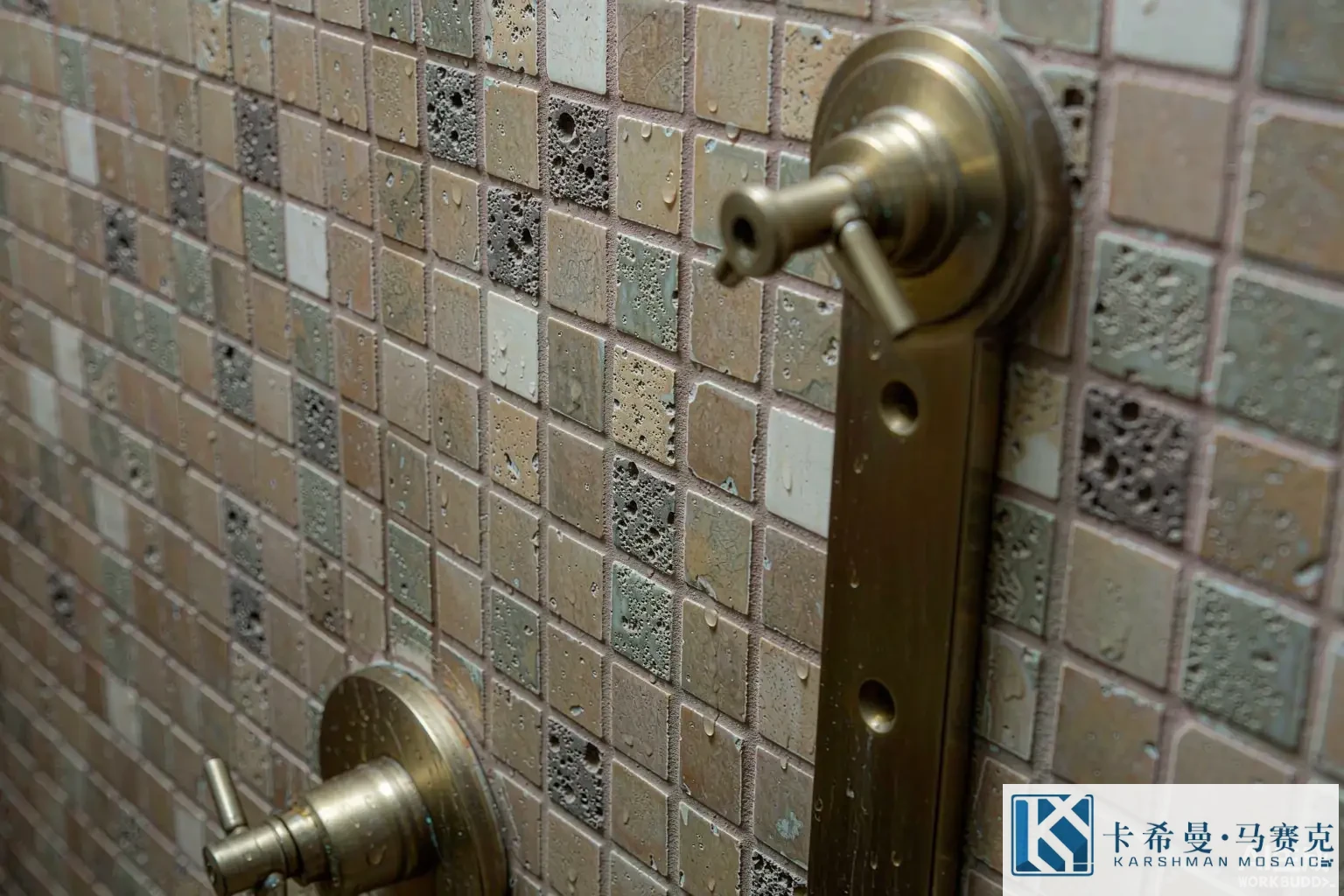
In a bathroom, grout does more work than anywhere else. It sits in steam, gets scrubbed, and dries slowly after a long shower. Use a grout rated for wet areas and seal it on schedule; in a shower, that schedule matters more than in a kitchen because the joints rarely fully rest. A tonal grout keeps the surface calm; a contrasting one turns the grid into the feature. Either can work, but the decision should be made before the tile goes up, not after.
Color under bathroom light
Bathrooms often run on cool, even light, which makes glass read crisper than it would in a warm kitchen. Pale tiles can look almost clinical under a cool bulb, while a mid-tone blue or green feels balanced. If your bath has a window, watch the sample through the day; morning sun and evening bulb tell different stories, and you want a tile that works in both rather than one that only sings at noon.
Mixing with stone and porcelain
Glass mosaic pairs well with the other materials in a bath. Against a stone counter it adds shine and a crafted note. Next to a large porcelain wall it brings scale contrast, small against large, which reads as intentional. The common error is overmixing: glass plus stone plus a busy pattern can crowd a small room. Pick one hero material and let the others support it; in most baths, that hero is the mosaic or the stone, not both fighting for attention.
A small bath that felt larger
We worked with a client whose bathroom was cramped and dark, with a single small window. We lined the shower with a pale aqua glass mosaic and kept the rest of the walls in a soft white tile. The glass caught what little light came in and seemed to push the walls back, so the room read bigger than its footprint. No extension, no new window, just a reflective surface placed where the light hit it. That’s the kind of result that doesn’t show up in a spec sheet but changes how a room feels every morning.
Mistakes worth avoiding
A few recur. People use a wall grout on a shower floor and wonder why it stains. They pick a glossy tile for the floor and slip on it. They skip the waterproof membrane to save a day and pay for it with a leak later. None are hard to avoid; they need the right product named in the plan before the first sheet goes up, and a tiler who treats the wet room as the system it is.
Getting the install right
Find a tiler who has set glass mosaic in showers, not just on floors. The waterproofing, the slope, the movement joints and the grout all have to line up, and a shower is less forgiving than a kitchen splash. Ask to see a finished shower, not a photo, and check the corners and the niche edges, where weak work shows first. A good shower installer will talk about the whole build, not just the tile.
Ordering for a bathroom
Approve a sample under your bathroom light and note the grout, the sheet size and the backing. For a shower, ask for a laid sample that includes the joint color, because that’s the read you’ll live with. Order a little extra so a later repair can match the batch; a repair from a different run can shade differently and show as a patch. Keep the sample as your reference through the build.
What the tile is made of
Glass mosaic for baths is small glass pieces, typically 10 to 25 millimeters, mounted on mesh or paper. The color runs through the body, so it doesn’t wear off under scrubbing the way a surface-printed tile can. Hold a sample to the light; the hue should look even, not patchy, and patchy color usually means weak grading at the plant. That’s a useful thing to know before you buy by the carton.
Glossy versus matte in a bath
Glossy glass brightens a shower and feels clean, but shows water spots, so it needs a wipe after use. Matte or frosted glass hides marks and reads softer, trading some sparkle for calm. Walls can carry glossy; floors should lean textured. Matching the finish to the spot is most of the work in a room that lives in water.
Care that takes a minute
After a shower, a quick squeegee or wipe keeps the glass clear and slows any film. Once a week, warm water with a drop of mild soap clears buildup. Avoid harsh pads and strong cleaners that dull the face. That’s the whole routine, and it’s why mosaic stays bright in a bath that sees daily use.
When to skip mosaic in a bath
Honesty helps here. If the wall is badly uneven and won’t be prepped, large tiles hide that better. If the budget is tight across the whole renovation, spend it on the shower build first and add mosaic as a finish later. And if you want a surface you don’t have to think about, a solid slab beats a grid of joints. Mosaic earns its place when you want color and character, not when you want the wall to disappear.
Glass mosaic on a bathroom floor
It comes up often: can the whole floor be mosaic? In a shower, a textured glass floor is fine and adds grip, but across a dry bathroom floor it’s usually more than the room needs, and the many joints mean more cleaning. We tend to suggest mosaic for the wet zone and a larger tile for the dry floor, so you get the look where it matters and an easier sweep everywhere else. If a fully tiled floor is the goal, pick a textured tile and confirm the slip rating before you buy.
A sign-off that saves arguments
Before the order, approve a laid sample under the bathroom’s own light, not just loose chips. Note the grout color and the sheet size on the sample and keep it through the build; if a carton arrives a shade off, the sample is your proof and your leverage. It sounds formal, but a five-minute sign-off prevents the usual dispute in a wet-room job, the one about whether the color was ever what was agreed.
How to frame the spend
Mosaic in a bath costs more than standard tile, and the install takes longer because the pieces are small. You can keep the bill sensible by limiting mosaic to the shower and the vanity splash and using a plainer wall elsewhere. Spend the budget on the waterproof build first; the mosaic is the finish that sits on top of it, and a great tile on a weak substrate is a waste. A contained mosaic job often delivers the look a full retile promises, at a fraction of the cost.
If you want to compare bathroom ranges and see how they read under wet-room light, contact our team for sample boards and current lead times.