
Walk into almost any kitchen and your eye lands on the backsplash whether you meant it to or not. It’s the strip of wall between the counter and the cabinets, and it takes a real beating in daily use, splashes, steam, the occasional tomato sauce incident. We’ve watched clients pick a plain tile, live with it for a year, and then come back asking about glass mosaic. The appeal isn’t hard to get.
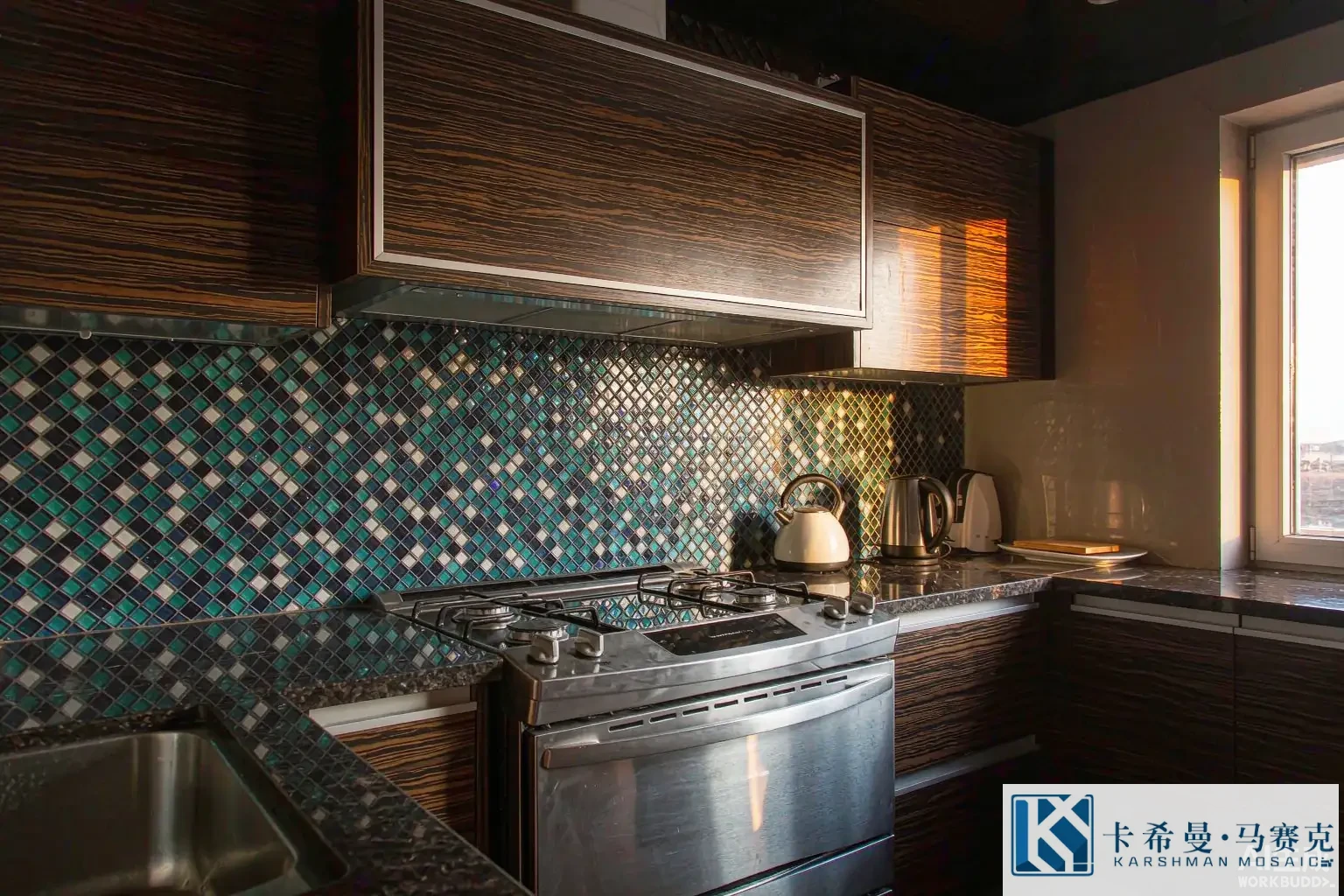
Glass mosaic behind a cooktop does one thing better than nearly any other finish: it wipes clean. The surface is non-porous, so oil and splatter sit on top instead of soaking in. A quick pass with a soft cloth and a mild cleaner takes care of everyday marks, and you don’t need special products. For a home that cooks often, that alone justifies the choice.
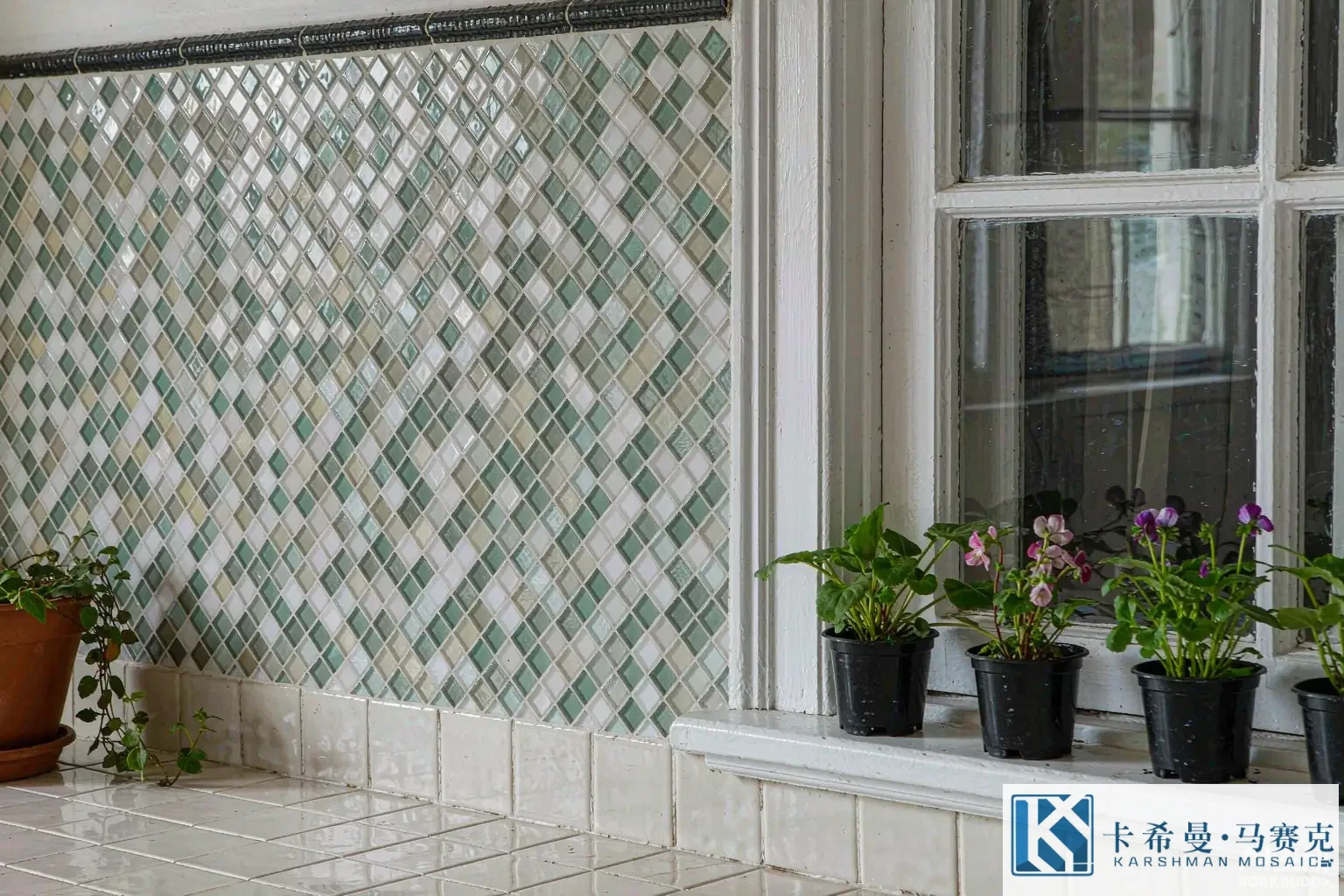
There’s also the look. A backsplash is a small area, which means you can be braver with color than you would on a floor or a whole wall. A calm pale blue reads quiet and coastal. A mix of whites and greens feels fresh. A deep teal or charcoal gives the kitchen a bit of edge without repainting the cabinets. Because the tiles are small, the color shows as a texture rather than a flat block, and that’s part of why glass mosaic rarely feels heavy.
Color choices that hold up
Not every shade behaves the same once it’s fixed to the wall. Very light tiles show splashes more clearly than mid-tones, so they need a bit more wiping near the stove. Mid-blues and greens hide day-to-day marks well and still feel bright. If you want drama, a single darker band behind the range, with a lighter field everywhere else, keeps the drama in one zone where you can enjoy it without committing the whole kitchen to a bold color.
We usually tell people to look at the sample in their own kitchen light before committing. A tile that looks cool grey in a showroom can read blue under warm bulbs at home. Tape a sample to the wall for a day and watch it through the morning and the evening. It sounds fussy, but a backsplash is hard to change once the adhesive sets, so a day of looking beats a year of second-guessing.
The grout question
Grout is where a glass mosaic job rises or falls, and it’s the part first-time buyers underestimate. The many narrow joints mean grout is visible across the whole area. A tonal grout, close to the tile color, lets the pattern read as one surface. A contrasting grout turns the grid into the main feature, which some designs want and others fight.
Whichever you pick, plan to seal it on the maker’s schedule. Sealed grout resists staining and stays easier to clean, which matters in a kitchen more than nearly anywhere else. Ask the installer which grout they’d use for a cooking zone and why; a short conversation here prevents a dingy line a year later.
Lighting changes the read
Glass carries light differently from ceramic or stone. Under a warm downlight it picks up a soft glow; under cool task lighting it reads crisper. If your kitchen leans on under-cabinet strips, the backsplash catches that light directly, so a glossy tile there can sparkle more than you expect. Matte or frosted glass tones that down if the room already has a lot of shine from steel and stone.
Sheet size and the grid
Mosaic comes on mesh or paper sheets, and the tesserae size sets the feel. Smaller pieces give a refined, detailed surface but more grout lines to keep clean. Larger pieces read calmer and set faster, which can trim labor. For a backsplash, a mid-size tile is a common sweet spot, detailed enough to feel crafted, large enough not to overwhelm the cleaning routine.
Where the budget goes
Glass mosaic costs more per square meter than basic ceramic, and anyone who tells you otherwise is selling something else. The trade is in the install: small tiles take more time to set, so labor rises with the detail. You can keep the spend sane by limiting mosaic to the backsplash and using a plainer material on the floor and the counters. Used as an accent rather than a full wrap, it delivers the look without the whole-room bill.
We’ve seen a four-square-meter backsplash turn a tired kitchen into the room people comment on, at a fraction of a full remodel. That’s the realistic pitch: not a miracle, just a high-impact, contained project that pays back every time someone walks in and notices.
A project we still talk about
One client came to us after painting their kitchen twice in three years, still unhappy with how flat it felt. We suggested a single band of glass mosaic above the range in a muted aqua, leaving the rest of the wall in a warm off-white tile. Six months later they sent a photo: the band had become the thing every guest noticed, and the rest of the kitchen finally felt finished. No knockdown, no new cabinets, just one focused strip of color done well.
Stories like that are why we keep recommending mosaic for kitchens. It rewards a small, deliberate move more than nearly any other surface in the room.
Mixing with what you already have
A glass backsplash pairs well with the materials already in a kitchen. Against a stone counter it adds a crafted contrast of shine and texture. Next to wood cabinets it brings a cool highlight that keeps the warmth from feeling heavy. With stainless appliances it picks up the same clean note. The trick is to let one material lead; if the counter is busy, keep the mosaic calm, and if the cabinets are plain, that’s where the color can step up.
Common mistakes we see
A few patterns come up often. People choose a grout two shades off from the tile and end up with a grid that fights the color. They skip sealing and wonder why the line looks tired after a season. They pick a tile from a screen and are surprised when the installed color reads warmer than the thumbnail. None of these are hard to avoid; they just need a sample on the wall and a five-minute talk with the installer before the order goes in.
Getting the install right
Find a tiler who has set glass mosaic before. The backing, the alignment of sheets, and the grout all need a steady hand, and a worker learning on your wall will leave gaps you can’t unsee. Ask to see a past job, not just a portfolio photo. A good installer will also tell you if your wall needs prep first, which saves a failure later and a redo that costs more than doing it once, properly.
What you’re actually buying
Glass mosaic is small pieces of glass, usually 10 to 25 millimeters across, mounted on a mesh or paper sheet so a wall can be set in whole panels. The glass is colored through the body, not painted on top, which is why the hue stays even as the light moves through the day. Knowing that helps you read a sample: hold it to the window and the color should look consistent, not patchy. Patchy color in a sample often points to weak grading at the plant, and that’s a sign to look at another range.
Glossy or matte in a kitchen
Glossy glass bounces light and reads clean and modern, which is why it’s common behind a range. The catch is that a glossy face shows fingerprints and water spots, so it needs a wipe after cooking. Matte or frosted glass hides those marks better and feels softer, at the cost of some sparkle. In a kitchen that gets heavy use and little daily upkeep, matte can be the calmer pick; in one where the backsplash is meant to be the shine, glossy earns its place.
A simple cleaning routine
Care is straightforward. Wipe splashes as they happen, or at least the same day. Once a week, a cloth with warm water and a drop of mild dish soap clears the film that cooking leaves behind. Skip abrasive pads and strong chemicals; they can dull a glossy face over time. That’s the whole routine, which is part of the appeal for a surface that sits inches from where you fry an egg.
When glass mosaic is the wrong call
It’s worth saying plainly: mosaic isn’t right for every kitchen. If your wall is uneven and you won’t prep it, large tiles hide that better than small ones. If you want a surface you don’t have to think about, a solid slab beats a grid of joints. And if the budget is tight across the whole renovation, spend it on the things you touch daily and add mosaic later as a finish. Being honest about this keeps the project focused instead of forcing a material where it doesn’t serve you.
Reading a quote
When a supplier sends a price, check what’s inside it. Does it cover the tile only, or the adhesive, grout and labor too? Is the glass rated for a backsplash, or is it a range meant for drier walls? A clear quote lists the sheet size, the joint width, the backing type and the lead time. If those lines are missing, ask. A quote you can read is one you can trust, and it protects you when the cartons arrive and someone needs to confirm they’re the right ones.
Lead times and planning
Glass mosaic often ships from a batch run, so a specific color can take a few weeks rather than a few days. If your kitchen is mid-reno and the backsplash is on the critical path, order early and let the tiles sit in the box until the wall is ready. Rushing a late order can mean a substitute color you didn’t pick. A little planning here keeps the finish close to what you approved.
If you’d like to compare backsplash ranges in person and see how the light hits them, get in touch with our team for sample boards and current lead times.