
The mosaic tile industry sits where construction, interior design and export manufacturing meet. For importers, distributors, contractors and specifiers, knowing which way the market is moving helps with stock decisions and with matching what current projects ask for. This overview covers the shifts worth watching in 2026 and what they mean for buyers who source mosaic at volume.

Durable, low-maintenance products lead
One clear move across the trade is toward products that stay good-looking with little upkeep. Buyers ask more often for porcelain and glass combinations, and for tiles rated for wet and outdoor use, because these suit both residential and commercial jobs. A floor that resists staining and a waterline that copes with chemicals reduce call-backs for the installer and support claims about longevity. For a distributor, stocking a versatile base range in these durable finishes covers a large share of everyday orders.
Color leans natural, with accents
Color demand has tilted toward calm, natural tones. Sand, stone, soft grey and muted blue read as safe choices that pair with many schemes, while a darker navy or charcoal gives a contemporary edge. At the same time, iridescent and reflective glass keeps a strong place in hospitality and pool work, where the play of light is part of the brief. The practical takeaway for buyers is to keep a stable palette of neutrals and add a smaller, bolder accent range rather than chasing every passing shade.
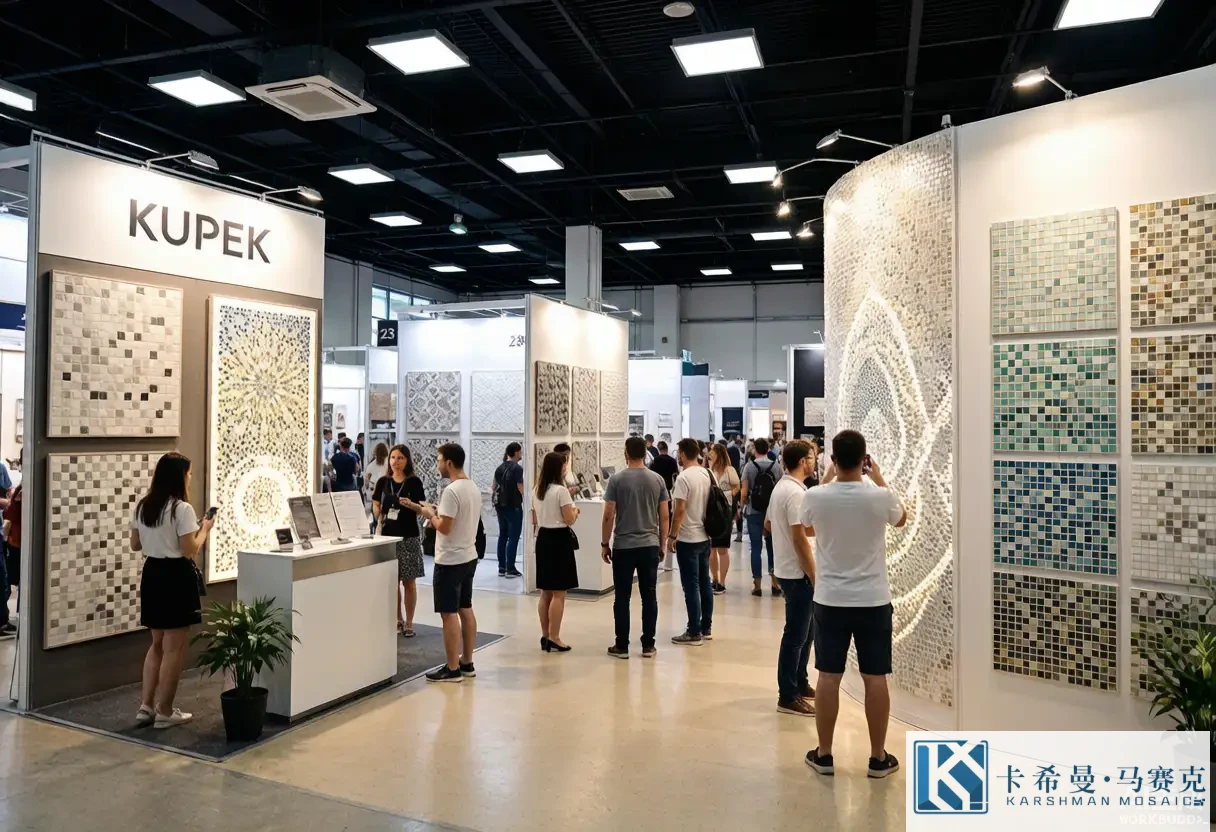
Mixed materials in one surface
Projects now mix materials within one surface more than before. A porcelain field with a glass waterline, or a stone coping with a mosaic feature wall, lets a designer get two looks from related products. This trend favors suppliers who can hold consistent color across material types, because a mismatch between the field tile and the accent reads as a fault. Buyers benefit from sourcing both from one maker where possible, which also simplifies lead times and paperwork.
Sustainability and documentation gain weight
Specifications increasingly ask for evidence, not just claims. Recycled-content glass, low-emission production and recognized test reports carry more weight in public and commercial tenders. Buyers who can present documentation for water absorption, slip resistance and frost performance find it easier to clear procurement checks. While the extra paperwork adds a step, it protects both the seller and the buyer when a project is audited after completion.
Customization and shorter lead times
Digital design tools and waterjet cutting have made custom mosaic more reachable. Logos, motifs and gradients that once needed long lead times are now produced from a file, which suits branded hotels and feature walls. The trade-off is that custom work needs clear artwork approval and a sample sign-off before production. Buyers who set that approval step early avoid the cost of a mismatched run and keep delivery dates realistic.
B2B buying moves online and sample-driven
Finding and comparing suppliers has shifted toward online sourcing, with sample-driven decisions. A buyer can review a catalog, request swatches and approve a physical sample before committing to a container. This speeds the early stage but raises the importance of a trusted supplier relationship, because the sample and the bulk run should match. Keeping a short list of verified factories remains a sound way to manage risk.
What buyers should do
Pulling the trends together, a few actions help. Hold a versatile base range in durable, neutral finishes. Keep documentation for the ratings your customers need. Treat custom work as a sample-approved process. And review your supplier list so the bulk run matches the sample you approved. Small discipline at the sourcing stage protects margin later, and it keeps a distributor ready when a project spec lands.
Regional demand and project types
Demand shapes differently by region. Warmer markets and resort destinations keep pool and outdoor mosaic busy, while dense urban housing leans on compact bathroom and feature-wall use. Public and hospitality projects tend to ask for documented ratings and consistent color across large areas, which favors suppliers who can hold a batch. Reading the project mix in your market helps a distributor weight the range toward what actually sells.
Price pressure and input costs
Glass, energy and freight all move the landed cost of mosaic, and buyers feel that in quote volatility. Rather than chase the lowest price on every line, many importers hold a core range with stable pricing and treat bold or custom lines as add-ons. A candid conversation with a supplier about minimum runs and repeat orders often stabilizes cost better than constant switching, and it supports a steadier catalog for your customers.
The mosaic market rewards buyers who plan the spec before the order. If you want to discuss volume sourcing or request sample boards, contact our team for current ranges and lead times.