
Understanding how glass mosaic tile is made helps a buyer judge quality and price, and ask the right questions of a supplier. The process looks simple from the outside, but the steps that control color consistency, durability and finish happen early. This walk-through covers the production line from raw glass to packed carton.
Raw glass and color batching
Production starts with selecting the glass base and the colorants. Clear or tinted cullet is weighed with mineral oxides that give each shade, and the batch is mixed so the color stays even across a run. Because glass color is sensitive to temperature and mix, the batching step sets the tone for everything after it. Buyers who care about a steady color should ask how a factory controls this stage and whether it keeps a reference sample for repeat orders.
Melting and forming
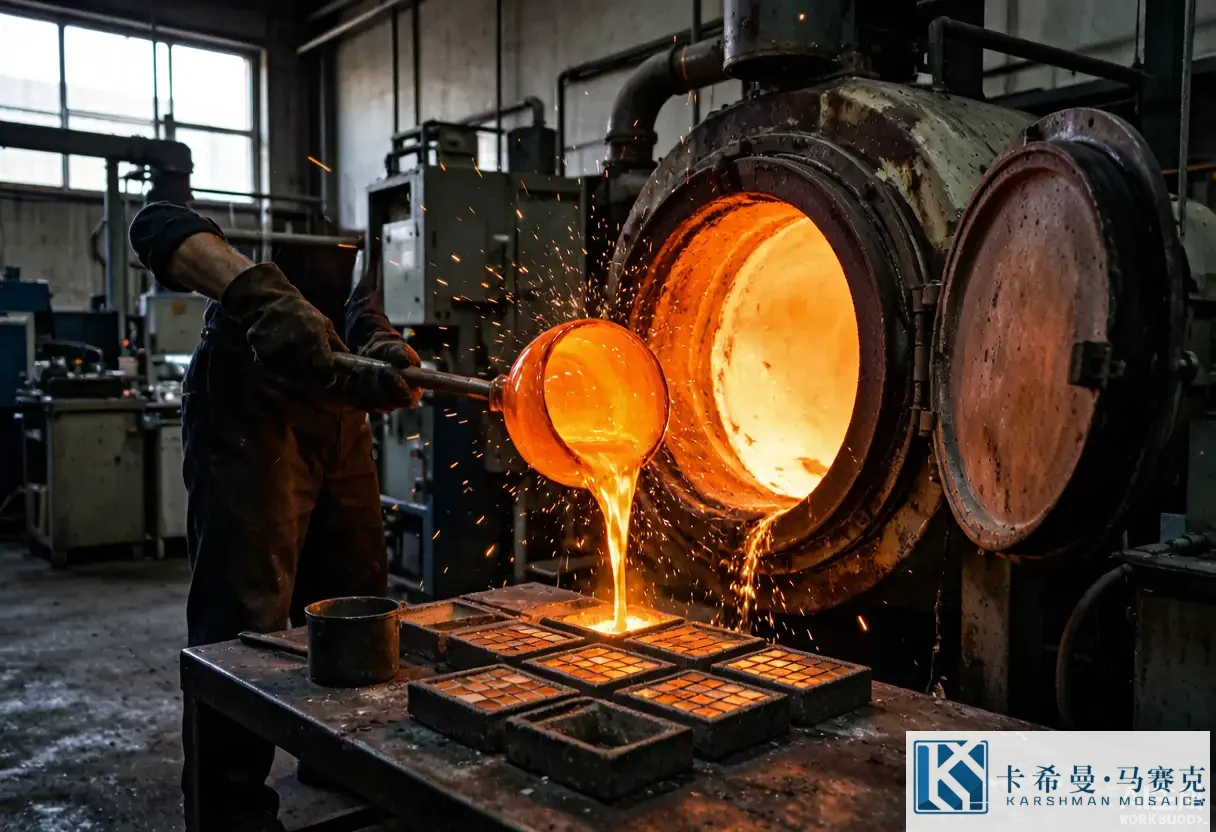
The batch is melted in a furnace at high temperature until it flows, then formed into tile. Some lines cast the molten glass into molds for thick, dimensional pieces, while others roll it into a sheet that is later cut. The method affects the look: cast pieces have depth and variation, rolled sheet gives a flatter, more uniform face. Both routes need careful temperature control so the glass sets without internal stress that could crack later.
Annealing and cooling
After forming, the glass passes through a controlled cooling stage called annealing. Slow, even cooling relieves stress in the material, which is what keeps a tile from fracturing under temperature change. Rushed cooling is a common source of latent defects, so a well-run line treats this step as part of quality rather than a pause. For buyers, the practical signal is a supplier who can explain its cooling process and its reject rate.
Cutting into tesserae
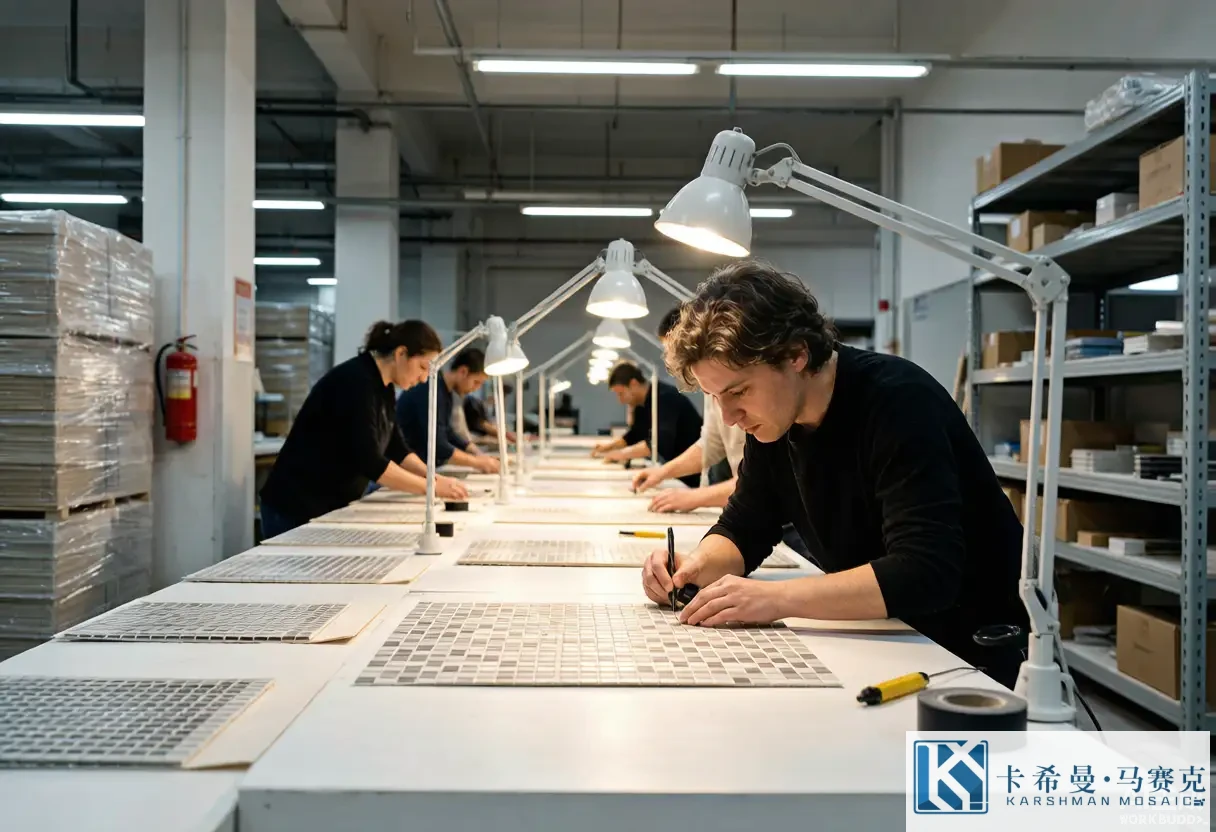
Cooled glass is cut into the small pieces, or tesserae, that give mosaic its name. Modern lines use precision cutters to hold size within a tight tolerance, then mount the pieces on a mesh or paper backing in sheets. Consistent sizing matters because uneven tesserae leave uneven grout lines and slow the installer. A buyer can check this quickly by laying a sheet flat and looking at the gaps between pieces.
Surface treatments
Many glass mosaics get a surface treatment after cutting. An iridescent coating adds the shifting color seen in premium lines, a frosted finish softens reflection, and some products get a backing for extra strength. Each treatment changes both the look and the care routine, so the finish should match the intended use. A clear specification of the finish helps a buyer compare products that look similar in a catalog photo.
Quality control on the line
Quality control runs through the line but concentrates at inspection. Staff check color consistency against a reference, measure dimensional tolerance, and sample for water absorption and frost resistance where the product is rated for outdoor or pool use. Reputable lines keep test records that a buyer can request. For high-value or custom runs, a pre-shipment check against an approved sample catches drift before the goods leave the factory.
Reading a specification sheet
A spec sheet tells a buyer what to expect. Look for the material, sheet size, tile size, finish, water absorption, slip rating where relevant, and any frost or chemical resistance. Certifications and test reports back up the numbers. Learning to read these fields turns a purchase from a color guess into a measured decision, and it makes it easier to match a product to a project’s actual conditions.
Packaging and export prep
Finished sheets are packed in cartons, palletized and prepared for export. Good carton labeling, corner protection and moisture barriers reduce damage in transit, which is where margin quietly leaks on long shipments. A buyer should confirm carton weight and pallet height fit the destination handling, and that documents list the product clearly for customs.
Cost drivers on the production line
Several factors move the price of a glass mosaic line. Raw glass and energy are the largest inputs, and custom colors or treatments add both material and set-up cost. Tighter tolerances and heavier inspection also raise the unit price but lower rejects, which protects the buyer over a full order. Understanding which step drives the cost helps a buyer choose where to spend and where a simpler spec meets the project.
Auditing a line without a site visit
A full factory tour is useful, but a remote check can still reveal a lot. Ask for a video walk-through of the forming and inspection areas, recent test reports, and references from buyers in your market. Request a small trial order before a large run so you see the packing and the consistency firsthand. These steps give a buyer confidence without travel, and they set a baseline for the bulk order that follows.
Knowing the process helps a buyer ask better questions and verify a supplier’s claims. If you want sample boards or test reports, contact our team for current product lines and documentation.