
Bathrooms are where mosaic tile shows its range. The small format suits the curves of a shower, the strip behind a basin, and a feature wall that lifts a plain room, and the right material copes with constant moisture. This guide covers how to use mosaic in a modern bathroom, with attention to material, slip rating and the details that keep a wet room safe and easy to care for.

Why mosaic suits bathrooms
Mosaic follows the shape of a wet room better than large tiles. It wraps a shower niche, curves around a built-in seat and meets a sloped floor without awkward cuts. Glass and porcelain resist water when properly grouted, so they stay sound in a space that is wet daily. For a designer, the small scale also means a little material covers a feature area with strong visual effect, which suits a compact bathroom.
Shower floors and niches
A mosaic shower floor is a practical choice because the many joints add grip underfoot, and the small tiles follow the fall to the drain. Choose a tile with a slip-resistant face and a matte or textured finish in the wet zone, and keep the grout sealed so it resists staining from soap. A matching niche lined in the same mosaic gives a tidy shelf and ties the shower together, which reads as a finished detail rather than an add-on.
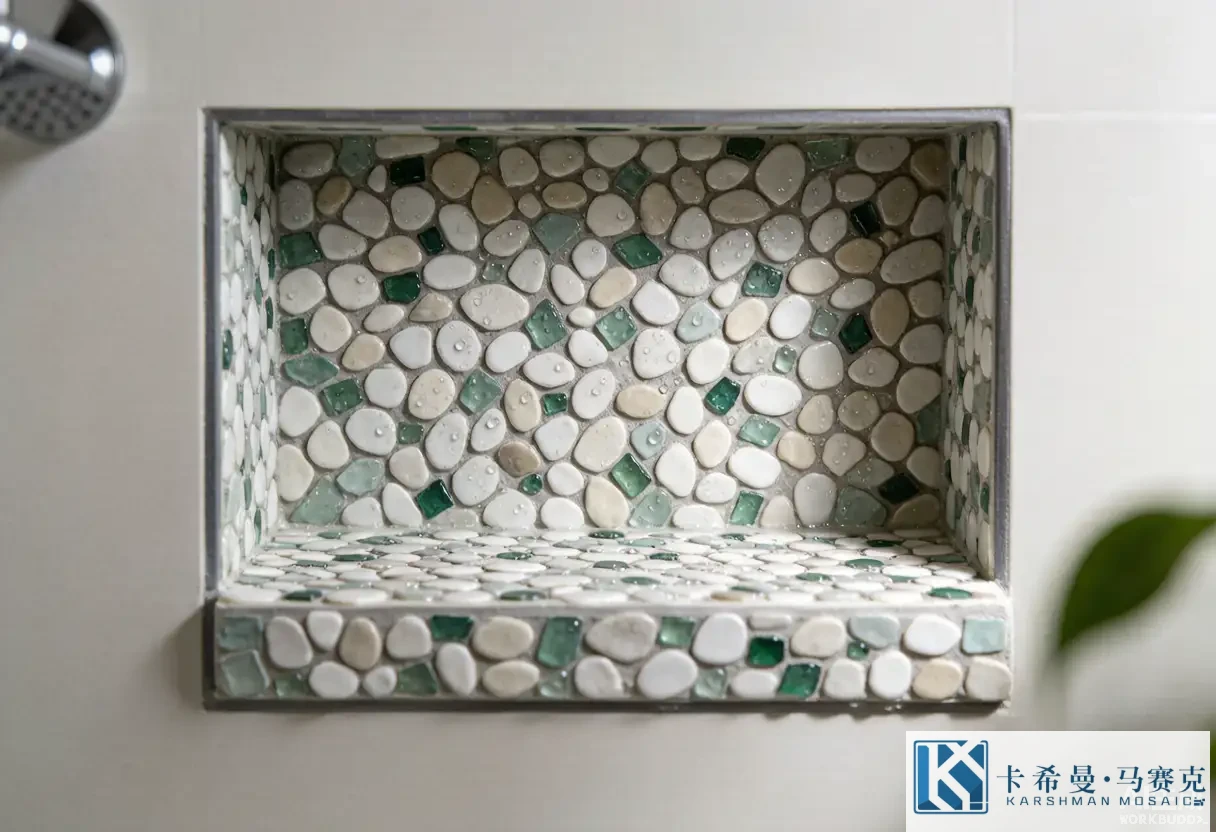
Vanity backsplash and basin surround
The strip behind a basin is a natural place for mosaic. A short run of glass or porcelain above the counter adds color without overwhelming a small room, and it wipes clean after splashes. Coordinating the backsplash with the floor or the shower keeps the scheme linked. For a double vanity, a continuous band reads calmer than two separate panels, so the layout should follow the counter rather than the mirrors.
Feature walls and full-height tiles
A full-height mosaic wall behind a bath or along a vanity gives a spa feel and turns a functional surface into the room’s focus. Pale, reflective glass opens a small bathroom, while a deeper tone adds drama in a larger one. Because the wall is large, keeping the color steady across batches matters, so ordering from one lot and approving a sample panel avoids a visible seam where the tone shifts.
Material and slip rating
In a bathroom, ratings matter more than in a dry room. Check the slip resistance for any floor tile, the water absorption for wet areas, and the frost rating only if the space faces cold. Glass and porcelain with low water absorption suit showers; natural stone needs sealing and more care. Matching the rating to the exact location keeps the floor safe and the warranty valid, which protects both the installer and the owner.
Grout, sealing and care
Bathroom grout works hard, so a product rated for wet areas and sealed after curing resists mold and staining. Light-colored grout shows soap scum sooner, while a mid-tone hides it longer between cleans. A regular wipe and a periodic reseal on the schedule the maker recommends keep the surface fresh with little effort. Because mosaic has many joints, using a quality grout from the start saves time over the life of the room.
Lighting and reflection
Bathroom light shifts from bright morning to soft evening, and a glass mosaic responds to both. Task light at the mirror helps grooming, while a soft wash on a feature wall shows the tile’s depth. For a reflective wall, placing the light to graze the face reveals the color shift; for a matte wall, even light avoids glare. Planning the fixtures with the tile keeps the room comfortable at every hour.
Planning before you tile
Before ordering, map the wet zones, the fall to the drain and the niche positions, and pick materials rated for each. Approve a sample under your bathroom light, confirm grout color, and agree the install method with your tiler so the substrate and adhesive suit the tile. A short checklist at this stage prevents the mismatch and delay that come from deciding mid-build, and it keeps the room on its planned date.
A bathroom is a good place to let mosaic do the work. If you want sample boards or help matching a tile to your wet zones, contact our team for current ranges and lead times.