
An accent wall turns a plain room into a space with a point of view, and mosaic is a strong way to build one. The small tiles carry color and texture that a painted wall cannot, and they hold up where a wallpaper might mark or peel. This guide covers how to plan a mosaic feature wall that reads as intentional rather than busy, from material and color to layout and light.
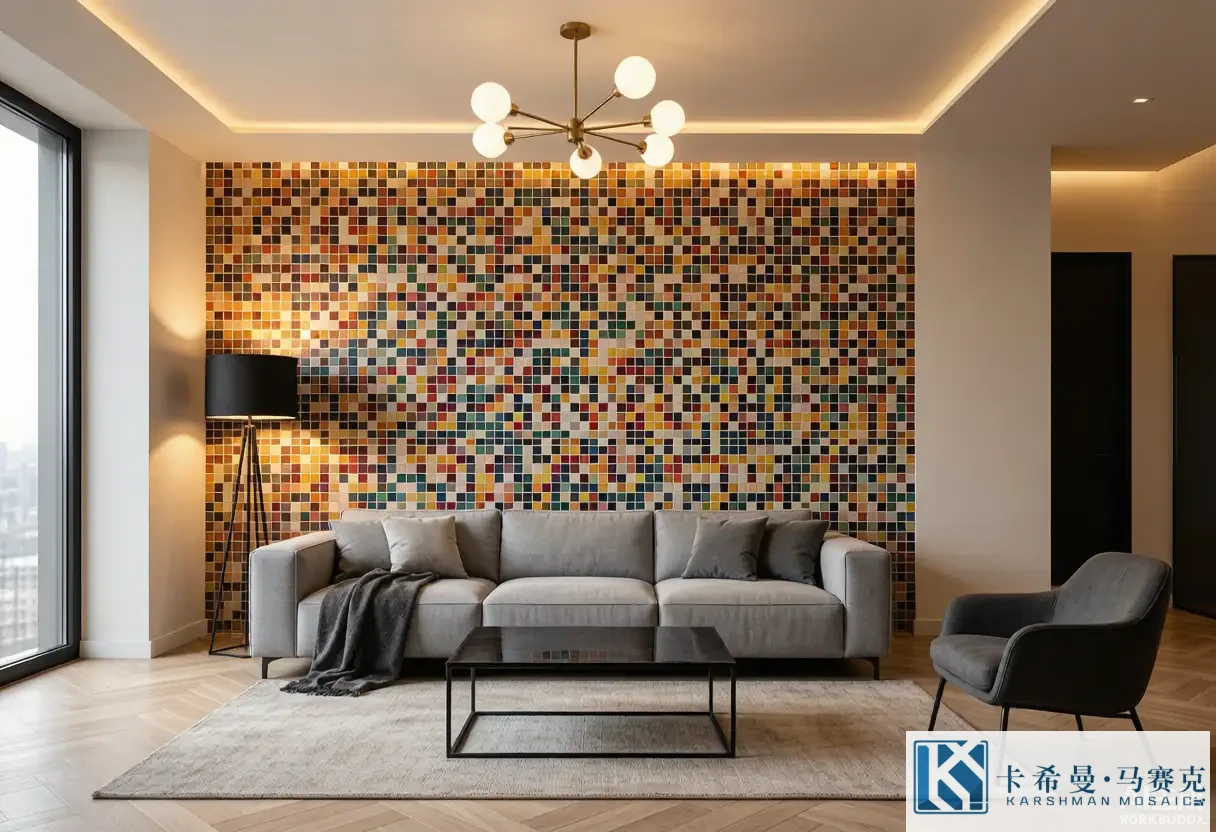
Pick the right wall
The first decision is which wall carries the mosaic. A wall you see on entering the room, or the one behind a sofa or a bed, gives a clear return because it frames the space. Avoid a wall cut by many doors or heavy furniture, since the pattern will break up and lose impact. A single, clear surface lets the design read as a whole, which is what makes an accent wall feel composed rather than random.
Material and finish
Glass mosaic brings light and a slightly reflective face that suits living rooms and lobbies. Ceramic and porcelain read warmer and suit a rustic or Mediterranean scheme. For a softer, tactile wall, a matte or frosted finish reduces glare, while a glossy or iridescent tile catches evening light. The finish should match the room’s other surfaces, so the wall feels connected to the scheme instead of added on.

Color and scale
Color sets the wall’s temperature. Cool blues and greens calm a large room; warm sand and terracotta bring a snug feel. A blended sheet that shifts across tones hides minor install variation and gives depth. Scale follows the room: a large, open wall can carry finer tile for detail, while a small alcove suits slightly larger pieces so the pattern stays readable. Viewing a sample in the room, not just online, prevents a color that reads stronger than expected.
Pattern and layout
Layout controls whether the wall feels calm or active. A full-field mosaic in one color is quiet and modern; a gradient or an ombre adds movement without a literal image. Geometric bands, a framed panel, or a central medallion give a focal point for a lobby or a dining room. The pattern should suit the architecture, with straight grids matching clean modern lines and a gentle diagonal softening a classic interior.
Lighting the wall
Light changes how a mosaic wall reads through the day. A directional spotlight brings out texture and the relief of each piece, while soft ambient light keeps the surface even. For a glass wall, placing the light so it grazes the face shows the color shift; for a matte wall, an even wash avoids hot spots. Planning the fixture with the tile, and dimming where possible, keeps the wall flexible from day to evening.
Preparation and substrate
A feature wall lasts when the substrate is sound. The surface should be flat, dry and stable, with any cracks or damp dealt with before tiling. A suitable primer and the right adhesive for the tile type prevent movement that could crack the sheet. For outdoor or semi-outdoor walls, choose a product rated for the exposure and a grout that resists weather. Spending time on preparation protects the look over the years.
Grout and sealing
Grout color shapes the final read. A close grout gives a smooth, continuous field; a contrast grout emphasizes the grid for a handmade feel. In areas that gather dust or humidity, a sealed grout resists staining and makes cleaning easier. Specifying the grout and sealer with the tile, and resealing on the maker’s schedule, keeps the wall fresh and reduces upkeep in busy spaces.
Where feature walls work well
Beyond living rooms, mosaic walls suit entries, restaurants, spas and retail backdrops where a brand color carries the brief. A reception wall in a calm tone sets a tone without signage; a hospitality feature in a deeper shade becomes the photo backdrop. In each case the wall should relate to the room’s use, so the design supports the space rather than competing with it. Reading the room’s function first keeps the result appropriate.
Planning before you commit
Before ordering, confirm the wall dimensions, the substrate and the lighting plan, and approve a sample panel at size so the color and scale are clear. Agree the grout, trim and the install method with your tiler, and check lead times for custom or blended sheets. A short checklist at this stage avoids a wall that reads differently from the sample once it is fixed in place.
A mosaic feature wall rewards planning more than budget. If you want sample panels or help sizing a design to your room, contact our team for current ranges and lead times.