
When planning a mosaic project, the first decision is often the material. Glass and ceramic are the two common choices, and each brings distinct strengths. This comparison walks through the factors that matter very so you can choose with confidence.
Appearance and Light
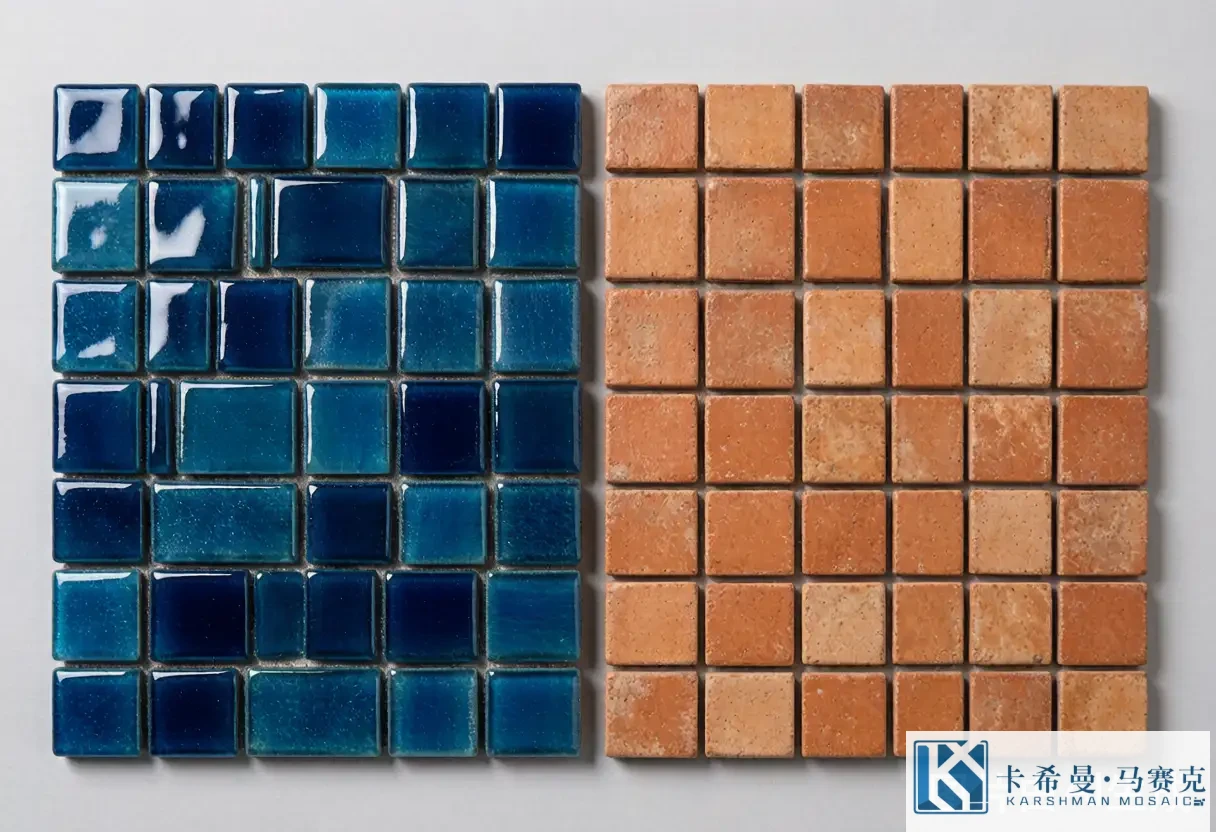
Glass mosaic tiles are translucent, so they capture and reflect light in a way that gives walls and pools a luminous quality. Colors appear deeper and more saturated. Ceramic tiles are opaque, with color sitting on or through the body of the tile. They offer a warm, grounded look and a broad palette, including matte finishes that glass rarely matches. If your goal is sparkle and depth, glass leads; if you want a soft, earthy feel, ceramic is a strong candidate.
Durability and Wear
Both materials are durable when installed correctly. Ceramic handles everyday wear on walls and light-traffic floors. Glass resists scratching on wall applications and keeps its color because the tone is part of the material. On floors with heavy traffic, ceramic or a textured glass may be preferable for grip. For very residential walls and pool surfaces, either material performs well over many years with proper care.
Water and Stain Resistance
This is where the two differ most. Glass is non-porous, so it does not absorb water, stains, or chemicals. That quality makes it a common choice for pools, spas, and wet rooms. Ceramic is also water resistant once glazed, though unglazed or damaged areas can take in moisture. For fully submerged or constantly wet areas, glass is usually the safer selection and tends to stay easier to clean.
Installation Notes
Glass and ceramic install with similar methods, but a few points stand out. Glass benefits from a white or light adhesive so the tile color stays true, and some glass types need a specific mortar. Ceramic is more forgiving with adhesive choice. Mesh-backed sheets speed up both. If you are unsure, ask your supplier or installer for the recommended setting materials before work begins.
Cost Considerations
Ceramic is generally the more economical option per sheet, which can matter for large wall coverage. Glass costs more, reflecting its manufacturing and the visual effect it delivers. For a single feature wall or a pool, the added cost is often acceptable given the result. Weigh the budget against the area you plan to cover, and request samples to compare the look in person.
Which One to Pick
Choose glass when you want light, color depth, and strong water resistance—pools, backsplashes, and accent walls are natural fits. Choose ceramic when you need broad color choice, a matte look, or a lower cost across a larger surface. Many projects even combine both, using glass for a feature and ceramic for the surrounding field to balance cost and impact.
Final Thoughts
There is no single winner; the better material depends on the room, the exposure, and the look you want. Compare the two side by side with samples, and match the choice to how the space will be used. Ready to compare options in person? Request samples through our contact page and our team will help you decide.