
Choosing mosaic tile for a project can feel busy at first, with many materials, colors, and sheet formats to weigh. A simple way to move forward is to match the tile to where it will be used, then compare the options on the few factors that matter most. This guide walks through those steps.
Start With the Application
Where the tile will be installed is the first question to answer. A pool interior, a kitchen backsplash, a shower wall, and a fireplace surround each place different demands on the material. Water exposure, foot traffic, and cleaning routines all shape the choice. Taking a moment to define the space helps narrow the options quickly and avoids costly changes later.
Know Your Material: Ceramic vs Glass
Ceramic mosaic tiles are made from fired clay and offer a wide range of colors with a matte or glossy finish. They handle indoor walls and floors well and suit larger coverage areas. Glass mosaic tiles bring light and color depth that ceramic cannot match, which makes them a frequent pick for feature walls, pools, and backsplashes. For wet or submerged areas, glass is often the more practical material because it does not absorb water. Both materials have a place, and the right one depends on the look and the environment.
Tile Size and Sheet Format
Mosaic tiles are supplied on mesh-backed sheets, which makes installation faster than placing loose individual tiles. Sheet sizes vary, and the tile chip size inside the sheet also varies—from tiny 10mm squares to larger 48mm pieces. Smaller chips suit curved surfaces and detailed patterns; larger chips read as more contemporary and install more quickly. Check that the sheet dimensions work with your wall or floor layout to reduce cutting on site.
Finish and Surface Texture
Glossy finishes reflect light and feel lively in bright spaces. Matte finishes read as softer and show less spotting, which can suit busy family areas. For floors and wet rooms, a textured or slightly raised surface improves grip. Think about how the finish will look under your actual lighting before deciding, because the same tile can read quite differently between a showroom and a home.
Slip Resistance and Safety Ratings
For floors, showers, and pool surrounds, slip resistance matters. Look for a slip-resistance rating suited to the area—higher traffic and wetter surfaces need a higher rating. very suppliers list this value, and asking for it is a reasonable step when planning a floor installation. Pair the rating with the right adhesive and grout for a safe, lasting result.
Color and Pattern Planning
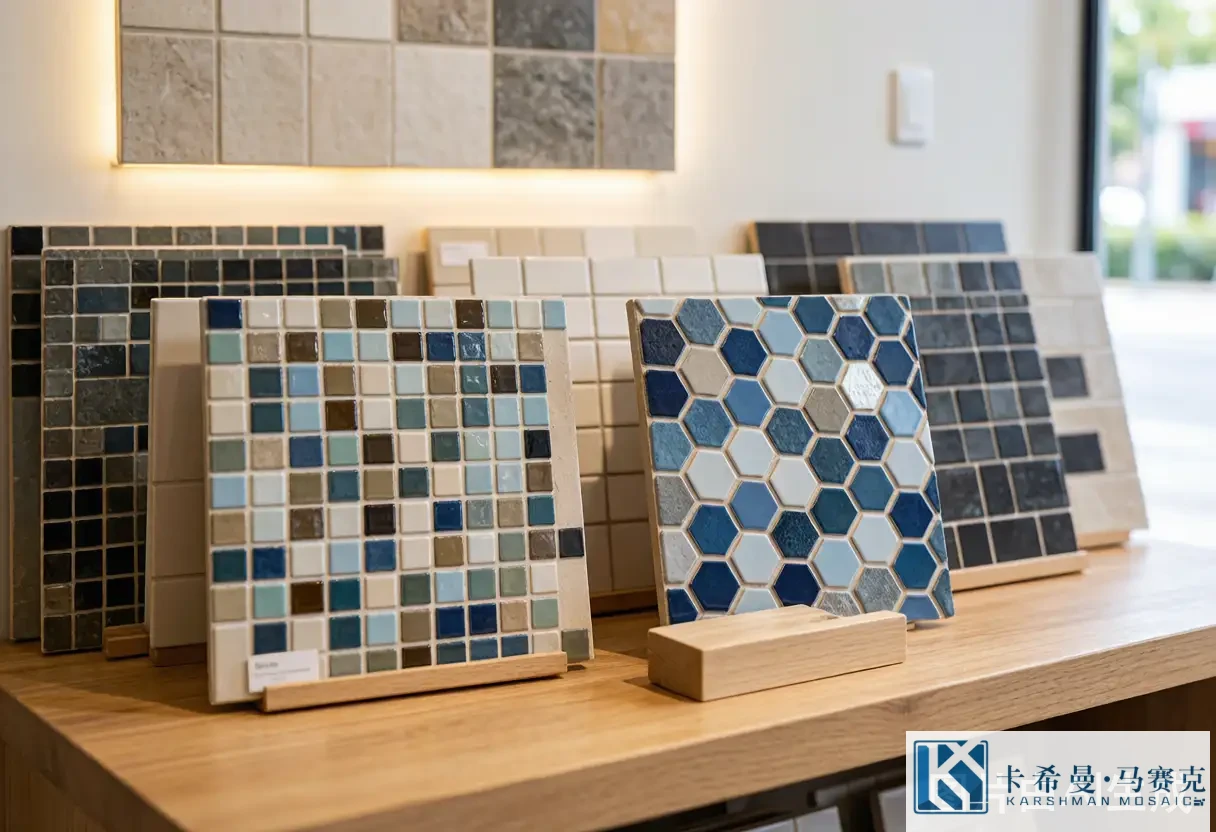
Color sets the mood. Light tones open up a small room, while deeper shades add drama. Patterns such as herringbone, basketweave, and random blends each create a different feel. Order a few samples and view them in the room where they will be installed, because color shifts under different light. Planning the pattern ahead also helps you estimate how many sheets to buy and where cuts will fall.
Budget and Quantity Planning
Price depends on material, sheet size, and finish. Glass generally costs more than ceramic per sheet, though the coverage area is similar. Measure the surface, add around 10% for cuts and waste, and confirm lead times if you need a specific color in bulk. Buying the full quantity at once helps keep batch color consistent across the whole project.
Working With a Supplier
A responsive supplier can provide samples, specification sheets, and guidance on suitability for your project. For custom patterns or large orders, discuss production time and shipping early. Clear communication at the start reduces surprises later and helps your installer plan the job.
Final Thoughts
Choosing mosaic tile comes down to matching the material, finish, and pattern to where the tile will live. Define the space, compare ceramic and glass, check slip ratings for floors, plan color with real samples, and confirm quantities with your supplier. If you would like help selecting tiles for your project, visit our contact page to discuss options with our team.