
Glass mosaic has become a familiar sight in pools and spas, and the reason is practical as well as visual. The tile resists water, carries color with depth, and copes with the chemicals and temperature swings that a wet, heated space brings. This guide covers where to place glass mosaic in a pool, how to choose color and slip rating, and how the material behaves across a season of use.
Why glass suits pools
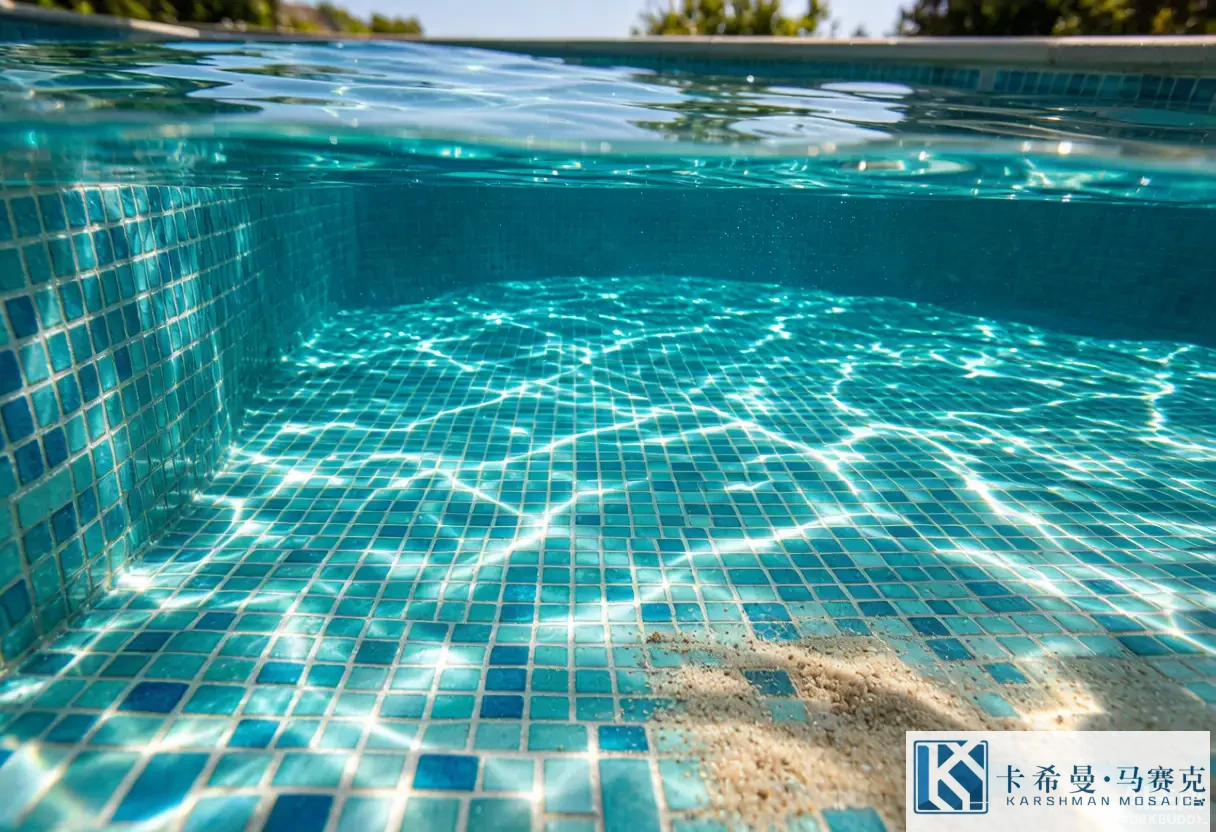
Pool surfaces live in a hard environment. They sit in water for years, meet chlorine or salt, and shift temperature with the weather and the heater. Glass mosaic answers these demands because the body is non-porous, so it does not soak up water or stain the way some stone can. Its color sits inside the glass rather than on the surface, so a strong blue stays strong instead of fading. For an owner, that means a pool that keeps its look long after the first summer.
Where to use it in a pool
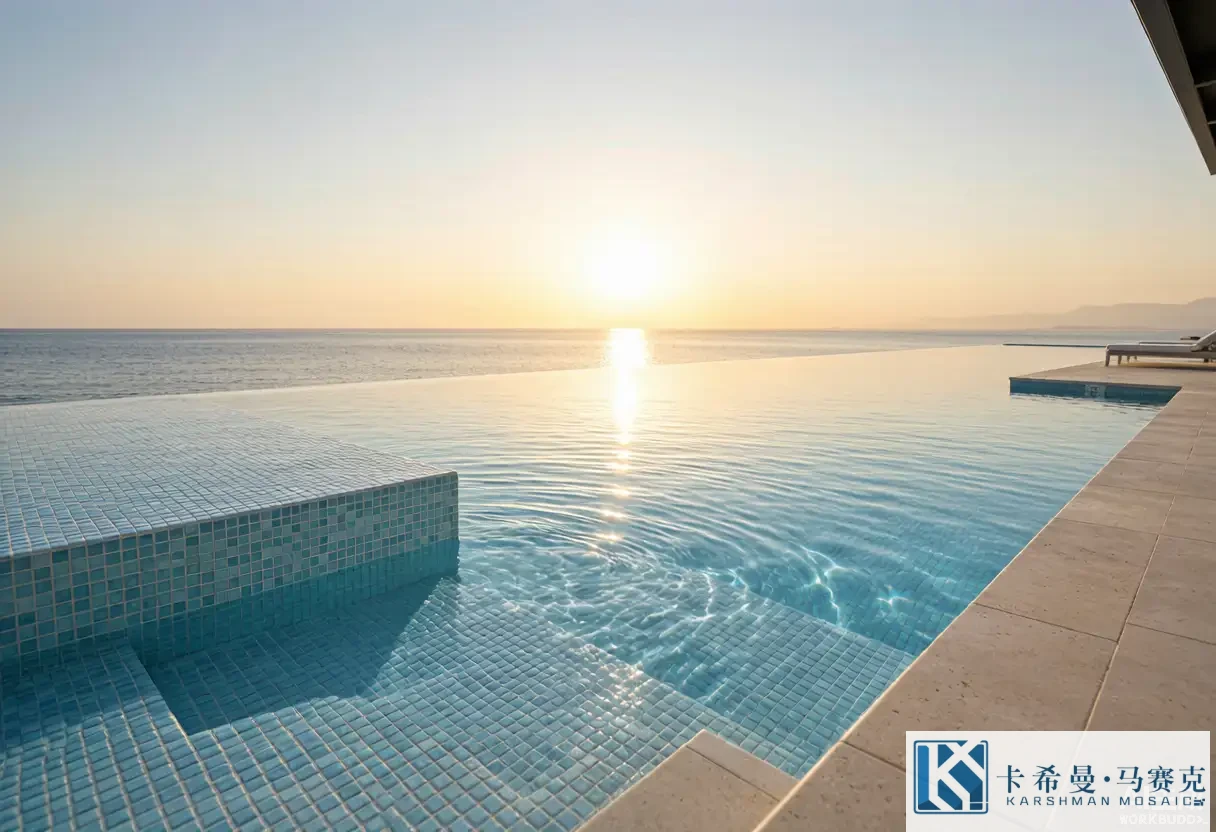
Glass mosaic fits several pool zones. The waterline – the band at the water’s edge – is the common spot, because it takes splash, sun and cleaning and benefits from a material that wipes clean. The full interior, including floor and walls, gives a continuous, tiled look that reads as calm and bright. Steps and benches use it for grip and visibility. Spas and sun shelves use it where water sits warm and moving. Choosing the zone first keeps the rest of the decision consistent.
The waterline band
The waterline earns special attention because it marks the pool more than any other strip. A glass mosaic band there hides the tide line of oils and sunscreen better than a plain plaster edge, and it gives the eye a clean rule to follow. Many designs pair a darker waterline with a lighter field, or reverse it, to frame the water. Because the band is small, a bolder color works here without dominating the whole pool.
Color choices for water
Color changes how the water reads. Light blues and aquas keep a pool feeling open and tropical; deeper blues add depth and a cooler mood; a near-white or pale tile makes a small pool feel larger. The same tile looks different under sun, cloud and night lighting, so viewing a sample in your own light helps. A useful habit is to lay the sample in a shallow tray of water before buying, because the submerged color is the one you actually live with.
Slip and safety on pool floors
Pool floors get wet and stepped on, so slip resistance belongs in the spec. Look for a tile rated for wet barefoot use, and favor a slightly textured face on floors and steps over a fully glossy one. The many grout joints of mosaic already add grip compared with large tile, but the face finish still matters where people stand and turn. Matching the rating to the exact spot protects users and keeps the install within the maker’s guidance.
Frost and thermal shock
Outdoor pools face cold that indoor ones do not. Glass that is annealed and tested for thermal shock resists cracking when warm water meets a cold night or when a freeze cycle passes. In regions with hard winters, confirm the tile and the setting system are rated for the local low, and detail the movement joints so the surface can expand and contract. A small check of the rating avoids a crack that appears only after the first cold season.
Chemical resistance and cleaning
Pool water carries chlorine, salt or other treatments, and glass mosaic holds up to them when grouted with a pool-grade product. Routine care is simple: keep the water chemistry balanced, brush the tile during normal cleaning, and wipe the waterline as part of pool maintenance. Because glass does not absorb, marks sit on the surface and come off with gentle products, which keeps the band clear without harsh scrubbing that could dull a glossy face.
Spa and hot tub use
Spas add heat and circulation to the pool equation. Warm, moving water suits glass mosaic well, provided the tile and adhesive are rated for the temperature the spa reaches. The interior of a spa is a small, intense environment, so color and finish show strongly; a calm tone keeps the space relaxing, while a textured floor gives footing where users step in and out. Detailing the penetrations for jets and drains cleanly keeps the look intact around the fittings.
Fountains and water features
Beyond the pool itself, glass mosaic lines fountains, spillways and reflecting pools. In these features the tile is often dry part of the day and wet the rest, so the non-porous body and stable color help it read well in both states. A fountain face benefits from a tile that shrugs off mineral marks, and a regular rinse keeps the surface bright. For a feature in a public or busy setting, choosing a durable, well-graded sheet protects the look under frequent use.
Installation notes
Good performance starts with the setting. Use an adhesive rated for submersion and for the substrate, set the sheets with even pressure, and keep movement joints where the structure needs them. Grout should be a pool-grade product matched to the joint width, and it should be sealed on the maker’s schedule. A tiler who has set glass mosaic before will handle the backing and the alignment; asking for that experience is a reasonable step that protects the finish.
Design ideas
Design options range from calm to bold. A single-color interior with a contrasting waterline is a safe, clean look. A gradient from light at the shallow end to deeper at the deep end adds depth without a pattern. A simple mosaic band or a few lane lines gives order to a lap pool. For a feature wall behind a spa, a handmade or textured glass range adds character. The brief should set the level of detail before samples are ordered.
Specifying for a pool project
Pulling the steps together: name the zones, pick a color that reads well submerged, confirm slip and frost ratings for the location, choose a pool-grade adhesive and grout, and approve a sample in water before the order. A short list like this keeps the pool project on track and the result close to the approved sample. Small discipline at selection protects the finish once the tile is fixed and full of water.
Choosing tile size and sheet for a pool
Pool mosaic comes in several tesserae sizes, and the size changes the look and the install. Smaller pieces follow the curves of a free-form pool and read as fine and detailed; larger pieces set faster on a straight, rectangular pool. The sheet size decides how many joints a tiler lays per square meter, so a big pool with fine tile takes longer than the same area in a larger format. Matching the size to the pool shape keeps both the look and the labor reasonable.
Grout color and its effect underwater
Grout color changes the read of a tiled pool more than many expect. A grout close to the tile color makes the surface look continuous and calm; a contrasting grout makes the grid pop and reads as graphic. Underwater, a light grout can show soiling sooner, while a mid-tone hides the tide line better. Because grout sits between every piece, its color is part of the design, and approving a grout sample next to the tile before the order avoids a surprise once the pool is full.
Maintenance through a season
Glass mosaic pools stay clear with routine care rather than heavy work. Through a season, keep the water chemistry balanced, brush the tile during normal cleaning, and wipe the waterline as part of pool upkeep. At the start and end of the season, a gentle clean of the tile and a check of the grout keeps the surface bright. Because glass does not absorb, marks sit on the face and come off with mild products, so the band stays clear without scrubbing that could dull a glossy finish.
Common pool tiling mistakes
A few mistakes repeat across pool jobs. Skipping movement joints leads to cracks when the structure moves. Using a non-pool adhesive or grout shortens the life of the finish. Setting paper-backed sheets without soaking the face leaves a weak bond. Choosing a glossy floor tile in a busy step zone reduces grip. None of these is hard to avoid; each is a check to put on the plan before the tiler starts, and together they protect the result for years of use.
Working with a designer or builder
For a new pool or a resurface, the tile choice is easier with the designer or builder in the loop early. Share the pool shape, the use – lap, play or spa – and the look you want, then review samples in water before the order. A coordinated choice of tile, adhesive, grout and lighting keeps the finish consistent and the schedule on track. Asking for a laid sample of the waterline and field together shows how the bands meet, which a single loose tile cannot reveal.
Comparing glass with other pool finishes
Glass mosaic is one of several pool finishes, and a quick comparison helps. Polished plaster is cheaper and smooth but shows wear and stains sooner, and it needs periodic resurfacing. Large-format tile reads clean and modern but follows curves poorly and gives less grip underfoot. Aggregate or pebble finishes feel natural yet trap more soil in the texture. Glass mosaic costs more than plaster yet brings lasting color, good grip from the many joints, and the ability to shape a free-form pool. The right pick depends on budget, shape and how long the look should last, so weighing glass against the alternatives is a reasonable step before the order is placed.
Glass mosaic earns its place in pools and spas through water resistance, lasting color and a look that suits wet spaces. If you want to compare pool-grade ranges and see them under water, contact our team for sample boards and current lead times.