
Stock mosaic suits very projects, but some spaces call for a custom design. A lobby mural that reflects a brand, a pool logo, a family crest above a fireplace, or a flowing abstract pattern along a hallway—these are the projects where off-the-shelf tile cannot reach what you have in mind.
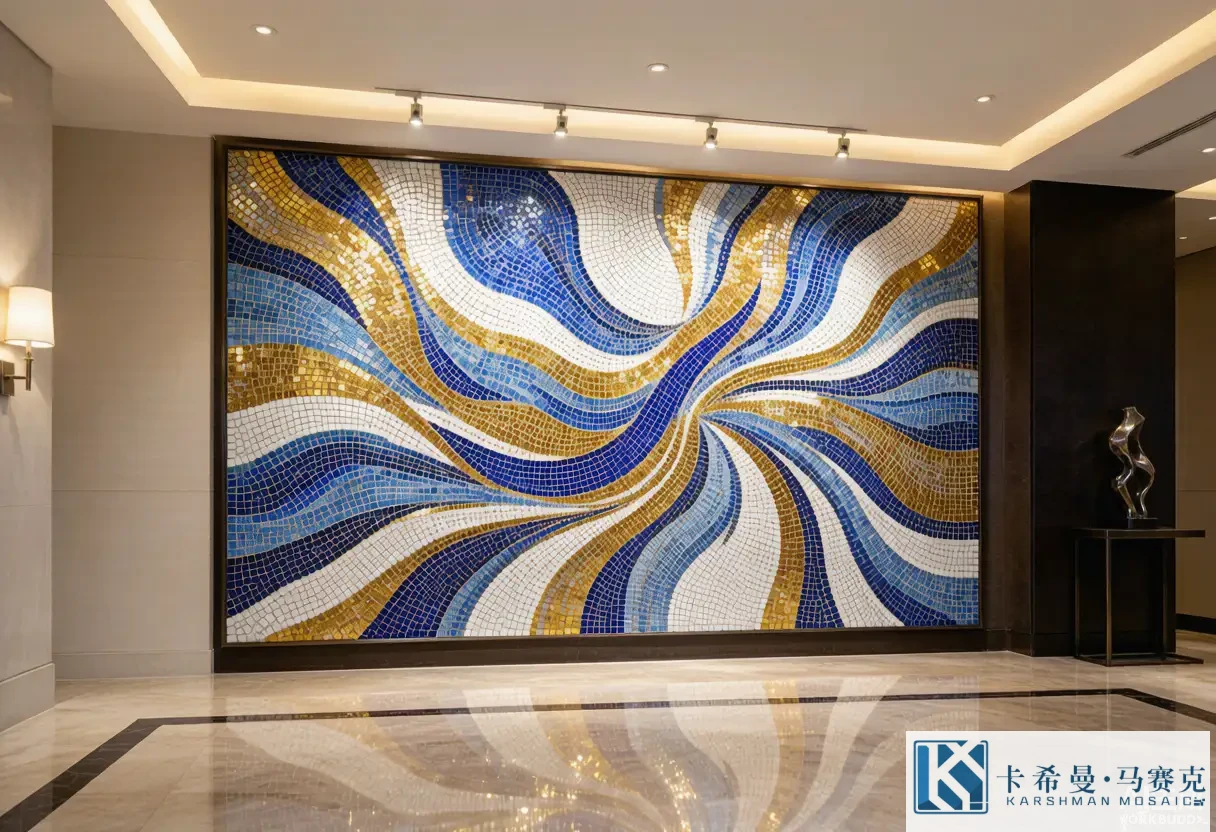
Custom mosaic also makes sense when you want a specific color blend, a particular pattern, or artwork that no catalog offers. The trade-off is more planning, more lead time, and a higher budget. In return, you get a piece that fits the space and the story you want to tell.
The Design Brief
A good custom project starts with a clear brief. The maker needs to know the wall size, the lighting, the viewing distance, the mood, and any reference images. Photos of the room, sketches of the wall, and examples of what you like or dislike all help narrow the design early.
It also helps to set priorities. Is the goal an exact reproduction of a painting, a faithful but simplified version of a logo, or a new abstract pattern in your color palette? The answer drives how the artwork is translated into tile.
Concept Sketches and References
The first round is usually rough sketches and reference photos. The maker turns these into a cleaner concept drawing, often in color, and shares it for review. At this stage, small changes in scale, color balance, or pattern density are easy and inexpensive to make.
Once the concept is signed off, the design is broken down into a sheet layout. This is the working drawing the production team uses to assemble each section. It also guides the installer on site.
Material and Color Sampling
Material choice shapes the look as much as the design itself. Glass mosaic gives color depth and light reflection; ceramic gives a softer, more matte feel; stone brings texture but more weight and sealing needs. For a pool or wet area, glass and porcelain are practical choices.
Color is sampled in real light, not on a screen. A sample board of chips in the actual chosen colors is mailed or shipped to the site, taped on the wall, and viewed in daylight and at night. Color can shift surprisingly between screen and physical chip, so this step saves rework later.
Translating Art into Tile Sheets
Every design has to be translated from image to mosaic sheets. The maker maps the design to a grid of chips, choosing sheet sizes that suit the scale. Detailed parts need smaller chips and tighter sheets; background fields can use larger chips and faster coverage.
The translation also handles the edges. Designs rarely fit a wall exactly, so the edges are planned to land cleanly at corners, ceiling, or floor. This is the step where an experienced maker earns the fee.
Production and Quality Checks
Production starts with cutting chips to the chosen sizes and tones. Sheets are assembled by hand or by machine, depending on the design.
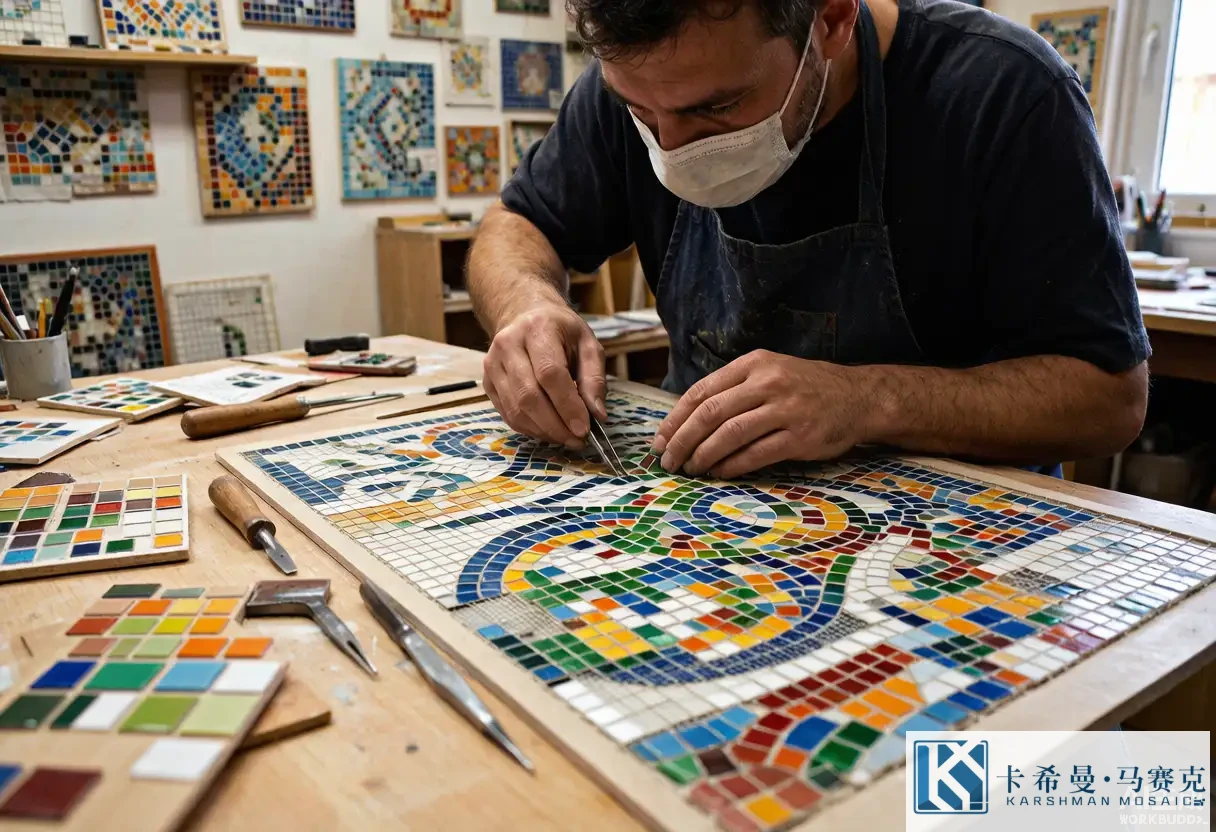
For large murals, the design is divided into numbered panels so the installer can lay them down in order.
Quality checks happen at every stage. Chips are sorted by tone, sheets are checked against the working drawing, and finished panels are laid out together for a full review. Any off-tone chips are replaced before the panels are packed.
Shipping, Installation and Care
Custom mosaic panels are packed and shipped with care, usually on pallets with clear labeling for the install order. The installer lays out the panels dry first to check the fit, then sets and grouts them in sequence. A dry layout catches layout errors before adhesive goes on the wall.
After installation, the same care rules apply as for any mosaic: gentle cleaning, mild cleaners, and resealing where stone is used. With reasonable care, a custom mosaic lasts for decades. The hard work is in the design and production; the on-site care is simple.
Cost, Lead Time and What to Ask
Custom mosaic is priced by size, chip count, design complexity, and material. Detailed murals cost more per square foot than simple gradient panels. Lead time runs from a few weeks for simple patterns to several months for large, detailed work.
Ask the maker for references, photos of past work at the same scale, and a clear schedule with milestones for design, production, and shipping. A clear plan and a sample board early on are good signs that the project will land well.
A custom mosaic is one of the few finishes that can carry a story into a room. With a clear brief, careful sampling, and a maker who walks you through the steps, the result is artwork that fits the wall and lasts. To start a custom mosaic project, visit our contact page and tell us about the wall you have in mind.