
Bathrooms combine small, often oddly shaped surfaces with constant moisture and steam. Mosaic tiles handle both challenges well.
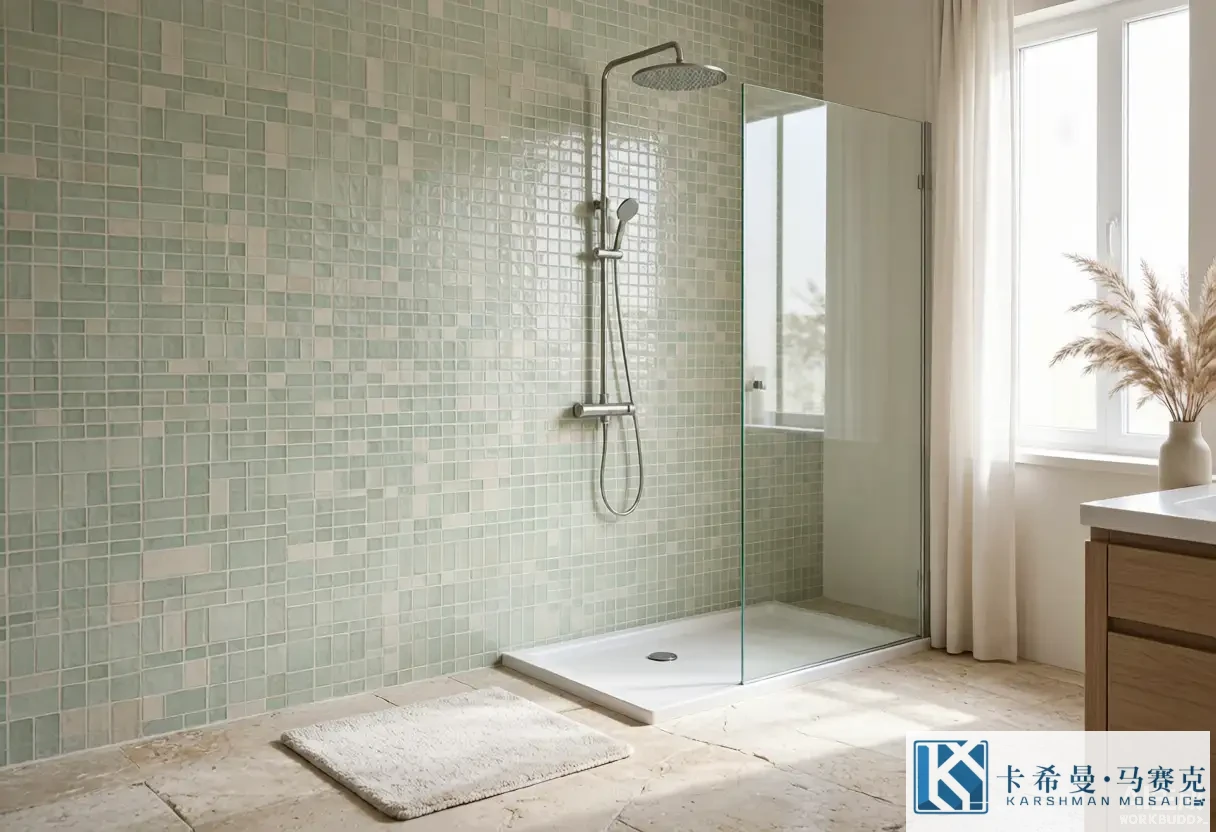
The small pieces bend around corners, follow curves, and fit tight spaces, while the many grout lines add grip and texture where the surface gets wet.
In a bathroom, mosaic can do three things at once: protect the wall, add interest to an otherwise plain surface, and bring color or pattern to a small room. The trick is choosing the right surface, the right material, and the right grout for the wet environment.
Shower Walls
The shower is a popular place for mosaic in a bathroom. The small chips follow the slope of the floor and wrap corners easily. A glass or ceramic mosaic in a soft tone makes a small shower feel larger and brighter; a darker tone adds depth and a spa-like mood.
For shower walls, plan the sheet layout before installation so that the pattern lands cleanly around the valve, niches, and the top edge. Mosaic sheets are easier to align in advance than to cut and patch at the end.
Bathroom Floors and Slip Resistance
Bathroom floors get wet, so slip resistance matters. Mosaic floors give more grip than large-format tiles because the grout lines break up the surface. Smaller chips give more grip than larger ones. For accessible bathrooms, look for mosaic with a textured surface and a higher slip rating.
Glass mosaic is fine on walls but can feel hard under bare feet on a floor. Ceramic or porcelain mosaic gives a softer touch and stays warmer on cold mornings. A matte finish reads more relaxed and hides water spots better than high gloss.
Vanity Backsplashes and Niches
The vanity backsplash is a small surface where a feature mosaic can stand out. A strip of blue, green, or patterned mosaic above the basin adds a focal point without much cost, and it is simple to replace later if tastes change.
Shower niches are another small spot worth attention. A contrasting mosaic inside the niche reads as jewelry and turns storage into a feature. Keep the niche depth shallow enough that the mosaic does not interfere with bottles.
Material Choices for Wet Areas
Glass mosaic resists water and stains well, which suits both shower walls and vanity areas. Ceramic and porcelain mosaic are equally waterproof once grouted and sealed, and they offer a wider range of finishes. Stone mosaic brings texture but needs more sealing and care, so it is better on walls than on bathroom floors.
For family bathrooms, a porcelain mosaic with a matte finish is a practical choice. For a spa look, a glass mosaic in soft greens or blues reads calm and reflects light off the water.
Grout, Sealing and Waterproofing
Grout choice makes a difference in wet areas. Epoxy grout resists mold and staining far better than cement grout and does not need sealing. It costs more and takes longer to install, but in a bathroom the extra step is worth it.
Behind the tile, a waterproof membrane is a key layer. It protects the substrate from any water that gets past the grout. Quality membrane, paired with good grout and proper sealing at changes of plane, is what keeps a bathroom dry for years.
Lighting and Color in a Wet Room
Bathroom lighting is layered: vanity lighting, overhead, and often a dedicated shower light. Mosaic reflects and absorbs that light differently than large tiles. A glass mosaic sparkles under direct light; a matte ceramic softens it.
Color affects how large the bathroom feels. Light tones open up a small bathroom; darker tones create a more enclosed, restful mood.
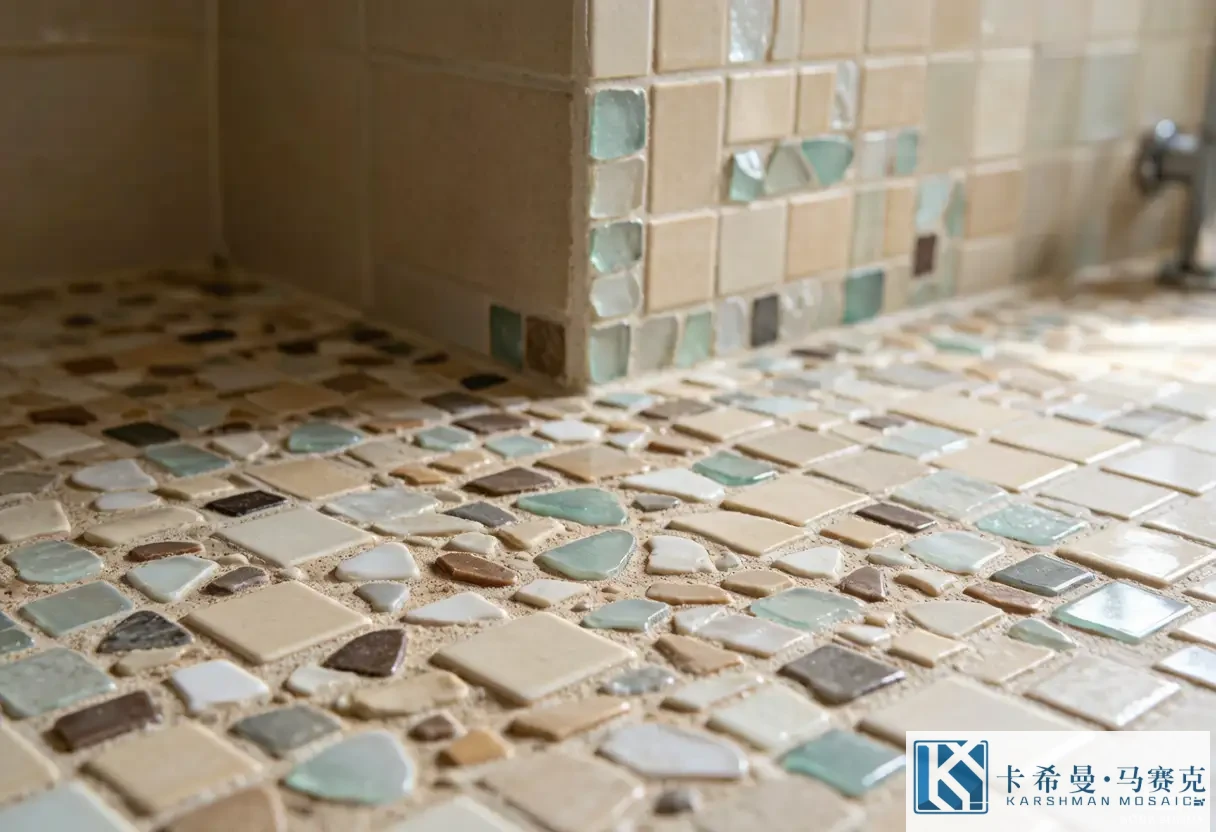
In a tight room, carrying the same mosaic from the shower wall onto the floor extends the line of sight and adds space.
Planning and Installation Tips
Before ordering, measure each surface carefully and account for waste, corners, and the niche detail. Keep a few extra sheets from the same batch for future repairs, since batches vary in tone. Plan the sheet layout with the installer so that the pattern is centered and falls cleanly at edges.
A mosaic bathroom is a rewarding small-room upgrades. Pick the material for the wet conditions, plan the grout and waterproofing with care, and use the mosaic as a feature on at least one wall. For help designing a bathroom mosaic layout, visit our contact page to start a conversation with our team.