
A backsplash has to do two jobs at once: protect the wall from cooking splashes and add character to the room. Mosaic tiles handle both well.
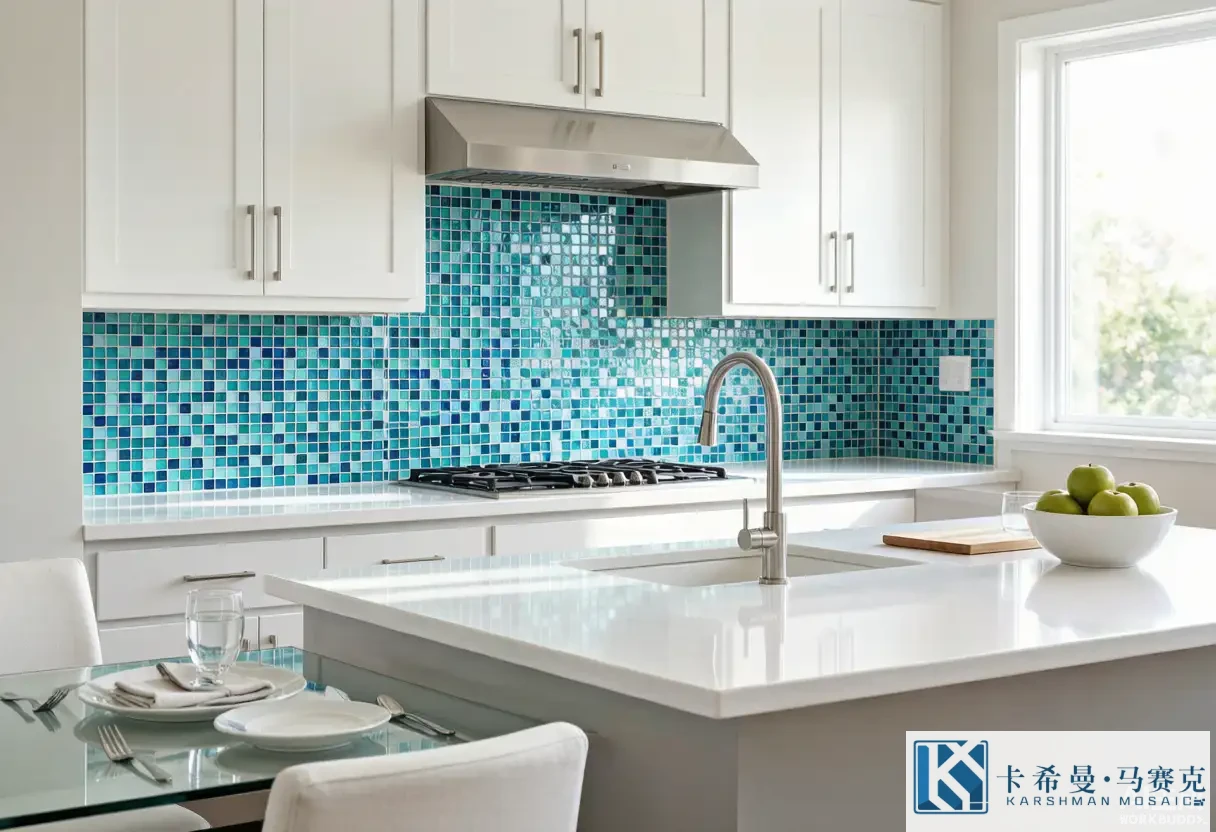
The small pieces give you room to build texture, color shifts, and detail that larger tiles cannot reach, while the grout lines break up the surface so everyday marks are less obvious.
In a kitchen, the backsplash is also the surface that ties the worktop, cabinets, and wall together. A well-chosen mosaic can quietly link all three, or stand out as the main feature. The choice depends on how much you want the room to speak.
Choosing the Right Material
Glass mosaic is a common choice for kitchen backsplashes. It reflects light, wipes clean easily, and the small chips create depth that flat tiles cannot match. Because glass is non-porous, it does not absorb cooking oils, which makes daily cleaning simpler.
Ceramic mosaic gives a softer, more matte look. It suits kitchens that lean warm or traditional, and it pairs well with stone countertops. The surface takes grout evenly, so you can hide or highlight the joints depending on the look you want.
Stone and pebble mosaic bring texture but need sealing. In a working kitchen, where steam and grease are daily, sealing has to be kept up. For many homeowners, glass or ceramic is the easier long-term answer.
Pattern Ideas
A single-color mosaic in a clean brick or square layout reads calm and modern. A gradient from dark to light draws the eye up and works well behind the cooktop. A two-tone geometric pattern adds structure without becoming busy. For a true focal point, a custom mural or a bold color blend turns the backsplash into the room’s signature.
Pattern choice also affects how busy the kitchen feels. Smaller chips create more movement; larger chips read as a calmer surface. If the cabinets and counters are already detailed, a simple pattern keeps the room balanced.
Layout Height and Edge Details
very backsplashes run from the countertop to the underside of the upper cabinets, often 15 to 18 inches. In kitchens without uppers, a full-height backsplash to the ceiling gives a strong, clean look and protects more wall. Decide the height before ordering, because sheet sizes are easier to plan around a fixed dimension.
Edge details matter at the visible ends. Metal or PVC trims finish a clean edge and protect cut sheets. Where the backsplash meets a window or open shelf, plan the sheet layout so cuts fall at corners, not in the middle of a pattern.
Grout Color and Maintenance
Grout color changes the whole feel of a backsplash. A grout close to the tile color makes the surface read as one calm field. A contrasting grout brings out the pattern and shape of each chip. Either works, but it is worth seeing samples before committing.
For a working kitchen, epoxy grout is worth considering. It resists stains from oil and wine far better than cement grout and needs less sealing. The trade-off is that epoxy is harder to work with, so installation takes longer.
Lighting and Color
Backsplashes live under cabinet lighting, so think about how the mosaic reads at night as well as during the day. Glass mosaic shines under LEDs, while matte ceramic softens the same light. Hold samples against the wall in the actual room, because color shifts a lot between store and home.
If the room has cool countertops, a warm-toned mosaic balances the space. If the room is already warm, a cooler mosaic or a clean white grounds it. A neutral scheme ages better and makes future cabinet changes easier.
Choosing the Right Chips
Chip size affects both look and installation. Larger chips (around 20 to 25 mm) read modern and install quickly; smaller chips suit detailed patterns and curved walls.
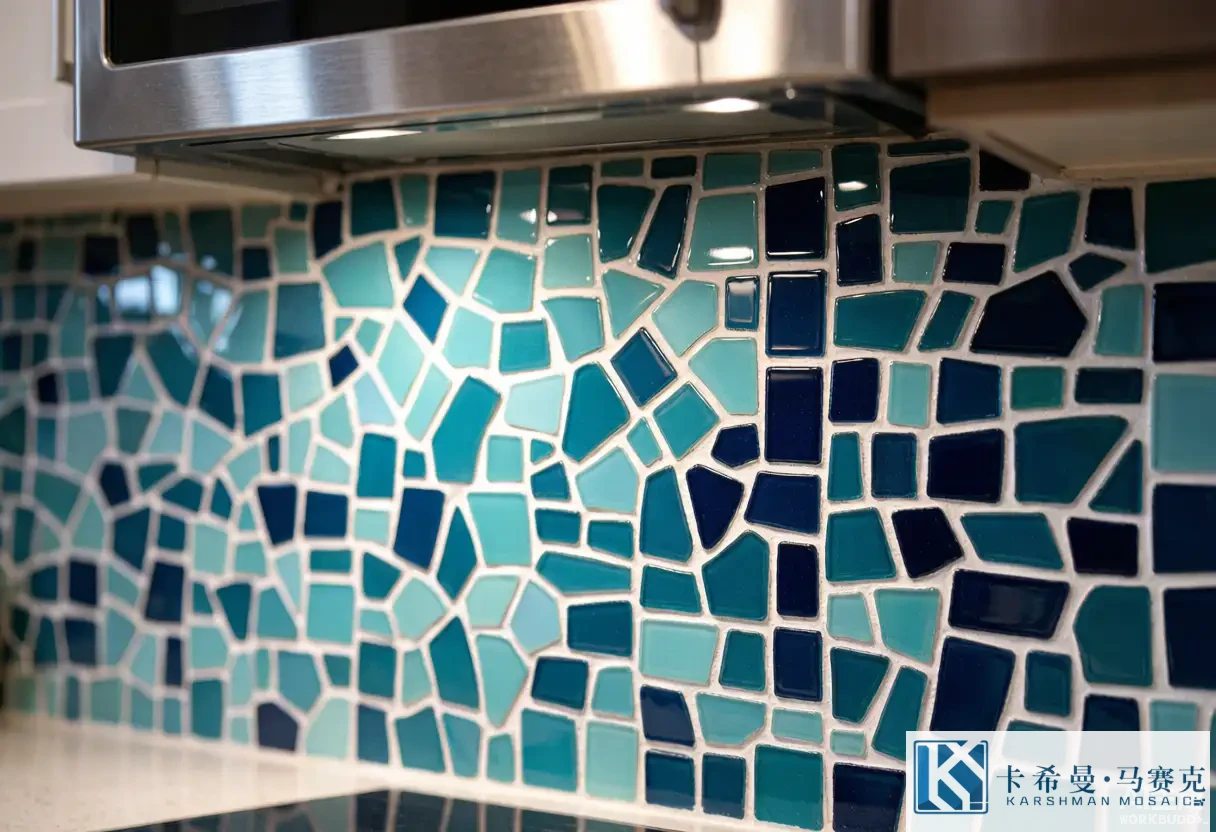
For a gradient effect, blended sheets save hours of sorting on site and keep color flow even across the wall.
Installation and Ordering Tips
Order 10 to 15 percent extra to cover cuts, future repairs, and pattern matching. Keep the batch numbers from different boxes in case you need a top-up later. Plan the layout on paper or with the installer before setting sheets, so cuts happen at edges and the pattern stays aligned.
A mosaic backsplash is a reachable way to give a kitchen personality. Pick the material and pattern for the way you cook and the mood you want, plan the grout with care, and keep an extra box of tiles for the years ahead. For help choosing a backsplash that fits your kitchen, visit our contact page to talk with our team.