
Buyers often weigh ceramic mosaic against glass mosaic, and both are strong finishes with different strengths. Ceramic starts as clay and is fired; glass is melted and cast. That difference shows in the look, the performance and the cost. This guide compares the two across the points that matter, then shows how to choose by room rather than by habit.
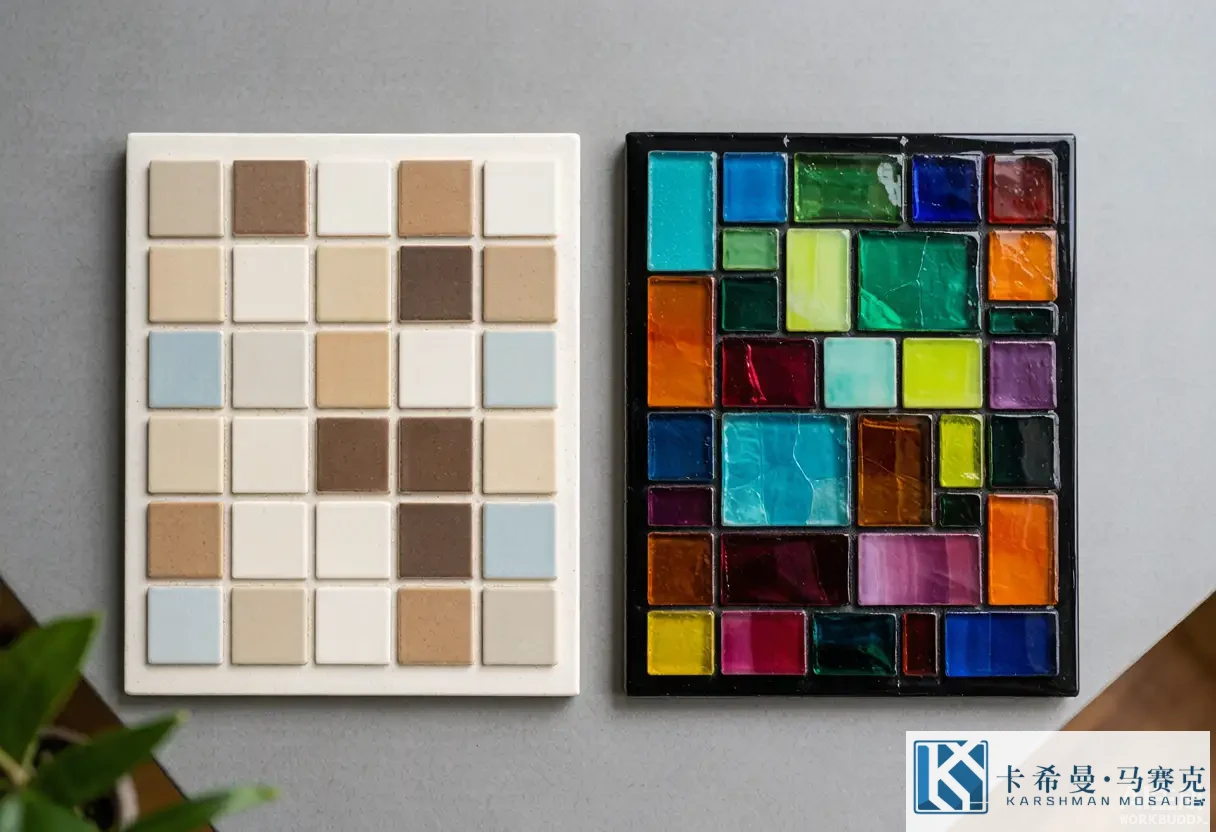
A quick comparison
At a glance, ceramic reads warm and earthy with a matte or soft gloss face; glass reads bright and cool with depth and shine. Ceramic costs less for most ranges and suits floors and walls; glass costs more and suits wet, decorative and water-facing zones. Neither is right for every job, which is why many projects pair a working ceramic field with a glass accent. The right pick follows the room, not a general ranking of materials.
Material and making
The materials differ at the start. Ceramic is pressed clay fired in a kiln, sometimes glazed; glass is silica melted and cast or fused. Ceramic can carry color through a glaze on the face; glass carries color through the body. These routes give ceramic a heavier, warmer feel and glass a lighter, reflective one. Understanding the making helps explain why the two feel different underfoot and to the eye across a finished space.
Look and light
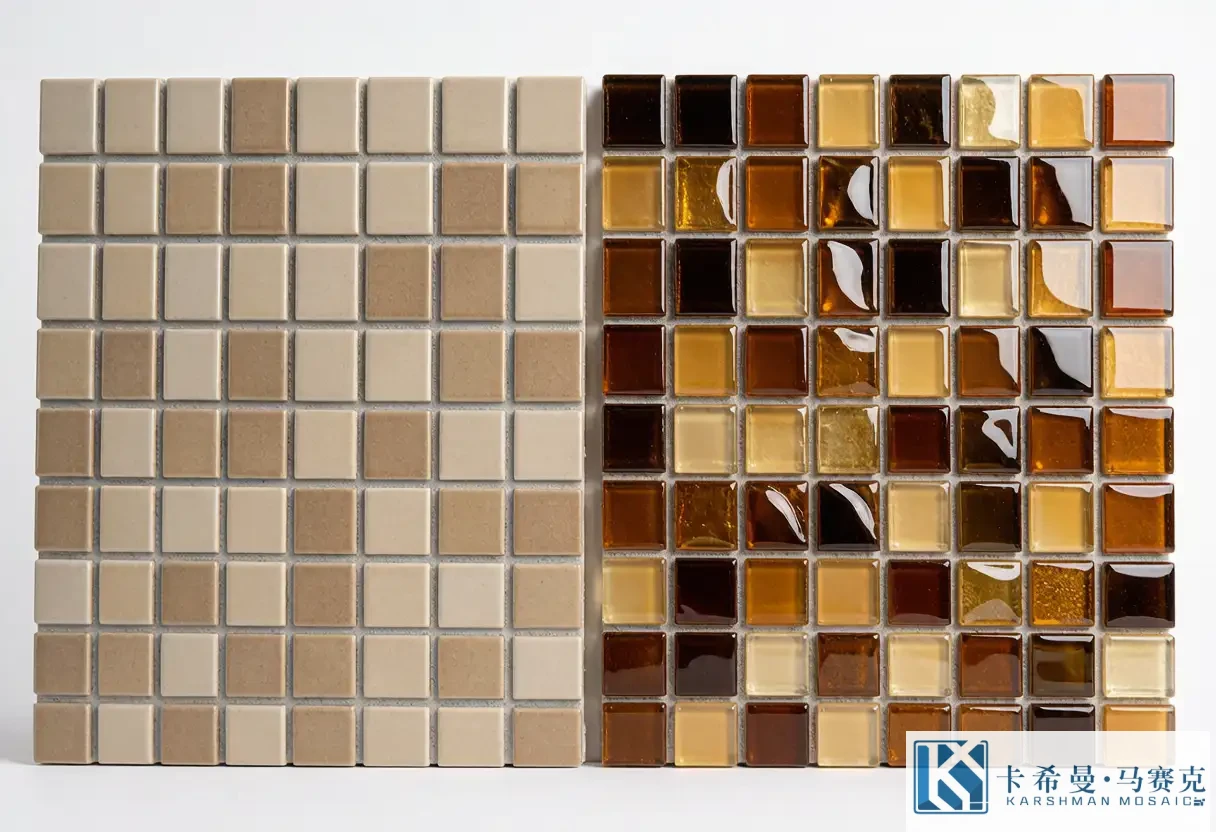
Look is where the two diverge most. Ceramic gives a soft, tactile surface that reads calm and pairs with natural materials. Glass gives a reflective face that brightens a space and shows color with depth. In a dim room, glass adds sparkle; in a bright room, ceramic keeps the light gentle. The choice often comes down to whether you want the surface to glow or to ground the space, and both answers are valid for different schemes and moods.
Water and wet areas
Both resist water when grouted, but glass has an edge in fully wet and submerged zones because the body takes up almost no water. Ceramic works well on shower walls and backsplashes; for pools and spas, glass is the common pick because it copes with constant immersion and chemicals. For a bathroom that is wet but not submerged, either can work, and the decision can rest on look and budget rather than performance alone in that setting.
Durability and wear
On floors and high-traffic areas, ceramic – especially porcelain – tends to suit the wear better because the body is dense and the face is often matte. Glass can scratch and shows marks on a glossy face, so it fits walls and accents more than busy floors. For a working floor, ceramic or porcelain usually carries the load; for a decorative wall, glass brings the drama. Matching the material to the traffic keeps the surface sound over time.
Slip and safety
Slip depends more on finish than material. A matte ceramic or a textured glass both give grip; a glossy face of either is slick when wet. The many joints of mosaic add grip either way, but the face finish still matters on a step or a shower floor. Checking the rated slip value for the exact location protects users and keeps the install within the maker’s guidance, whichever material you choose for the zone.
Cost
Cost usually favors ceramic. Standard ceramic mosaic sits at a moderate price, while glass – particularly cast or handmade ranges – costs more because of the making and the lower yield. A mixed approach keeps cost down: a ceramic field with a glass band gives both looks without a full wall of the dearer material. Setting a budget by zone, and spending where the eye lands first, is a practical way to get the result without overspend on every surface.
Care and cleaning
Both clean with mild products and a soft cloth. Glass shows water spots and marks on a glossy face, so it wants prompt wiping; ceramic hides marks better, especially in matte. Grout care is the same for both – seal it on schedule and keep it clean. Because the areas are usually small, routine care takes little time for either material, and the difference is mostly about how often you wipe a shiny surface after use.
Where each fits
Ceramic suits kitchens, bath walls, floors, entries and outdoor zones rated for frost. Glass suits pools, spas, backsplashes, feature walls and accents where shine matters. Reading the room tells you the material: a working, trafficked, budget-minded surface leans ceramic; a wet, decorative, light-catching surface leans glass. Letting the use decide avoids forcing a pretty but wrong tile into a harsh spot where it will underperform.
How to decide by room
A practical way to choose is by location. List the zones, note the traffic and the wetness, then match material to each. A kitchen backsplash can be either, with ceramic for value and glass for glow. A shower wall can be either, with ceramic for calm and glass for brightness. A pool calls for glass. A floor should be ceramic or porcelain for grip and wear. This room-first method keeps the choice practical and the result sound.
Mixing both in one project
Many designs use both. A ceramic field on the working surfaces with a glass band on a feature wall, or a glass niche inside a ceramic shower, gives contrast without clutter. Because glass is thin, it sits flush beside ceramic, and its color draws the eye to the intended zone. The trick is to let one material lead and the other support, so the space reads as one scheme rather than two finishes competing for attention across the wall.
Sample and sign-off
Before a volume order, approve a physical sample of each material under your lighting, and lay them side by side to see how they meet. For a mixed design, approve a laid sample, not just loose pieces, because the joint color and the spacing change the final read. This sign-off is the cheapest point to adjust, and it gives both sides a reference if a question arises later. Treating the sample as the contract settles many disputes before they reach the site.
Color and finish range compared
The two materials cover color differently. Ceramic carries a large glaze palette – warm terracotta, cream, grey, blue, green – in matte, gloss and textured faces. Glass covers blues, teals, neutrals and a few bold tones with a reflective, depth-filled face. If you want a warm, earthy scheme, ceramic gives more range; if you want a bright, light-catching surface, glass leads. Knowing which look you are after narrows the field faster than browsing every sample on a showroom wall at random.
Environmental and recycling notes
Both materials have an environmental side. Ceramic is made from abundant clay and is long-lived, which spreads its making impact over many years of use; some ranges include reclaimed material in the body. Glass often uses recycled cullet, which lowers the energy needed to melt. Neither is free of footprint, but both are durable, and a tile that lasts reduces the churn of replacement. For a project that tracks material stories, asking the supplier about reclaimed content is a reasonable step.
Resale and long-term value
For a home, tile choice affects both daily life and later value. A calm, well-set ceramic or glass mosaic in a bath or kitchen reads as cared-for and dates slowly, which helps at resale. Bold, trend-led choices can either delight or tire, so expressing trend through a small, changeable accent is a safer route than covering a whole room. Matching the level of trend to the zone keeps the design flexible, and a tidy, lasting install is what owners and buyers notice first.
Common mistakes when choosing
A few mistakes repeat. Picking a glossy floor tile in a busy wet zone reduces grip. Choosing a pretty but wrong material for a pool – such as a non-rated ceramic – shortens life. Skipping movement joints leads to cracks. Forgetting to approve a sample under the room’s light leads to a color shock. None of these is hard to avoid; each is a check to put on the plan before the tiler starts, and together they protect the result for years of normal use.
Sample board workflow
A sample board turns a loose idea into a decision. Lay the chosen tile next to the grout, the adjacent material and a swatch of the room’s other finishes, then view it under the light the space actually has. A board shows the joint color, the spacing and the way the material meets stone or paint – details a screen cannot. Building the board before the order is the cheapest point to adjust, and it gives the tiler a clear reference on the day of the job, reducing the chance of a mismatch.
A short decision checklist
Pulling it together, the steps are: list the zones, note traffic and wetness, pick material by use, choose finish by grip and look, set color from the room outward, and approve a sample under your light. A short list like this keeps the choice practical and the project on date. Small discipline at selection protects the finish once the tile is fixed, and it keeps ceramic and glass each in the place where they perform at their strongest.
How lighting changes the comparison
Light tips the balance between the two. In a dim or north-facing room, glass mosaic brightens the space and adds a sense of depth that ceramic cannot match. In a bright, sun-filled room, ceramic keeps the light calm and avoids the hot spots a glossy glass face can throw. Planning the light source before the tile is fixed helps you pick a finish that responds well – glossy glass for sparkle, matte ceramic for steadiness – so the room reads as intended through the day.
When to mix rather than choose one
For many rooms, the answer is not ceramic or glass but both. A ceramic field on the working walls with a glass band at the waterline, or a glass niche set into a ceramic shower, gives the practical base and the decorative lift without covering a whole wall in the dearer material. Because glass is thin, it sits flush beside ceramic, and the two share a grout line cleanly. Letting the use decide where each appears keeps the project balanced in both look and cost.
Ceramic and glass mosaic each bring clear strengths, and the choice comes down to the room, the look and the budget. If you want to compare both side by side, contact our team for sample boards and current lead times.