
A mosaic pool that is installed well will stay attractive for years, but it still needs routine care.
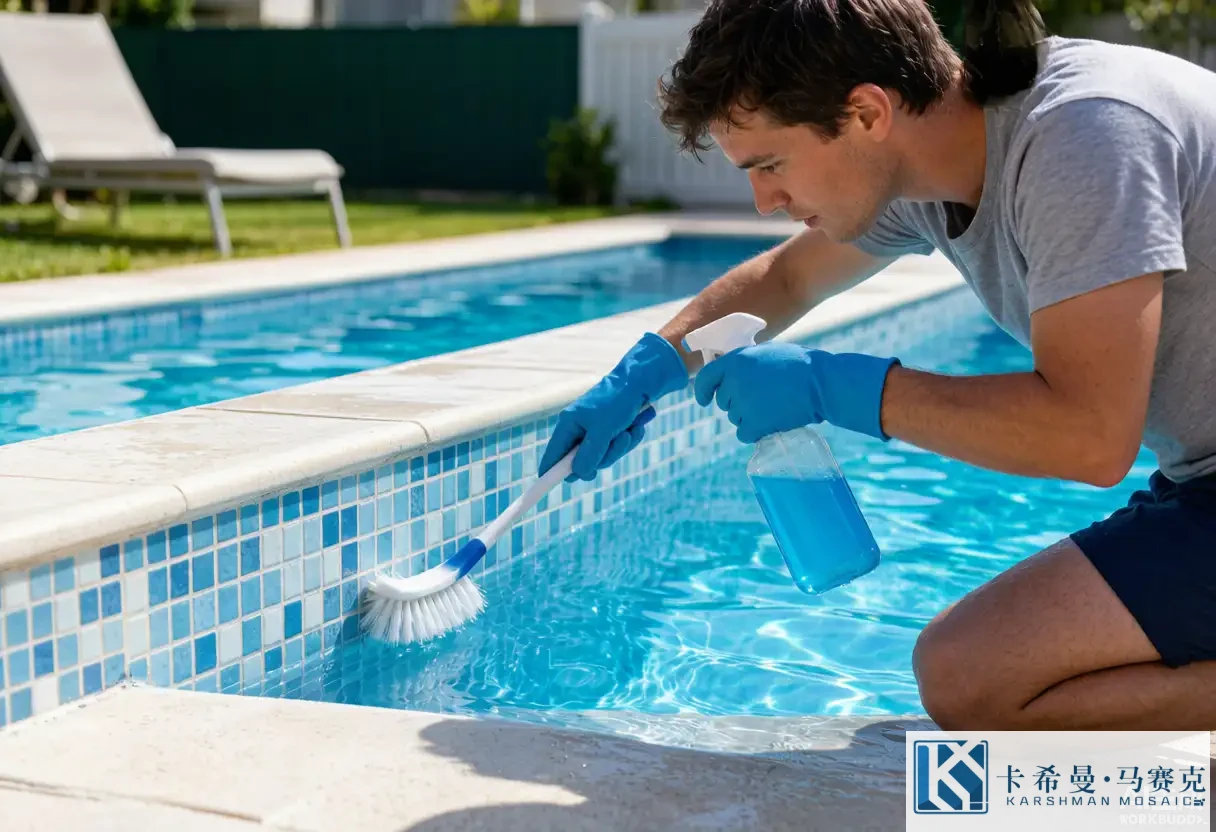
The good news is that mosaic is easy to maintain: the chips are durable and the main work is keeping the surface and the grout clean. This guide covers practical pool mosaic tile care from weekly cleaning to seasonal shut-down.
A little attention on a schedule prevents the build-up that turns into stubborn staining later.
A Simple Routine Pays Off
Most pools stay in good shape with a light weekly brush and balanced water chemistry. Brush the walls and floor with a soft or nylon brush to lift dust and early growth before it settles into the grout. Run the filter on its normal cycle and keep pH and sanitizer in the range your pool professional recommends.
Balanced water is the quiet hero of tile care: wrong chemistry is what etches glass and weakens grout over time.
Removing Scale and Calcium
In hard-water areas, white scale can form at the waterline. A pool-safe scale remover or a mild acid made for pools, applied with a soft cloth, lifts it without scratching the tile.
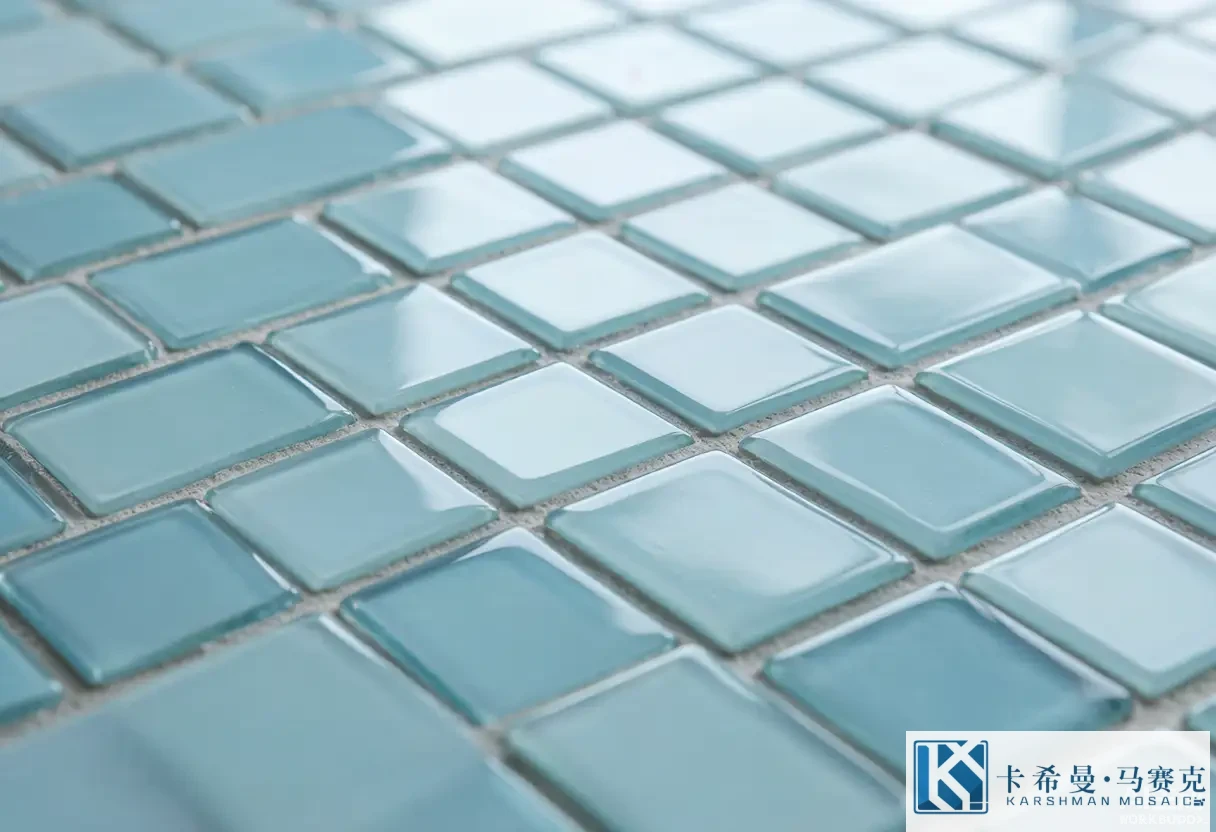
Avoid steel wool or abrasive powders—they mark glass and open the grout to staining.
Address scale as soon as you see it. Left alone, it bonds to the surface and takes far more effort to remove.
Keeping Algae in Check
Algae prefers still, shaded water and dirty grout. Good circulation, regular brushing, and correct sanitizer levels keep it from taking hold. If you spot green or black spots, treat them early with the appropriate algaecide and brush the area, then check that the filter and flow are doing their job.
A pool that is used and moved rarely stays dirty for long; stagnation is the bigger risk than the tile itself.
Caring for the Grout
The grout between chips is where problems usually start, because it is more porous than the tile. Epoxy grout resists staining far better than cement grout, but all grout benefits from clean, balanced water. If you notice a joint going discolored or soft, have it looked at before it spreads to neighbors.
Keeping the waterline clear is the single habit that protects grout the longest.
Winterizing a Seasonal Pool
In colder regions, closing the pool for winter means more than covering it. Lower the water if your climate calls for it, balance the chemistry, and clean the tile thoroughly so nothing is left to stain during the off season. A proper cover keeps debris off the surface and reduces the spring clean-up.
A pool that is closed clean opens clean, which saves a hard first scrub next season.
Knowing When to Call a Professional
Most care is straightforward, but some signs deserve a specialist: loose or hollow-sounding chips, grout that keeps discoloring after cleaning, or staining you cannot shift with pool-safe products. Catching these early protects the surrounding tile and keeps a small fix from becoming a rebuild.
Consistent, gentle care is what keeps a mosaic pool looking new. For advice on products or a professional clean for your pool, visit our contact page and tell us about your setup.