
Pool mosaic art is the practice of building a recognizable picture out of thousands of small glass or ceramic tiles. Where a plain tiled pool is mostly color and texture, a picture mosaic adds a subject: a dolphin gliding across the floor, a family crest set into the wall, or a company logo greeting guests at the shallow end. For a foreign-trade buyer or a resort owner, that picture is often the single detail people remember.
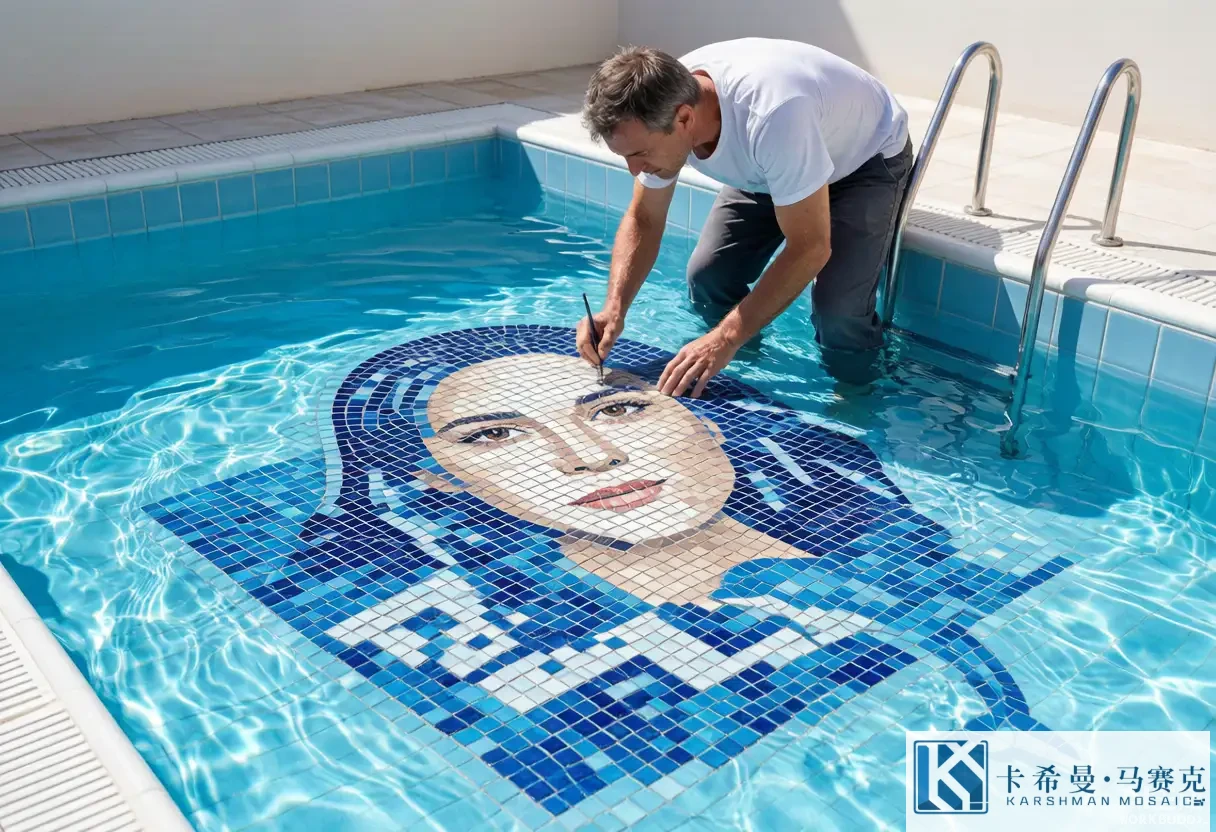
Why choose a picture mosaic
A printed vinyl decal fades and peels within a season. A tile picture, by contrast, is made from the same frost-proof, fade-resistant material as the rest of the pool, so it survives sun, chlorine and foot traffic for years. It also reads clearly through water, because the grout lines between tiles actually help the eye separate shapes. The result feels built-in rather than stuck-on, which suits hotels, clubs and homeowners who want a feature that looks intentional.
From photograph to tile
The workflow is straightforward but precise. First, a source image is chosen and simplified — busy photos lose detail underwater, so high contrast and a clear silhouette matter. The image is then mapped onto a grid, and each cell is matched to the nearest tile color from the available palette. Tiles are mounted face-down on adhesive mesh in the workshop, producing a sheet that installers can lay like ordinary tile. Finally the sheets are set in adhesive and grouted, with the grout color chosen to sit quietly behind the picture rather than cutting it up.
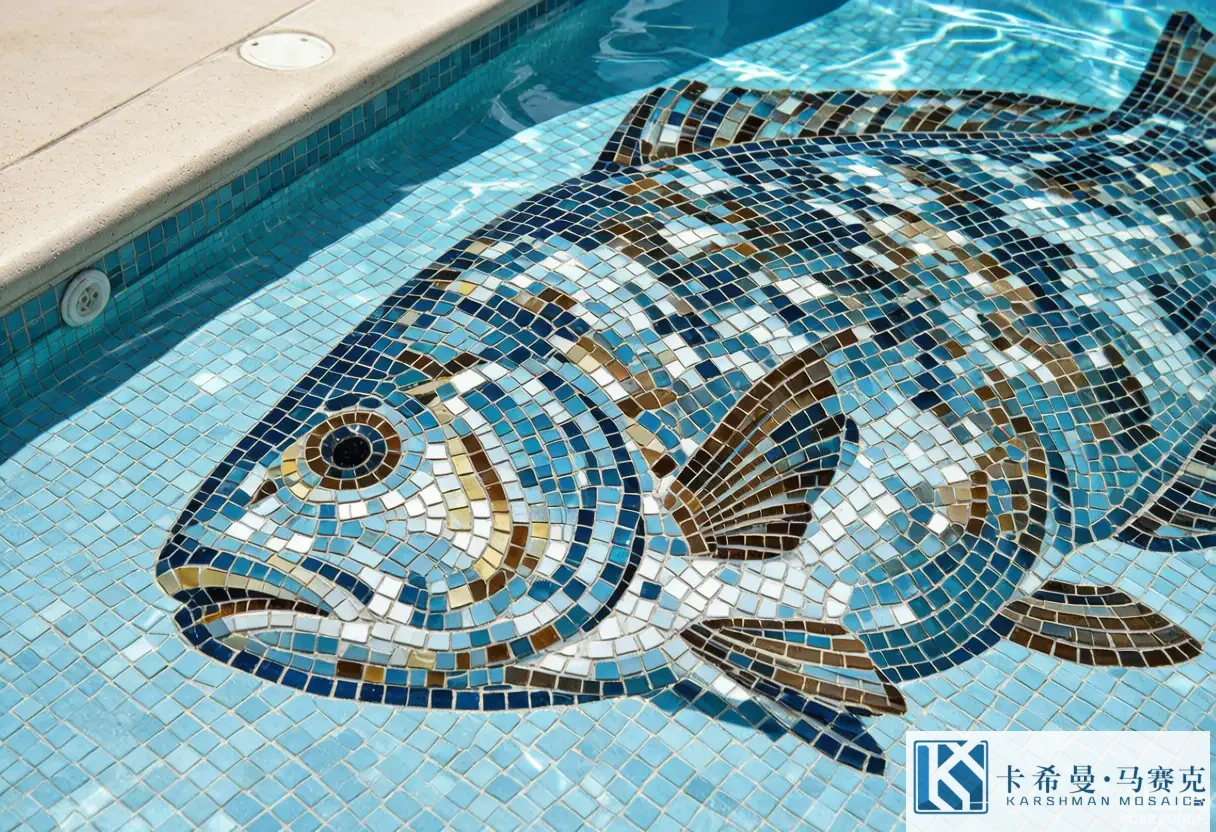
Subjects that work well
Some motifs translate better than others. Marine life — fish, dolphins, turtles and waves — is a natural fit because the surrounding water completes the scene. Lettering and logos need a little more care: keep strokes thick, avoid fine serifs, and test the layout at the actual tile size before production. Portraits and pets are possible but demand a larger area and a finer tile, since small facial details disappear from a distance. A good rule is to view the design from several meters away; if it still reads, it will read in the pool.
Design tips worth keeping
Limit the palette. A picture built from eight to twelve colors looks clean, while one using forty shades often turns muddy once grouted. Use the darker tiles for outlines and shadows, and let lighter tiles carry the highlights. Place the picture where it will be seen — the floor of the shallow end, the wall behind a spa, or the base of a staircase are all strong choices. And size the tile to the picture: a large floor scene can use a 20 mm tile, while a detailed emblem near the waterline benefits from something smaller.
Glass, ceramic or porcelain
Most pool pictures use glass tile because it keeps its color underwater and reflects light in a way that makes the image glow. Ceramic and porcelain are heavier and a little more opaque, which can flatten detail, though they suit large, simple shapes and tighter budgets. Within glass, look for frost-proof, chemically stable tile rated for submerged use; not every decorative glass tile is built to live in chlorinated water year after year. The supplier should confirm the tile is suitable for pools before you commit to a large sheet order.
Planning with your installer
Because the picture arrives as mesh sheets, your installer lays it much like ordinary tile, but the alignment matters more. Agree on the exact placement and orientation on paper first, mark the centerlines on the floor, and set the central sheets before filling outward so the picture stays centered. Allow lead time for production — a custom sheet can take a few weeks rather than days — and order a small spare sheet in case a section needs rework. Clear communication between the designer, the supplier and the installer is what turns a strong design into a clean result.
Custom pool mosaic art rewards planning, but the payoff is a pool that shows something personal every time the water settles. If you have a photo, logo or motif in mind, our team can map it to tile and produce the mesh sheets ready for your installer. Reach out to discuss your project and we will help you turn the idea into a finished, swimmable picture.