
Mosaic tiles are known for their durability and low maintenance, but a little regular care goes a long way in keeping them looking new for years. Whether you have ceramic mosaics in your kitchen, glass mosaics in your bathroom, or pool mosaics outdoors, this guide covers everything you need to know about cleaning and maintaining different types of mosaic tiles.
Why Maintenance Matters
Mosaic tiles are resistant to water, stains, and wear — but they are not maintenance-free. Over time, grout lines can absorb dirt and discolor, hard water can leave mineral deposits, and outdoor tiles can develop algae or efflorescence. A consistent cleaning routine prevents these issues from becoming permanent and protects your investment.
Daily and Weekly Care
Wipe Down Surfaces
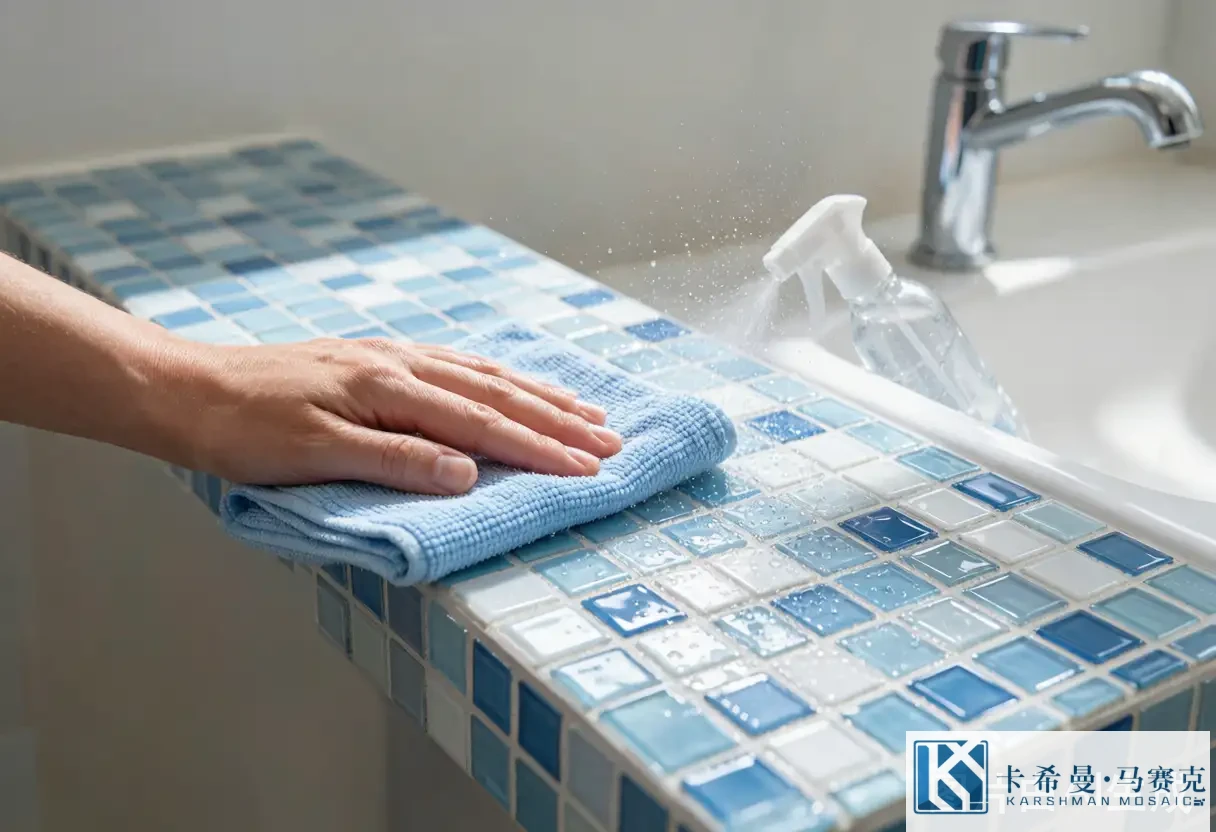
For kitchen backsplashes and bathroom walls, a quick wipe with a soft, damp microfiber cloth after use prevents soap scum and grease buildup. This takes seconds but dramatically reduces the need for deep cleaning later.
Sweep or Vacuum Floors
Dust and grit act like sandpaper underfoot on mosaic floors. Sweep or vacuum regularly to prevent surface scratches, especially in high-traffic areas and entryways.
Deep Cleaning by Tile Type
Ceramic Mosaic Tiles
Ceramic mosaics are the easiest to clean. For routine cleaning, use warm water with a few drops of mild dish soap. For tougher stains, a solution of equal parts white vinegar and water works well — apply with a soft brush, let sit for 5 minutes, then rinse and dry.
Avoid abrasive powders and scouring pads, which can scratch the glaze over time. For glazed ceramic tiles, a pH-neutral cleaner is a safe everyday choice.
Glass Mosaic Tiles
Glass mosaics are non-porous and highly stain-resistant, but they show water spots and fingerprints more readily than ceramic. Clean with a 50/50 vinegar and water solution in a spray bottle, then buff dry with a lint-free cloth for a streak-free shine.
For soap scum in showers, use a non-abrasive bathroom cleaner and a soft sponge. Avoid using rough scrubbing pads on glass — they can create micro-scratches that dull the surface.
Pool Mosaic Tiles
Pool mosaics face a harsher environment — chlorine, sun, and minerals in the water. To maintain them:
- Brush weekly with a nylon pool brush to prevent algae and calcium buildup along the waterline.
- Balance water chemistry — keep pH between 7.2 and 7.8 and calcium hardness in the recommended range to protect the tile and grout.
- Clean the waterline with a vinegar-based cleaner or a commercial pool tile cleaner. For stubborn calcium deposits, a pumice stone works on ceramic tiles (not glass — it will scratch).
- Check grout annually — pool grout degrades faster than indoor grout. Re-seal or repair as needed to prevent water from getting behind the tiles.
Cleaning Grout Lines
Grout is a major part of any mosaic installation. It is porous, absorbs liquids, and can discolor over time. To keep grout looking fresh:
- Make a paste of baking soda and water, apply to grout lines, and scrub with a soft-bristled brush.
- For mold or mildew, use hydrogen peroxide or a mild bleach solution (1 part bleach to 4 parts water). Test in an inconspicuous area first.
- Rinse thoroughly and dry — leaving cleaning solution on grout can cause discoloration.
- Apply a grout sealer every 6-12 months in wet areas to reduce staining.
What to Avoid
| Don’t Use | Why | Use Instead |
|---|---|---|
| Abrasive powders (e.g., comet scouring powder) | Scratches glaze and glass | Soft sponge + pH-neutral cleaner |
| Acidic cleaners on natural stone | Etches the surface | Stone-specific cleaner |
| Steel wool or wire brushes | Leaves metal particles that rust | Nylon brush or microfiber cloth |
| Wax or oil-based polishes | Attracts dirt, makes surface slippery | Dry buff with microfiber |
Seasonal Maintenance Checklist
- Spring: Deep clean all mosaic surfaces, re-seal grout in wet areas, check pool tiles for winter damage.
- Summer: Monitor pool water chemistry weekly, clean waterline monthly, inspect outdoor tiles for cracking.
- Fall: Clean gutters and drainage to prevent water pooling near tiled surfaces, check for loose tiles before winter.
- Winter: Avoid de-icing salts on outdoor mosaic surfaces — they can penetrate grout and cause spalling. Use a plastic shovel, not metal.
When to Reseal and Re-Grout
Even with proper care, grout eventually needs attention. Signs it is time to re-grout or reseal:
- Grout color is visibly darker or discolored and does not respond to cleaning
- Grout is crumbling, cracking, or missing in sections
- Water penetrates quickly when you splash it on the grout (seal has failed)
- Tiles feel loose or sound hollow when tapped
For minor grout repair, you can remove the damaged section and re-grout small areas yourself. For larger issues or pool installations, consider hiring a professional to ensure the waterproofing integrity is maintained.
Protecting Your Investment
Quality mosaic tiles are designed to last decades. With a consistent cleaning routine, periodic sealing, and prompt attention to any issues, your mosaic installations — whether a kitchen backsplash, bathroom feature wall, or swimming pool — will continue to look vibrant and perform well year after year.
Need advice on caring for your specific mosaic tiles? Reach out to KARSHMAN — our team can recommend the right cleaning products and maintenance schedule for your installation.