
Pattern is what turns loose chips into a design. In mosaic, pattern can be as quiet as a color gradient or as bold as a picture built chip by chip.
The right pattern depends on the wall, the viewing distance, and how much the surface should speak. This article covers the main pattern families and how to choose between them.
Because mosaic is made of small pieces, pattern is flexible in a way larger tiles are not. The same chips can form a clean grid, a soft blend, or a detailed image—often within one project.
What a Mosaic Pattern Does
A pattern gives a surface rhythm. It can calm a room (a simple grid), lead the eye (a gradient toward a focal point), or become the artwork itself (a pictral motif). Before picking a pattern, decide whether the surface should sit quietly or stand out.
Pattern also affects installation. Simple, repeating layouts are faster and cheaper to set; detailed motifs take more planning and labor. The pattern choice is partly a design choice and partly a budget one.
The Gradient
A gradient steps chips from one tone to another—light to dark, or one hue into the next. It is a practical pattern because it adds movement while staying calm. A vertical gradient can draw the eye upward; a horizontal one can widen a space.
Gradients work especially well on feature walls and pools, where a smooth color shift reads as depth.
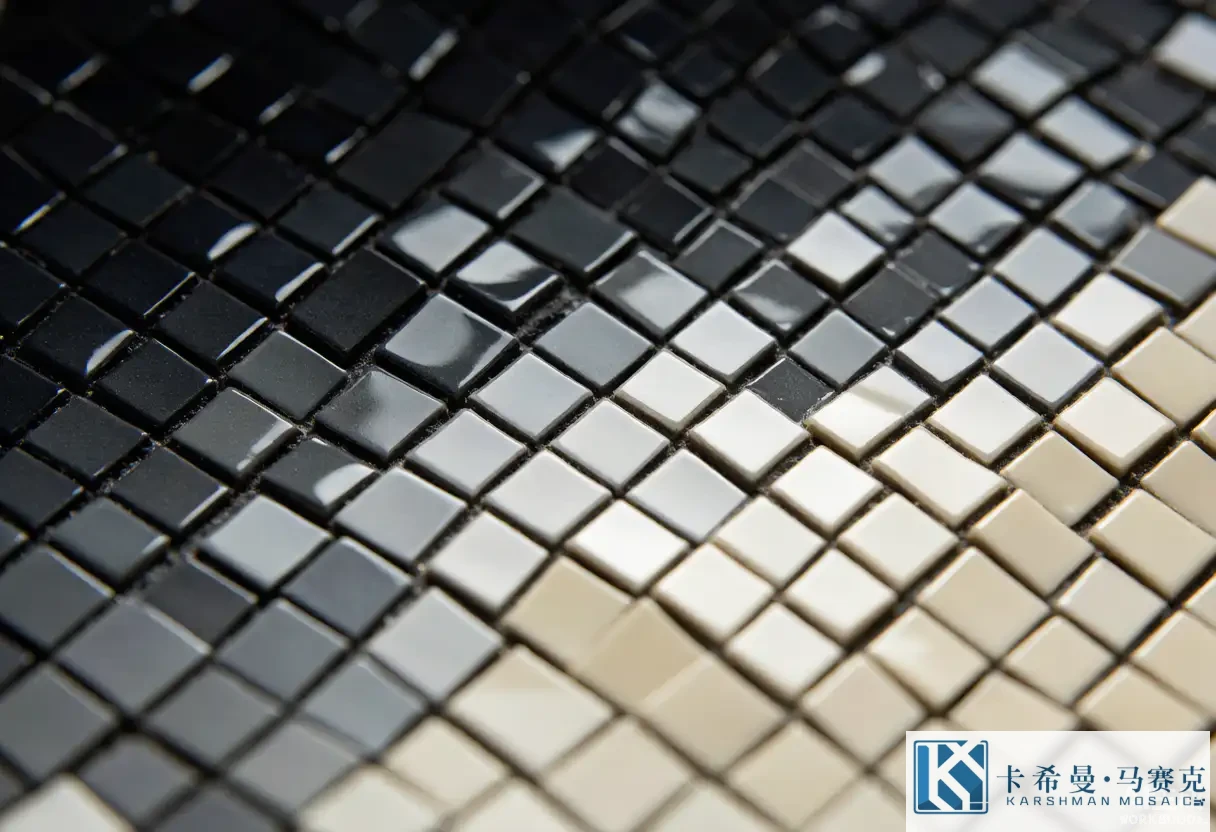
For a clean result, use pre-blended sheets so the tone flow stays even across the whole surface.
Geometric and Grid Patterns
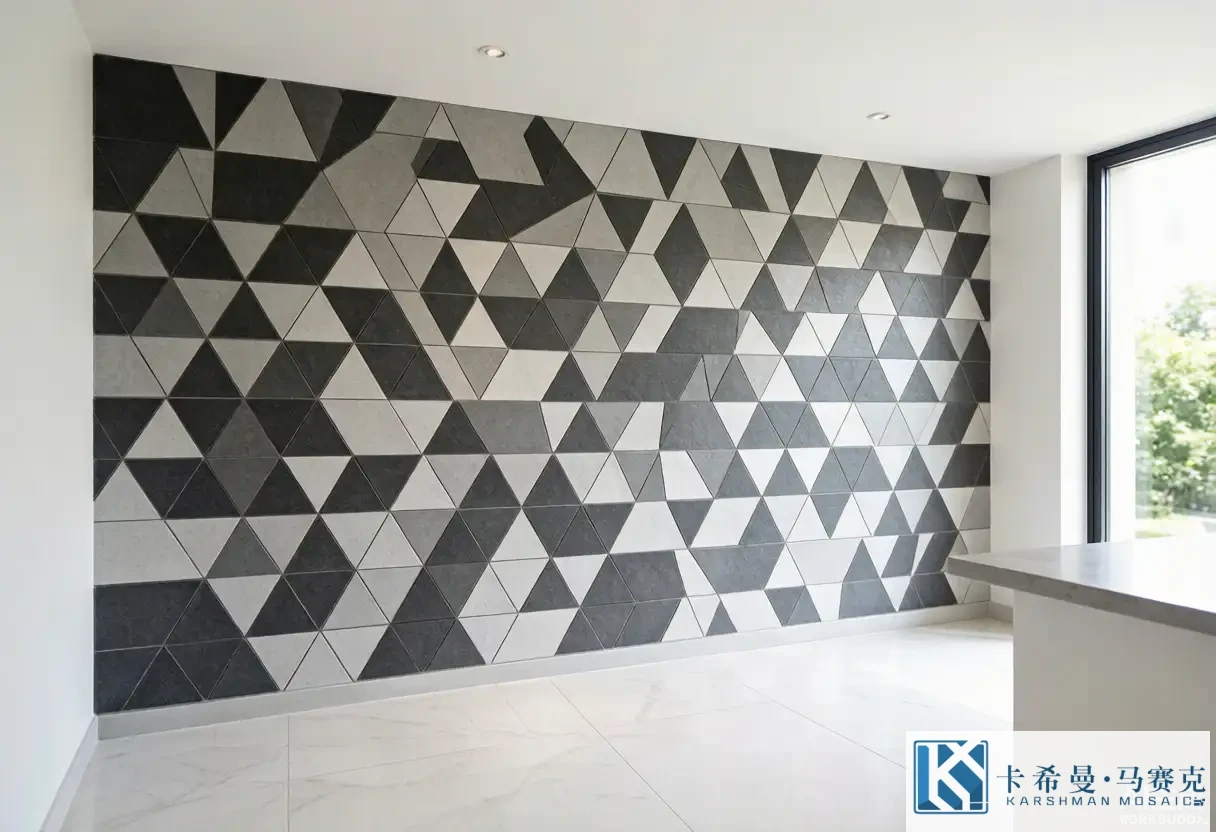
Geometric patterns—stacked grids, brick layouts, diagonals, interlocking shapes—bring order and a modern feel. They need few colors and read clearly even from far away, which makes them practical for large walls.
The chip size changes the feel: larger chips read as a bold, contemporary grid; smaller chips let the geometry look finer and more detailed. Match the chip size to the room’s scale.
Borders and Edging
A border is a pattern used at the edge—a line of contrasting chips that frames a field or a niche. Borders are a low-cost way to add a custom touch and to finish a cut edge cleanly. They also help separate a mosaic area from plain tile nearby.
In pools and bathrooms, a border often marks the waterline or the edge of a feature. Keep the border tone related to the field so the two read as one design.
Picture and Motif Mosaics
Motif mosaics turn the wall into imagery—a logo, a crest, a wave, a floral panel. These are a detailed pattern type and need smaller chips and a clear working drawing. A motif works well as a focal point rather than across an entire room.
The detail level should match the viewing distance. A logo seen from across a lobby can carry fine lines; a pool floor motif viewed from above can be bolder. Too much detail at the wrong scale simply blurs.
Scale: How Pattern Reads From a Distance
The same pattern looks different up close and far away. A fine geometric that is pleasant near the wall may disappear from across the room; a bold motif that is busy up close may simplify into a clean shape from a distance. Check the pattern at the distance people will actually view it.
Mixing Patterns Across a Project
Using more than one pattern is fine if they relate. A gradient field with a geometric border, or a quiet grid with one motif panel, reads as intentional. Clashing two busy patterns on the same wall usually reads as noise. Let one pattern lead and keep the others quiet.
From Sketch to Sheet
Every pattern ends up as a sheet layout the installer follows. For custom work, the maker translates the pattern into numbered panels so the design lands where it should. Reviewing that layout before production is where small corrections are cheap.
Mosaic pattern design is mostly about restraint and scale. Pick one pattern to lead, keep the rest supportive, and check it from the distance it will be seen. To explore pattern options for your wall, visit our contact page and share your idea.